Elegant Living

Welcome to Diva Princess

Glamorous living starts at home. Discover fashion, food, décor, and travel inspiration that transforms everyday moments into luxurious experiences.

Explore Now 👑 All My Links & Socials 💜 My Self-Care Guides — $12.99 🤍 Printable Journals on Etsy
✦

Daily Inspiration

Return each day for a new thought to carry with you.

Donna Barrow
Meet the Creator

Diva Princess

I am Donna — the woman behind Diva Princess, and I want to tell you something important right from the start: this life you are living is worthy of beauty. Not the life you are planning one day, or saving up for, or waiting to begin. This one. Today.

I built Diva Princess because I believe that elegance is not a privilege reserved for a certain income bracket or a certain zip code. It is a practice. It is the choice, made daily, to bring intention and grace to the way you cook, the way you dress, the way you set your table, the way you travel, and the way you inhabit every room you walk into.

I have cooked lobster feasts in my kitchen and walked barefoot on Caribbean beaches. I have set my dinner table beautifully on a Tuesday for no reason other than because I could. I have worn pink with the full knowledge that every eye in the room would follow — and I have never apologized for it once.

This community is for the woman who is done waiting for permission to live beautifully. She is already here. She is already magnificent. She just needs a space that reflects that back to her. Welcome home.

Timeless Fashion

Dress like the woman you are becoming

Donna in a lime green suit

Fashion, at its highest expression, is not about following trends. It is about telling the truth. The truth of who you are, where you have been, and the magnificent woman you are choosing to become. Every garment is a statement. Every accessory is punctuation. And the woman who dresses with intention — who selects her blazer the way an artist selects a brushstroke — is already leagues ahead of the crowd.

The Diva Princess wardrobe philosophy is rooted in three unshakeable principles: quality over quantity, fit above all else, and personal style over seasonal trends. It is the camel coat that lasts a decade. The silk blouse that works as well at brunch as it does at a board meeting. The pink pantsuit that commands every room it enters and makes the woman wearing it feel exactly the way she deserves to feel — extraordinary.

Fashion here is not aspirational in the sense of being out of reach. It is aspirational in the truest sense — it inspires you to step more fully into yourself. To wear colour with confidence. To mix textures without apology. To dress not for the occasion, but for the life you are building.

Donna in a black leather outfit with a silk scarf

The Diva Princess Style Rules

01

Fit Is Everything

An inexpensive dress that fits perfectly will always outclass an expensive one that does not. Find a tailor you trust and use them.

02

Buy Less, Choose Well

A curated wardrobe of 30 pieces you adore is infinitely more powerful than a packed closet of 200 things you settle for.

03

Colour Tells Your Story

Learn your colours — the ones that make your skin glow and your eyes light up. Wear them without reservation.

04

Dress for Who You Are Becoming

Not where you are right now, but where you are headed. Your wardrobe is a vision board you wear every day.

05

Own Your Signature

Find the one element that is unmistakably, unapologetically you — and make it your trademark. For some it is a colour. For others, a silhouette. Discover yours.

06

Confidence Is the Final Layer

You can put on the most exquisite outfit in the world, but the woman who wears it with confidence will always be the best-dressed person in the room.

The Daily Diva

A new page of the story, written every day

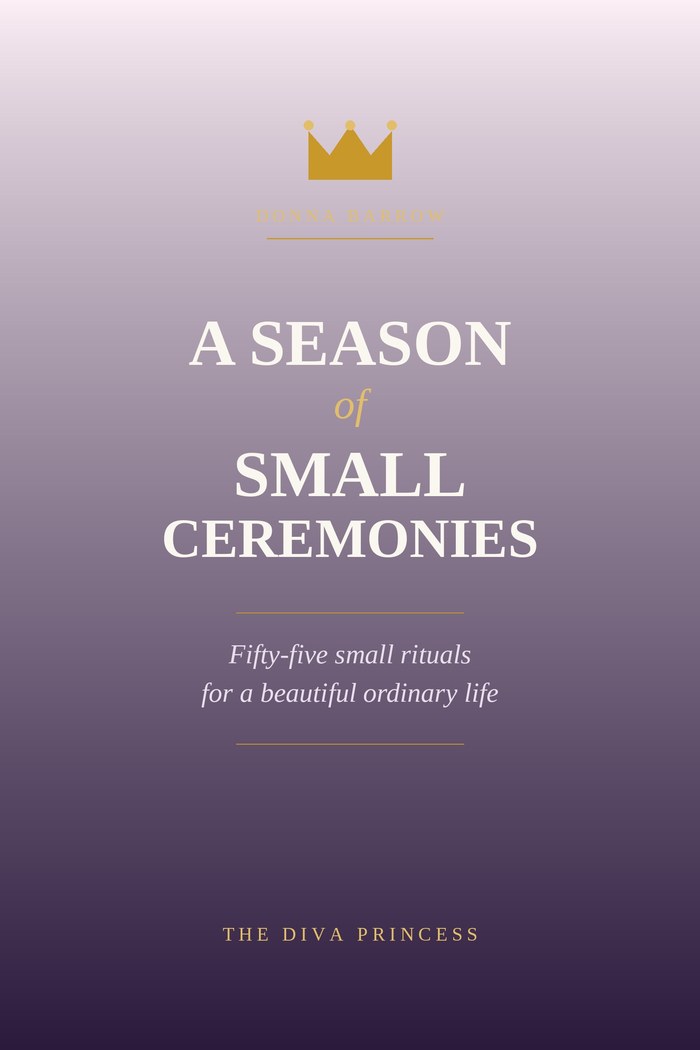
A Season of Small Ceremonies, by Donna Barrow

The book

A Season of Small Ceremonies

Fifty-five small rituals for a beautiful ordinary life

Every ceremony from this blog, gathered into one 162-page book — the morning hour, the well-made bed, the good china, the mended blouse. Yours to keep, and to read one page at a time.

$24.99Get the book

Or take everything — the book and all thirteen of my self-care guides — in The Complete Diva Princess Collection, $49.99.

Welcome, darling. You are on the list — your free guide is on its way to you shortly. 💜

A gift for you, darling

The Diva Princess Letter

Seven of my small ceremonies, gathered into a little book of their own — yours free, sent straight to your inbox the moment you join.

Send me the free gift

No noise and no nonsense, and you may leave whenever you wish.

Shop along with me, darling

My Amazon Favourites

The small things that make these ceremonies easier — a decent iron, a pretty carafe, a proper pair of scissors. Tap through here before you shop, my loves, and anything you buy that day helps keep this blog going.

Shop my Amazon favourites

As an Amazon Associate I earn from qualifying purchases. It costs you not a penny extra, darling.

Donna in a beige off-shoulder sweater and white trousers

Write the List, Darling: On the Small Ceremony of Setting Down What You Carry

There are two women this morning, darlings. One carries her whole week in her head, rattling like loose cutlery. The other writes it down. Be the second one.

I was, for years, a woman who thought remembering everything was a strength. It was only noise, and it woke me at three in the morning.

For here is the quiet truth of it, my dears: to write the list is to say that your mind is not a storage cupboard. It is for thinking.

And it need not be grand, sweethearts — the back of an envelope will do. Seven lines, no more. Put one lovely thing on it, so the page is not all duty.

So here is your loving assignment, my darling: before the day runs off with you, set down what you are carrying. Then put the page where you will see it.

Because this is what I have come to know, my loves, one small page at a time: a beautiful life is rarely the fullest head. It is the quietest.

P.S. If you would love more gentle ways to quiet your days and make room for yourself, my guides were written for exactly that, my darling — you will find them here, $12.99 each and yours to keep forever. 💜

P.P.S. A diva loves a tidy little list of her own savings: join Rakuten Canada with my link and we each get $30 — enough for a beautiful notebook and a very good pen. 💕

— Donna, the Diva Princess

Fill the Hot Water Bottle, Darling: On the Small Ceremony of a Warm Bed on a Cold Night

Two women climb into bed on a chilly October night, darlings. One slides between icy sheets, shivering. The other finds a warm patch waiting for her toes. Be the second.

I was, for years, a woman who thought hot water bottles were terribly old-fashioned. Then I borrowed a friend’s, and never looked back.

For here is the quiet truth of it, my dears: to warm the bed before you climb in is to say that you deserve a welcome, even from your own sheets.

And it need not be grand, sweethearts — a bottle in a knitted cover, hot (never boiling) water, tucked where your feet will go.

So here is your loving assignment, my darling: tonight, while you brush your hair and cream your face, let the hot water bottle warm the bed for you.

Because this is what I have come to know, my loves, one warm bed at a time: a beautiful life is very rarely about grand comforts. It is the small warmth waiting at day’s end.

P.S. If you would love more small ways to make your evenings tender and cosy, my guides are full of them, my darling — you will find them here, $12.99 each and yours to keep forever. 💜

P.P.S. A diva loves a warm bed: join Rakuten Canada with my link and we each get $30 — enough for a hot water bottle in the softest knitted cover. 💕

— Donna, the Diva Princess

Send the Leftovers Home, Darling: On the Small Ceremony of a Generous Container

Two women wave goodbye to their guests after a holiday dinner, darlings. One stands at the door empty-handed. The other presses a parcel of turkey and pie into every pair of hands. Be the second.

I was, for years, a woman who ate cold turkey alone until Friday, wondering why I had cooked for twelve.

For here is the quiet truth of it, my dears: to send the leftovers home is to say that the love does not end when the dishes are cleared.

And it need not be grand, sweethearts — a stack of clean containers or jam jars, a name in marker. Keep a few by the door all autumn.

So here is your loving assignment, my darling: today, pack up what is left and deliver a little to a neighbour, a friend, or someone who spent yesterday alone.

Because this is what I have come to know, my loves, one full container at a time: a beautiful life is very rarely kept to oneself. It is passed along, still warm.

P.S. If you would love more small ways to share your table and your heart, my guides are full of them, my darling — you will find them here, $12.99 each and yours to keep forever. 💜

P.P.S. A diva loves a generous gesture: join Rakuten Canada with my link and we each get $30 — enough for a set of pretty glass containers worth sending out. 💕

— Donna, the Diva Princess

Say Thank You Out Loud, Darling: On the Small Ceremony of a Thanksgiving Toast

Two women sit down to Thanksgiving dinner today, darlings. One feels grateful quietly and passes the potatoes. The other lifts her glass and says it out loud. Be the second.

I was, for years, a woman who assumed everyone simply knew how much I loved them. Some, I learned, never did.

For here is the quiet truth of it, my dears: to say thank you out loud is to say that the people at your table are seen, and that their love has landed.

And it need not be grand, sweethearts — one raised glass, one sentence, one name. If you are dining alone, ring someone and say it down the line.

So here is your loving assignment, my darling: before the first bite today, raise whatever is in your glass and name one person, one blessing, out loud.

Because this is what I have come to know, my loves, one spoken thank you at a time: a beautiful life is very rarely about having more. It is about noticing, and saying so. Happy Thanksgiving.

P.S. Gratitude has a chapter of its very own in my book, A Season of Small Ceremonies — fifty-five small ceremonies, $24.99, and yours to keep. 💜

P.P.S. A diva loves a full table: join Rakuten Canada with my link and we each get $30 — enough for a pie you did not have to bake yourself. 💕

— Donna, the Diva Princess

Polish the Silver, Darling: On the Small Ceremony of Things That Shine

Two women are laying the Thanksgiving table this weekend, darlings. One sighs at the tarnished silver and uses the everyday forks. The other sits down with a soft cloth and makes it gleam. Be the second.

I was, for years, a woman who kept my mother’s silver wrapped in a drawer, too dull to use and too dear to give away.

For here is the quiet truth of it, my dears: to polish the silver is to say that the lovely things we inherit are meant to be held, not hidden.

And it need not be grand, sweethearts — a cloth, a little paste, or baking soda and warm water. Do only the pieces you will use.

So here is your loving assignment, my darling: polish one fork, one spoon and one serving piece today, and set them on the table tomorrow.

Because this is what I have come to know, my loves, one gleaming spoon at a time: a beautiful life is very rarely bought new. It is buffed back to its shine.

P.S. If you would love more ways to bring your good things out of hiding, my guides are full of them, my darling — you will find them here, $12.99 each and yours to keep forever. 💜

P.P.S. A diva loves a table that sparkles: join Rakuten Canada with my link and we each get $30 — enough for a fresh tin of polish and something lovely to pour. 💕

— Donna, the Diva Princess

Plump the Cushions, Darling: On the Small Ceremony of a Sitting Room That Says Welcome Back

Two women walk into their sitting rooms this evening, darlings. One finds the cushions squashed flat from yesterday. The other finds them plump and waiting. Be the second.

I was, for years, a woman who sat on the same flattened cushion until it was practically a pancake.

For here is the quiet truth of it, my dears: to plump the cushions is to say that the room is ready to receive you, and that you are worth receiving.

And it need not be grand, sweethearts — a good chop to the top, a shake, a pat on each side, and the throw folded over the arm. One minute, before bed.

So here is your loving assignment, my darling: tonight, before you turn out the lamp, plump every cushion so that tomorrow’s woman walks into a welcome.

Because this is what I have come to know, my loves, one plump cushion at a time: a beautiful life is very rarely about new furniture. It is about how lovingly you keep what you have.

P.S. If you would love more small ways to make your home a soft place to land, my guides are full of them, my darling — you will find them here, $12.99 each and yours to keep forever. 💜

P.P.S. A diva loves a cosy corner: join Rakuten Canada with my link and we each get $30 — enough for a velvet cushion in a colour that makes you smile. 💕

— Donna, the Diva Princess

Stretch Before You Rise, Darling: On the Small Ceremony of Waking Slowly

Two women wake this morning, darlings. One leaps out of bed into the rush. The other lies still and stretches like a cat in the sun. Be the second.

I was, for years, a woman who got up as though the house were on fire. My back and my temper both paid for it by noon.

For here is the quiet truth of it, my dears: to stretch before you rise is to say that your body deserves a gentle good morning, too.

And it need not be grand, sweethearts — arms long over your head, toes pointed, a slow roll of the shoulders, three deep breaths. Two minutes, under the covers.

So here is your loving assignment, my darling: tomorrow, before your feet touch the floor, reach for the headboard and stretch every inch of yourself awake.

Because this is what I have come to know, my loves, one slow morning at a time: a beautiful life is very rarely begun in a hurry. It unfolds, the way a woman does when treated kindly.

P.S. If you would love more gentle ways to begin your mornings, my guides are full of them, my darling — you will find them here, $12.99 each and yours to keep forever. 💜

P.P.S. A diva loves a lazy morning: join Rakuten Canada with my link and we each get $30 — enough for a lovely new pillow to stretch out on. 💕

— Donna, the Diva Princess

Warm the Plates, Darling: On the Small Ceremony of a Supper That Stays Hot

There are two women serving supper tonight, darlings. One sets a hot dinner onto a cold plate. The other warms the plate first. Be the second.

I was, for years, a woman who did not know plates could be warmed. My lovely suppers went lukewarm by the third forkful.

For here is the quiet truth of it, my dears: to warm the plate is to say that the meal matters, and so does the woman eating it.

And it need not be grand, sweethearts — a few minutes in a barely warm oven, or a rinse under the hot tap and a quick dry. It costs nothing at all.

So here is your loving assignment, my darling: warm your plate tonight, even if supper is only beans on toast, even if you are eating alone. Especially then.

Because this is what I have come to know, my loves, one warm plate at a time: a beautiful life is very rarely about the feast. It is about the care you take with the ordinary one.

P.S. If you would love more small ways to turn an ordinary supper into an occasion, my guides are full of them, my darling — you will find them here, $12.99 each and yours to keep forever. 💜

P.P.S. A diva loves a beautifully laid table: join Rakuten Canada with my link and we each get $30 — enough for a set of plates well worth warming. 💕

— Donna, the Diva Princess

Fill the Biscuit Tin, Darling: On the Small Ceremony of Being Ready for Company

Two women hear a knock at the door on the same grey afternoon, darlings. One apologises that she has nothing in. The other lifts the lid off a full tin and puts the kettle on.

I was, for years, a woman with an empty tin, my dears — always meaning to shop, always caught out.

For here is the quiet truth of it, my dears: to keep the biscuit tin filled is to say that you expect good things — a friend, a neighbour, a reason to sit down.

And it need not be grand, sweethearts — a packet of shortbread, a pretty tin, and the lid kept on properly so they stay crisp.

So here is your loving assignment, my darling: fill your tin this week, and have one yourself with your afternoon tea.

Because this is what I have come to know, my loves, one full tin at a time: a beautiful life is very rarely a house that waits to be worthy of visitors. It is a house that is quietly ready for them.

P.S. If you would love more gentle ways to make your home feel ready and welcoming, I have written whole guides full of them, my darling — you will find them here, $12.99 each and yours to keep forever. 💜

P.P.S. A diva loves a well-stocked tin: join Rakuten Canada with my link and we each get $30 — plenty for a pretty tin and something lovely to fill it. 💕

— Donna, the Diva Princess

Warm the Towel, Darling: On the Small Ceremony of Stepping Out Into Something Warm

Two women step out of the bath on the same chilly morning. One snatches a cold, stiff towel from the hook. The other reaches for one warmed on the radiator and sighs with pleasure.

I was, for years, a woman who thought a warm towel belonged to hotels and other people's lives, my dears — never to a Tuesday in my own bathroom.

For here is the quiet truth of it, my dears: to warm your towel is to say that the small moment between the bath and the day deserves tenderness too.

And it need not be grand, sweethearts — one towel over the radiator ten minutes before you run the water, and nothing more.

So here is your loving assignment, my darling: set your towel to warm tonight, and step into it slowly.

Because this is what I have come to know, my loves, one warm towel at a time: a beautiful life is very rarely made of grand comforts. It is made of the small ones you finally stopped going without.

P.S. If you are learning to let the small comforts back into your ordinary days, my guides were written for exactly that, my darling — you will find them here, $12.99 each and yours to keep forever. 💜

P.P.S. A diva loves a little warmth: join Rakuten Canada with my link and we each get $30 — more than enough for a set of proper soft towels. 💕

— Donna, the Diva Princess

Put On the Lipstick, Darling: On the Small Ceremony of a Little Colour Before Breakfast

Two women catch their reflection on the same Monday morning, darlings. One looks away quickly. The other sweeps on a little rose-coloured lipstick and says, good morning, beautiful.

I was, for years, a woman who saved her lipstick for weddings and funerals, my dears — as if my ordinary face did not deserve it.

For here is the quiet truth of it, my dears: to put on your lipstick is to say that you are worth the effort, even when no one is coming.

And it need not be grand, sweethearts — one tube you love, thirty seconds at the mirror, and a little blot on a tissue.

So here is your loving assignment, my darling: wear it today, to the shop, the garden, or the kitchen table.

Because this is what I have come to know, my loves, one rosy smile at a time: a beautiful life is very rarely a special occasion. It is an ordinary day you decided to dress up.

P.S. If you are ready to feel this lovely every ordinary day, my book, A Season of Small Ceremonies, is full of rituals just like this one — $24.99, and yours to keep. 💜

P.P.S. A diva loves a pretty lip: join Rakuten Canada with my link and we each get $30 — plenty toward a new shade that makes you smile. 💕

— Donna, the Diva Princess

Sit in the Sun, Darling: On the Small Ceremony of Ten Golden Minutes

Two women notice the same patch of October sunshine, darlings. One hurries past it with a list in her hand. The other carries her cup outside, sits down, and turns her face to it like a flower.

I was, for years, a woman who saved sitting for when the work was done, my dears — and the work, of course, was never done.

For here is the quiet truth of it, my dears: to sit in the sun is to say that warmth is not something you must earn.

And it need not be grand, sweethearts — a step, a bench, a chair by a bright window. Ten minutes. Nothing more.

So here is your loving assignment, my darling: find today's sunshine and give it your whole, unhurried attention.

Because this is what I have come to know, my loves, one golden afternoon at a time: a beautiful life is very rarely found by rushing. It waits for you to sit still.

P.S. If you are learning to rest without guilt, my guides walk beside you through exactly that, my darling — you will find them here, $12.99 each and yours to keep forever. 💜

P.P.S. A diva loves a sunny seat: join Rakuten Canada with my link and we each get $30 — perhaps toward a soft cushion for your favourite bench. 💕

— Donna, the Diva Princess

Fill the Fruit Bowl, Darling: On the Small Ceremony of Something Beautiful on the Table

Two women walk into the same kitchen, darlings. One sees a bare counter and a cold kettle. The other sees a bowl heaped with red apples and pears, and she smiles before she has even had her coffee.

I was, for years, a woman who kept fruit in the bag it came home in, my dears — tucked in a drawer, forgotten until it softened.

For here is the quiet truth of it, my dears: to fill the fruit bowl is to say that your table deserves colour, and you deserve to be fed well.

And it need not be grand, sweethearts — six autumn apples from the market, in whatever bowl you already love.

So here is your loving assignment, my darling: fill it today, set it where the light lands, and eat from it.

Because this is what I have come to know, my loves, one shining apple at a time: a beautiful life is very rarely a feast. It is a little abundance, kept in plain sight.

P.S. If you love a small ceremony like this one, my book, A Season of Small Ceremonies, holds fifty-five more — $24.99, and yours to keep. 💜

P.P.S. A diva loves a full bowl: join Rakuten Canada with my link and we each get $30 — enough for a pretty new bowl to show off your apples. 💕

— Donna, the Diva Princess

Draw the Curtains, Darling: On the Small Ceremony of Closing the Day In

Two women sit in the same October dusk, darlings. One lets the dark windows stare back at her all evening. The other draws the curtains, and the room wraps around her like a shawl.

I was, for years, a woman who never closed them, my dears — too busy to notice the night had come right in and sat down beside me.

For here is the quiet truth of it, my dears: to draw the curtains is to say the day is done, and the evening is yours.

And it need not be grand, sweethearts — no new drapes. Just the ones you have, pulled closed slowly, and one warm lamp switched on.

So here is your loving assignment, my darling: tonight, when the light goes, walk room to room and tuck your house in.

Because this is what I have come to know, my loves, one drawn curtain at a time: a beautiful life is very rarely about shutting the world out. It is about choosing when it may rest.

P.S. If your evenings could use a little more tenderness, my guides were written for exactly those quiet hours, my darling — you will find them here, $12.99 each and yours to keep forever. 💜

P.P.S. A diva loves a cosy room: join Rakuten Canada with my link and we each get $30 — perhaps toward a lamp with a lovely warm glow. 💕

— Donna, the Diva Princess

Wash the Window, Darling: On the Small Ceremony of Letting the Autumn Light All the Way In

Two women wake to the same October morning, darlings. One peers through a smeared pane and calls the season dreary. The other washed her glass, and the light pours in gold.

I was, for years, a woman who cleaned her windows only when company was coming, my dears — as though the light were for guests and not for me.

For here is the quiet truth of it, my dears: to wash your window is to say that what you look at every single day deserves to be beautiful.

And it need not be grand, sweethearts — warm water, a drop of vinegar, a square of newspaper. One pane. The one you sit beside.

So here is your loving assignment, my darling: choose that window today, and do it slowly, in your own good time.

Because this is what I have come to know, my loves, one clear pane at a time: a beautiful life is very rarely a bigger view. It is a cleaner one.

P.S. If this clearer light has you longing to see the rest of your lovely life more plainly, my guides were written for exactly that, my darling — you will find them here, $12.99 each and yours to keep forever. 💜

P.P.S. A diva loves a clear view: join Rakuten Canada with my link and we each get $30 — plenty toward soft cloths and a sparkle at every pane. 💕

— Donna, the Diva Princess

Warm Your Feet, Darling: On the Small Ceremony of a Proper Pair of Slippers

Darlings, two women cross a cold kitchen floor this autumn morning. One does it in thin socks gone bare at the heel. The other slips into something soft and warm, and begins her day cosseted.

I was, for years, a woman who wore the same tired slippers until they flapped, my dears, because who was looking?

For here is the quiet truth of it, my dears: to warm your feet properly is to say that your comfort matters, even in the rooms no one else will see.

And it need not be grand, sweethearts — one good pair with a proper sole, waiting by the bed, is all it takes.

So here is your loving assignment, my darling: retire the sad old pair this week and give your feet something they deserve.

Because this is what I have come to know, my loves, one soft step at a time: a beautiful life is very rarely built from grand gestures. It is built from the small kindnesses we show ourselves at home.

P.S. If you would love more small ways to be tender with yourself at home, I have written whole guides full of them, my darling — you will find them here, $12.99 each and yours to keep forever. 💜

P.P.S. A diva loves a cosy toe: join Rakuten Canada with my link and we each get $30 — lovely toward a pair of slippers fit for a queen. 💕

— Donna, the Diva Princess

Spritz the Good Perfume, Darling: On the Small Ceremony of Smelling Wonderful on a Tuesday

Darlings, two women get dressed this Tuesday morning. One glances at the lovely bottle on her dresser and thinks, not today, it’s only errands. The other lifts it and spritzes her wrists and throat.

I was, for years, a woman who saved her good perfume for weddings, my dears, and watched it turn in the bottle.

For here is the quiet truth of it, my dears: to wear your scent on an ordinary day is to say that you are the occasion, and that you need no invitation to feel wonderful.

And it need not be grand, sweethearts — one spritz on the pulse points, a whisper on your scarf, and you will catch it all day long.

So here is your loving assignment, my darling: take down your best bottle today and wear it for no one but yourself.

Because this is what I have come to know, my loves, one spritz at a time: a beautiful life is very rarely about saving things. It is about using them while they still smell sweet.

P.S. If you would love more ways to treat yourself like the occasion, I have written whole guides full of them, my darling — you will find them here, $12.99 each and yours to keep forever. 💜

P.P.S. A diva loves a signature scent: join Rakuten Canada with my link and we each get $30 — lovely toward a new bottle of something that makes you feel like a queen. 💕

— Donna, the Diva Princess

Warm the Pot, Darling: On the Small Ceremony of Tea Made Properly

Darlings, two women need a cup of tea this Monday afternoon. One dunks a bag in a mug, leaves it stewing, and drinks it standing at the counter. The other warms the pot first.

I was, for years, a woman who made tea like a chore to be finished, my dears.

For here is the quiet truth of it, my dears: to warm the pot is to say that your pause is worth doing properly, and that you deserve more than a mug gulped on the run.

And it need not be grand, sweethearts — a swirl of hot water, two good spoonfuls of leaves, four patient minutes, and a cup with a saucer.

So here is your loving assignment, my darling: today, make one pot of tea the slow way, and sit down to drink it.

Because this is what I have come to know, my loves, one proper cup at a time: a beautiful life is very rarely about rushing. It is about letting four minutes belong entirely to you.

P.S. If you would love more little pauses like this one, I have gathered them into gentle guides, my darling — you will find them here, $12.99 each and yours to keep forever. 💜

P.P.S. A diva loves a proper cup of tea: join Rakuten Canada with my link and we each get $30 — lovely toward a tin of good loose-leaf or a pretty new teacup. 💕

— Donna, the Diva Princess

Press a Leaf, Darling: On the Small Ceremony of Keeping a Little of the Season

Darlings, two women walk beneath the maples this Sunday. One hurries through, eyes on her phone. The other stops, bends down, and chooses the reddest leaf on the path.

I was, for years, a woman who let whole autumns pass without truly noticing a single one, my dears.

For here is the quiet truth of it, my dears: to press a leaf is to say that your days are worth keeping, and that beauty found on an ordinary walk deserves a place of honour.

And it need not be grand, sweethearts — tuck it between two sheets of paper inside your heaviest book, and forget about it for a fortnight.

So here is your loving assignment, my darling: go out today, choose one perfect leaf, and press it.

Because this is what I have come to know, my loves, one crimson leaf at a time: a beautiful life is very rarely about grand adventures. It is about noticing the season while you are standing in it.

P.S. And when you reach for that heavy book, my darling, may it be mine — A Season of Small Ceremonies holds fifty-five gentle rituals like this one, $24.99, and yours to keep. 💜

P.P.S. A diva loves an autumn stroll: join Rakuten Canada with my link and we each get $30 — lovely toward a warm pair of walking gloves. 💕

— Donna, the Diva Princess

Bake Something, Darling: On the Small Ceremony of a Kitchen That Smells of Home

Darlings, two women have a free Saturday afternoon as the leaves turn. One scrolls through it and wonders where it went. The other ties on an apron, peels three apples, and fills the house with cinnamon.

I was, for years, a woman who only baked for bake sales and other people’s birthdays, my dears.

For here is the quiet truth of it, my dears: to bake something just for yourself is to say that you are worth the butter, the bother, and the warm first slice.

And it need not be grand, sweethearts — a simple crumble, a tray of scones, or a loaf from those spotty bananas will do beautifully.

So here is your loving assignment, my darling: this weekend, bake one small thing and eat it warm, on a proper plate.

Because this is what I have come to know, my loves, one warm crumble at a time: a beautiful life is very rarely about perfection. It is about a kitchen that smells like someone cares.

P.S. If you would love more cosy ways to spoil yourself this autumn, I have written whole guides full of them, my darling — you will find them here, $12.99 each and yours to keep forever. 💜

P.P.S. A diva loves a warm kitchen: join Rakuten Canada with my link and we each get $30 — lovely toward a new pie dish or a pretty apron. 💕

— Donna, the Diva Princess

Bring Down the Blanket, Darling: On the Small Ceremony of Welcoming the Cool Evenings

Darlings, two women feel the first proper chill of autumn this week. One pulls her cardigan tighter and makes do. The other goes to the cupboard, brings down her softest blanket, and lays it over the arm of her favourite chair.

I was, for years, a woman who made do, my dears. The good throw stayed folded on a high shelf, saved for guests who rarely came.

For here is the quiet truth of it, my dears: to bring down the blanket is to say that your own comfort is not an afterthought, and that the woman in that chair deserves warmth before she has to ask for it.

And it need not be grand, sweethearts — give it a shake on the step, a little airing by the window, and it is ready.

So here is your loving assignment, my darling: tonight, bring it down, drape it where you sit, and wrap yourself in it with your tea.

Because this is what I have come to know, my loves, one soft blanket at a time: a beautiful life is very rarely about grand gestures. It is about letting yourself be cosy on an ordinary Friday night.

P.S. If you would love more of these gentle ways to look after yourself as the seasons turn, my darling, I have written whole guides full of them — you will find them here, $12.99 each and yours to keep forever. 💜

P.P.S. A diva loves a cosy evening in: join Rakuten Canada with my link and we each get $30 — lovely toward a new throw or a tin of good tea. 💕

— Donna, the Diva Princess

Light It Early, Darling: On the Small Ceremony of Being Warm Before You Strictly Need To Be

Darlings, two women on the first properly cold evening. One puts on a second cardigan and says it is not worth it yet. The other lights the fire in September and sits down.

I was the first woman, sweethearts. I had a rule in my head that fires were for December, and shivered through three autumns obeying a rule nobody ever made.

For here is the quiet truth of it, my dears: to light it early is to say comfort is not a thing you must hold out for until it is officially allowed.

And it need not be grand, sweethearts — a candle in a jar, a lamp and a blanket, the oven on with something in it. Warmth is warmth, and you need not own a hearth.

So here is your loving assignment, my darling: tonight, be warm before you strictly need to be. Then sit in it for half an hour and do nothing useful whatsoever.

Because this is what I have come to know, my loves, one early fire at a time: a beautiful life is rarely the one that waited for the right moment. It belongs to the woman who was warm in September.

P.S. If you would like a gentle hand with the small ceremonies that make an ordinary evening lovely, my darling, I have written whole guides of them — you will find them here, $12.99 each and yours to keep forever. 💜

P.P.S. A diva loves a warm room: join Rakuten Canada with my link and we each get $30 — lovely toward a proper blanket for the good chair, or candles enough for the whole autumn. 💕

— Donna, the Diva Princess

Book the Appointment, Darling: On the Small Ceremony of Putting Your Own Name in the Diary

Darlings, two women look in the mirror at a haircut that stopped being a haircut in June. One says she will ring next week, and has been saying so since July. The other rings on Tuesday.

I was the first woman, sweethearts. I could book the dog in, the car in, my daughter's whole life in, and leave myself sitting at the very bottom of the list.

For here is the quiet truth of it, my dears: to make the appointment is to say your name belongs in that diary alongside everybody else's.

And it need not be grand, sweethearts — ring while the kettle boils, before you have talked yourself out of it. Take the first date they offer, my love, not the convenient one.

So here is your loving assignment, my darling: make the call you have been putting off since summer. Then write it in the diary in pen, where you will not quietly move it.

Because this is what I have come to know, my loves, one appointment at a time: a beautiful life is rarely the one that fits everybody in. It belongs to the woman who left room for herself.

P.S. If you would like fifty-five of these small ceremonies gathered in one place, my darling, they are all waiting in my book, A Season of Small Ceremonies — $24.99, and yours to keep forever. 💜

P.P.S. A diva loves a fresh cut and a clear diary: join Rakuten Canada with my link and we each get $30 — lovely toward the appointment you have been putting off. 💕

— Donna, the Diva Princess

Change the Tea Towel, Darling: On the Small Ceremony of Finishing the Job Properly

Darlings, two kitchens, two tea towels. One has hung on the rail since Sunday, faintly grey and faintly sour, drying clean plates. The other went into the wash this morning and its replacement is crisp.

I was the first woman, sweethearts. I would scrub a worktop beautifully and then wipe it dry with something that had been hard at work all week.

For here is the quiet truth of it, my dears: to change the tea towel is to say the last small step of a job matters quite as much as the first.

And it need not be grand, sweethearts — a fresh one every second day, and a separate one for hands so the two are not fighting. Buy six plain white ones and boil them.

So here is your loving assignment, my darling: change it now, while you are thinking of it. Then go and look at the bathroom hand towel, which is almost certainly older.

Because this is what I have come to know, my loves, one clean cloth at a time: a beautiful life is rarely the one that has been deep-cleaned. It belongs to the woman whose small things were fresh.

P.S. If a home that runs kindly is what you would like a gentle hand with, my darling, I have written whole guides full of exactly these — you will find them here, $12.99 each and yours to keep forever. 💜

P.P.S. A diva loves good linen: join Rakuten Canada with my link and we each get $30 — lovely toward a proper stack of tea towels that will outlast the lot of us. 💕

— Donna, the Diva Princess

Tie the Scarf, Darling: On the Small Ceremony of One Good Length of Silk

Darlings, two women in the same navy coat. The first is simply in a navy coat. The second has a length of silk at her throat, and the whole street assumes she has been somewhere interesting.

I was the first woman, sweethearts. I owned four beautiful scarves and wore none of them, having somehow decided they were for women more finished than me.

For here is the quiet truth of it, my dears: to tie the scarf is to say you are allowed to be looked at, and that dressing well was never something you had to earn.

And it need not be grand, sweethearts — one scarf, folded into a band and knotted loose at the side. That is the whole trick. Practise twice at the mirror and it is yours forever.

So here is your loving assignment, my darling: take out the scarf you never wear, and put it on to do something perfectly ordinary. The shops will do nicely.

Because this is what I have come to know, my loves, one knot at a time: a beautiful life is rarely the best-dressed one. It belongs to the woman who wore the lovely things while she had them.

P.S. If dressing like you mean it is the sort of thing you would like a gentle hand with, my darling, I have written whole guides of exactly these — you will find them here, $12.99 each and yours to keep forever. 💜

P.P.S. A diva loves good silk: join Rakuten Canada with my link and we each get $30 — lovely toward a scarf in a colour that lifts your whole face. 💕

— Donna, the Diva Princess

Sweep the Front Step, Darling: On the Small Ceremony of Arriving Somewhere Welcoming

Darlings, two women come home in the evening. One steps over three weeks of leaves and a dead geranium. The other comes up a swept path to a door that looks pleased to see her.

I was the first woman, sweethearts. I kept the inside beautifully and let the doorstep go, as though the welcome only started once you were through it.

For here is the quiet truth of it, my dears: to sweep your step is to say you deserve a proper arrival every day, whether or not another soul ever comes up it.

And it need not be grand, sweethearts — a broom and four minutes. Wipe the door handle while you are out there, my love, and the little glass panel if you have one.

So here is your loving assignment, my darling: sweep it this afternoon. Then stand at the gate and look back at your own house the way a visitor would.

Because this is what I have come to know, my loves, one swept step at a time: a beautiful life is rarely lived in the grandest house on the road. It belongs to the woman whose door said welcome.

P.S. If a home that greets you kindly is the sort of thing you would like help with, my darling, I have written whole guides full of exactly these — you will find them here, $12.99 each and yours to keep forever. 💜

P.P.S. A diva loves a doorstep worth arriving at: join Rakuten Canada with my link and we each get $30 — lovely toward a proper doormat, or a pot of something green beside the door. 💕

— Donna, the Diva Princess

Never Run It to Empty, Darling: On the Small Ceremony of Keeping a Little in Reserve

Darlings, two women drive the same road. The first is at the petrol station on a black wet night with the warning light on and her shoulders round her ears. The second filled up on Tuesday, in daylight.

I was the first woman for years, sweethearts. I ran everything to empty — the tank, the milk, the diary, myself — and called it managing.

For here is the quiet truth of it, my dears: to keep a little in reserve is to say you will not spend your life two inches from an emergency.

And it need not be grand, sweethearts — half a tank is the rule, not a full one. The same in the cupboard: one spare of the thing you would hate to run out of.

So here is your loving assignment, my darling: fill up tomorrow while it is light, whatever the gauge says. Then name the other thing you always run to nothing, and buy a spare.

Because this is what I have come to know, my loves, one half-tank at a time: a beautiful life is rarely the one with the most in it. It belongs to the woman who was never quite desperate.

P.S. If you would like fifty-five of these small ceremonies together in one place, my darling, they are all in my book, A Season of Small Ceremonies — $24.99, and yours to keep forever. 💜

P.P.S. A diva loves a full cupboard and a calm mind: join Rakuten Canada with my link and we each get $30 — lovely toward the spares that keep a week from going wrong. 💕

— Donna, the Diva Princess

Keep One Good Pen, Darling: On the Small Ceremony of Writing With Something Decent

Darlings, two women sit down to write a card. The first tries four pens from a mug, every one of them dying, and writes the whole thing in scratchy grey. The second reaches for one good pen.

I was the first woman, sweethearts, and I had perhaps thirty pens. Not one of them was mine. They belonged to the bank, the vet, and a hotel in Kelowna.

For here is the quiet truth of it, my dears: to keep one good pen is to say your handwriting is worth something decent to write it with.

And it need not be grand, sweethearts — no fountain pen unless you fancy one. A proper gel pen costs a few dollars and changes everything. Keep it somewhere only you know.

So here is your loving assignment, my darling: throw out every pen in this house that does not write first time. All of them. Then buy one you like the feel of.

Because this is what I have come to know, my loves, one pen at a time: a beautiful life is very rarely the one with the most of anything. It belongs to the woman whose few good things worked.

P.S. If small ceremonies like this one are what you would like a gentle hand with, my darling, I have written whole guides full of them — you will find them here, $12.99 each and yours to keep forever. 💜

P.P.S. A diva loves a pen that glides: join Rakuten Canada with my link and we each get $30 — lovely toward one you would be pleased to sign your name with. 💕

— Donna, the Diva Princess

Name the Photograph, Darling: On the Small Ceremony of Making Sure Your People Are Remembered

Darlings, here are two shoeboxes of photographs. In the first, nobody living knows who the woman in the good hat is. In the second it says on the back: Auntie Vera, Blackpool, 1961.

I was the first woman, sweethearts. I have a picture of a beautiful girl on a doorstep and nobody left to ask, and that is a loss I cannot mend now.

For here is the quiet truth of it, my dears: to write on the back is to say these people existed and were loved, and somebody ought still to know their names in fifty years.

And it need not be grand, sweethearts — a soft pencil, never a biro, and only three things. Who, where, roughly when. Ten photographs of an evening is plenty.

So here is your loving assignment, my darling: name ten tonight. Begin with the ones only you can identify, because those are the ones the world loses first.

Because this is what I have come to know, my loves, one photograph at a time: a beautiful life is rarely the best documented one. It belongs to the woman who made sure her people were not forgotten.

P.S. If the small ceremonies that hold a family together are what you would like a gentle hand with, my darling, I have written whole guides of them — you will find them here, $12.99 each and yours to keep forever. 💜

P.P.S. A diva loves a photograph out where she can see it: join Rakuten Canada with my link and we each get $30 — lovely toward proper albums, or a frame for the one you love best. 💕

— Donna, the Diva Princess

Wash the Good Jewellery, Darling: On the Small Ceremony of Wearing What You Own

Darlings, two women open a jewellery box. The first sees a dull, tangled heap and shuts it again. The second lifts out a chain that catches the light, and puts it on.

I was the first woman, sweethearts. I had a gold locket I believed had simply gone dark with age. It had gone dark with soap and hairspray, and ten minutes put it right.

For here is the quiet truth of it, my dears: to clean your jewellery is to say the lovely things you own are for wearing, not for going quietly grey in a drawer.

And it need not be grand, sweethearts — warm water, a drop of washing-up liquid, an old soft toothbrush, a dry towel. Pearls want only a wipe, my love, never a soak.

So here is your loving assignment, my darling: do the one piece you wear most. Then hang the chains where you can see them, because what you cannot see, you will not wear.

Because this is what I have come to know, my loves, one chain at a time: a beautiful life is rarely the one with the finest jewels in it. It belongs to the woman who wore hers.

P.S. If you would like fifty-five of these small ceremonies gathered in one book, my darling, they are waiting for you in A Season of Small Ceremonies — $24.99, and yours to keep forever. 💜

P.P.S. A diva loves a chain that catches the light: join Rakuten Canada with my link and we each get $30 — lovely toward a little stand to hang them on where you will see them. 💕

— Donna, the Diva Princess

Give One Thing Away, Darling: On the Small Ceremony of Keeping Only What You Love

Darlings, two women own the same lovely thing and never use it. The first keeps hers because it was expensive. The second hands it to somebody who will use it tomorrow.

I was the first woman, sweethearts. I kept a good coat for eleven years because of what it cost, in a size I had not been for nine of them.

For here is the quiet truth of it, my dears: to give a thing away is to say your home is for the woman you are, not the one you were or meant to become.

And it need not be grand, sweethearts — one thing, not a carful. A bag by the door, and the charity shop on your way past. Do not open it again.

So here is your loving assignment, my darling: choose the one thing you have felt quietly guilty about owning. Give it away this week, and let somebody else be pleased with it.

Because this is what I have come to know, my loves, one bag at a time: a beautiful life is very rarely the one with the most in it. It belongs to the woman who kept what she loved.

P.S. If letting go gently is something you would like a hand with, my darling, I have written whole guides for the harder seasons — you will find them here, $12.99 each and yours to keep forever. 💜

P.P.S. A diva loves a wardrobe with room in it: join Rakuten Canada with my link and we each get $30 — lovely toward the one good thing worth the space you just made. 💕

— Donna, the Diva Princess

Throw Out the Ancient Jar, Darling: On the Small Ceremony of a Cupboard That Tells the Truth

Darlings, two women reach into the back of a cupboard. One finds a sticky jar from a Christmas she cannot place, and puts it back. The other reads the date, throws it out, and can see her shelf.

I was the first woman, sweethearts. I kept things because throwing food away felt wasteful, then bought them again anyway, because I could never find what I already had.

For here is the quiet truth of it, my dears: to clear the shelf is to say you would rather have less and know it than have plenty and be lost in it.

And it need not be grand, sweethearts — one shelf, not the whole pantry. Everything out, wipe it down, and only what you would genuinely eat this month goes back.

So here is your loving assignment, my darling: do the one shelf you already know is the worst. Then note what was lurking, so you buy less of it next time.

Because this is what I have come to know, my loves, one shelf at a time: a beautiful life is rarely the one with the fullest cupboards. It belongs to the woman who can see what she has.

P.S. If a kitchen that runs kindly is the sort of thing you would like a gentle hand with, my darling, I have written whole guides full of exactly that — you will find them here, $12.99 each and yours to keep forever. 💜

P.P.S. A diva loves a shelf she can see: join Rakuten Canada with my link and we each get $30 — lovely toward proper jars, or the good olive oil you keep not buying. 💕

— Donna, the Diva Princess

Write the Cards Early, Darling: On the Small Ceremony of Love That Arrives on Time

Darlings, two women in October. The first remembers her sister's birthday on the morning itself and sends a hurried message. The second wrote the card in September, and it came through the letterbox on the day.

I was the first woman for years, sweethearts. I loved people enormously and told them late, which from the outside looks very much like not remembering at all.

For here is the quiet truth of it, my dears: to write the cards early is to say the people you love deserve to be planned for, not caught up with.

And it need not be grand, sweethearts — buy six cards, sit down with the calendar, write them in one go, and pencil the posting date on the envelope corner.

So here is your loving assignment, my darling: write one card today for a birthday still weeks away. Say more in it than you usually would. There is room, and no rush.

Because this is what I have come to know, my loves, one card at a time: a beautiful life is rarely the one with the best intentions in it. It belongs to the woman whose love arrived on time.

P.S. If you would like a gentle hand with the small ceremonies that keep a woman close to her people, my darling, I have written whole guides of them — you will find them here, $12.99 each and yours to keep forever. 💜

P.P.S. A diva loves good stationery: join Rakuten Canada with my link and we each get $30 — lovely toward a box of cards worth writing on, and the stamps to send them. 💕

— Donna, the Diva Princess

The Drawer That Shames You, Darling: On the Small Ceremony of Making Your Own Things Behave

Darlings, every house has one. Two women, two drawers. One sticks halfway, and she rummages in the dark like a woman feeling for coins in a fountain. The other opens, and there are the scissors.

I was the first woman, sweethearts. Mine held eleven dead batteries, four keys to nothing, and a Christmas cracker screwdriver I had kept for six years in case.

For here is the quiet truth of it, my dears: to sort that drawer is to say you will stop paying a small tax of irritation every day of your life.

And it need not be grand, sweethearts — tip the whole thing onto a tea towel. Bin, keep, belongs elsewhere. Twenty minutes, and one little box to hold the fiddly things upright.

So here is your loving assignment, my darling: do the drawer tonight while the kettle boils. And put the scissors back in it afterwards, every single time, so it stays done.

Because this is what I have come to know, my loves, one drawer at a time: a beautiful life is rarely the one that looks tidy to visitors. It belongs to the woman whose small things obey her.

P.S. If you would like fifty-five of these little ceremonies gathered in one place, my darling, they are all in my book, A Season of Small Ceremonies — $24.99, and yours to keep forever. 💜

P.P.S. A diva loves a drawer that opens sweetly: join Rakuten Canada with my link and we each get $30 — lovely toward proper scissors that live where you left them. 💕

— Donna, the Diva Princess

Open the Envelope, Darling: On the Small Ceremony of Facing What Came in the Post

Darlings, two women have the same brown envelope on the hall table. One walks past it for nine days, and it grows teeth. The other opens it standing up, and finds it is only a letter.

I was the first woman for years, sweethearts. I once let a pile build until I was frightened of my own hallway, and nothing in it was worse than the waiting.

For here is the quiet truth of it, my dears: to open the post is to say you would rather know. Nothing in an envelope was ever made smaller by being ignored.

And it need not be grand, sweethearts — no filing system, no folders. Open it standing at the bin. Three piles: bin, pay, keep. Five minutes, my love.

So here is your loving assignment, my darling: open the one you have been walking past. Only that one. If it wants an answer, write the answer where you will see it tomorrow.

Because this is what I have come to know, my loves, one envelope at a time: a beautiful life is rarely the one with no difficult letters in it. It belongs to the woman who stopped letting them sit.

P.S. If facing the harder days with a little more grace is something you would like help with, my darling, I have written whole guides for exactly those — you will find them here, $12.99 each and yours to keep forever. 💜

P.P.S. A diva loves a hall table with nothing dreadful on it: join Rakuten Canada with my link and we each get $30 — lovely toward a pretty tray to keep the post in its place. 💕

— Donna, the Diva Princess

Change the Bulb, Darling: On the Small Ceremony of Refusing to Live in Half-Light

Darlings, two women sit in the same room. One has had a dead bulb overhead since June and squints at her book beneath it. The other changed hers in a minute, and reads in comfort.

I was the first woman, sweethearts. I lived in half-light a whole winter because the shade was awkward to unscrew, and I never put it near the top of a day.

For here is the quiet truth of it, my dears: to change the bulb is to say you will not spend your evenings straining. Your eyes are worth the light.

And it need not be grand, sweethearts — keep a packet in the cupboard. Warm white, not that blue hospital sort. Do it in daylight, my love, when you can see.

So here is your loving assignment, my darling: walk your rooms tonight and count the dark ones. The lamp, the oven, the little light over the cooker. Put one right.

Because this is what I have come to know, my loves, one bulb at a time: a beautiful life is rarely lived in the grandest house. It belongs to the woman who refused to sit in the dark.

P.S. If small ceremonies like this one are the sort of thing you would like a gentle hand with, my darling, I have written whole guides full of them — you will find them here, $12.99 each and yours to keep forever. 💜

P.P.S. A diva loves a room lit kindly: join Rakuten Canada with my link and we each get $30 — lovely toward a proper reading lamp, or a shade that flatters everyone under it. 💕

— Donna, the Diva Princess

Press One Good Blouse, Darling: On the Small Ceremony of a Well-Ironed Collar

Darlings, two women dress on a Wednesday. The first pulls out a creased blouse, hasn't the time, wears it anyway, and spends the day tugging at herself. The second took ten minutes with an iron last night.

I was the first woman for years, sweethearts. I thought ironing was something my mother's generation did. What I actually did was quietly stop wearing my prettiest things.

For here is the quiet truth of it, my dears: to press a blouse is to say you are worth the ten minutes it takes to be seen properly.

And it need not be grand, sweethearts — a folded towel on the table will do. Press the collar, the cuffs, the front. Nobody has ever inspected the back of a blouse.

So here is your loving assignment, my darling: choose the thing you love and never wear because it always wants pressing. Press it tonight. Wear it tomorrow, to nothing at all.

Because this is what I have come to know, my loves, one smooth collar at a time: a beautiful life is rarely the one with the fullest wardrobe. It belongs to the woman who made what she owned fit to wear.

P.S. If you would like fifty-five of these small ceremonies gathered together in one place, my darling, they are all in my book, A Season of Small Ceremonies — $24.99, and yours to keep forever. 💜

P.P.S. A diva loves a collar that sits flat: join Rakuten Canada with my link and we each get $30 — lovely toward a decent iron, or the blouse you have been promising yourself since spring. 💕

— Donna, the Diva Princess

Set the Water by Your Bed, Darling: On the Small Ceremony of Looking After the Woman You Will Be at Midnight

Darlings, two women wake at two in the morning with a dry throat. One pads down a dark hallway, catches her hip on the door frame, and comes back wide awake. The other reaches out, finds a glass waiting, and sleeps.

I was the first woman for years, sweethearts. I would have carried water up to a guest without a thought. To my own bedside, it seemed like a fuss.

For here is the quiet truth of it, my dears: to set water by your bed is to say the woman who wakes at two is worth planning for.

And it need not be grand, sweethearts — a jam jar will do. Fill it while you brush your teeth, and slip a saucer underneath for the wood.

So here is your loving assignment, my darling: fill something tonight and set it beside you. Then ask what else that midnight woman might want, and give her that too.

Because this is what I have come to know, my loves, one glass at a time: a beautiful life is rarely built around the woman you are at your best. It belongs to the one who was kind to herself at midnight.

P.S. If looking after yourself in the small quiet ways is something you would like a gentle hand with, my darling, I have written whole guides full of exactly these — you will find them here, $12.99 each and yours to keep forever. 💜

P.P.S. A diva loves a pretty glass on the nightstand: join Rakuten Canada with my link and we each get $30 — lovely toward a little carafe for your bedside, or the lamp that ought to sit beside it. 💕

— Donna, the Diva Princess

Sharpen the Knife, Darling: On the Small Ceremony of Tools That Do As They Are Told

Darlings, here are two women making the same simple supper on a Monday evening. The first is sawing away at a tomato with a knife that will not cut, squashing the poor thing flat, and somewhere underneath her irritation is the quiet suspicion that she is not much good in a kitchen. The second draws her knife through the same tomato and it falls open in clean rounds, and she is done in a moment and rather pleased with herself. The same supper, my loves. The same hands, the same tomato. The only difference between those two women is three minutes of upkeep that one of them has had done and the other has not.

I was, for years, the first woman, sweethearts — and what makes me laugh now is that I owned six knives. Six! A whole handsome block of them on the counter, and not one that would cut a ripe peach. I thought a dull knife was simply what a knife became, the way a cardigan pills. It had honestly never occurred to me that it was a thing a woman could put right.

For here is the quiet truth of it, my dears: to sharpen your knife is to say that your hands deserve tools that obey them, and that the work you do in your own kitchen is worth doing well. You are not merely sharpening a blade, my loves. You are refusing to spend one more evening struggling with something that was only ever waiting to be seen to.

And it need not be grand, sweethearts — no whetstone, no oil, no leather strop, none of that business the men on the cooking programmes make such a performance of. A little pull-through sharpener from the hardware shop costs less than a bunch of flowers and takes ten seconds. Or carry your one good knife to the butcher or the hardware counter and have it done properly for a few dollars. And keep it out of the dishwasher and out of the jumbled drawer afterward, my love, for those two things blunt more knives than cooking ever has. A sharp knife is also the safer one, whatever you may have been told — it goes where you send it instead of skidding off.

So here is your loving assignment, my darling: do not sharpen six. Choose the one knife your hand reaches for without thinking — you know exactly which one it is — and see to that one today. Then, while you are in the mood for it, look about for the other small things in your house that have quietly stopped working: the scissors that chew instead of cut, the pen by the telephone that has been dry since spring. Put one of them right as well.

Because this is what I have come to know, my loves, one sharp blade at a time: a beautiful life is very rarely the one with the finest tools in it. It belongs to the woman who kept the few she truly uses in good working order, so that her days stopped fighting her back.

P.S. If you would like a gentle hand with the small ceremonies that keep a home running kindly, my darling, I have written whole guides full of exactly these — you will find them here, $12.99 each and yours to keep forever. 💜

P.P.S. A diva loves a kitchen that behaves itself: join Rakuten Canada with my link and we each get $30 — lovely toward one good knife worth keeping sharp, or a proper little sharpener to keep in the drawer. 💕

— Donna, the Diva Princess

Water the Green Things, Darling: On the Small Ceremony of Tending What Grows Indoors

Darlings, here are two women and two windowsills on a Sunday afternoon. The first has a plant on hers that she is quietly waiting to die — she has stopped looking at it directly, the way you avoid the eye of someone you have wronged, and when it finally goes she will say she has simply never had any luck with green things. The second has a plant on hers too, and it is not a grander plant, my loves, nor a rarer one, nor one that cost a penny more. But once a week she carries it to the tap and takes a moment over it. And it has been with her four years.

I was, for years, the first woman, sweethearts. I saw off a great many perfectly willing plants through nothing more sinister than never quite looking at them. Then somebody gave me a geranium I could not in good conscience neglect, and I learned the thing nobody tells you: it is not a green thumb that keeps a living thing going. It is a day of the week you have promised it.

For here is the quiet truth of it, my dears: to water the green things is to say that you are a woman who keeps her promises to what is living in her care — even the quiet ones, even the ones who can never remind you. You are not merely watering a plant, my loves. You are practising being someone who does not let things go dry.

And it need not be grand, sweethearts — no misting bottles, no plant food in a clever little box, no windowsill of rare and temperamental things with Latin names. One green thing will do it. A pot of ivy from the grocer's for a few dollars, a geranium carried in off the porch before the frost has it, a cutting in a jam jar from a friend who has too many. Give it the brightest sill you own, a proper drink when the soil is dry to your finger, and nothing at all when it is not — far more of them drown than ever go thirsty, my love.

So here is your loving assignment, my darling, and September is precisely the moment for it: the light is growing shorter and everything indoors is settling in for the long season with you. Choose one green thing today and give it a real drink at the sink, not a splash from your water glass in passing. Turn the pot a quarter-turn while you are there, so it grows evenly instead of leaning. Then pick the day you will do it again — Sunday is a lovely one for it — because a diva keeps her standing appointments, my dear, even the ones nobody else knows she has made.

Because this is what I have come to know, my loves, one watering can at a time: a beautiful life is very rarely the one with the greenest windowsill. It belongs to the woman who kept turning up for one small living thing, week after week, long after anybody thought to notice that she did.

P.S. If you would like a gentle hand with the small ceremonies that keep a home and a woman thriving, my darling, I have written whole guides full of them — you will find them here, $12.99 each and yours to keep forever. 💜

P.P.S. A diva loves a windowsill worth looking at: join Rakuten Canada with my link and we each get $30 — lovely toward a pretty pot or two, or a proper little watering can instead of the kitchen jug. 💕

— Donna, the Diva Princess

Fill the Feeder, Darling: On the Small Ceremony of Keeping Company Outside Your Window

Darlings, here are two women standing at their kitchen windows on a cool September morning. The first looks out at a perfectly pleasant garden and sees nothing much happening in it — a fence, a bit of lawn, the neighbour's shed — and turns back to her sink. The second looks out and finds a great deal going on: a chickadee working away at a feeder, two sparrows squabbling over the best perch, and a jay who plainly believes the whole arrangement was built for him. The same window, my loves. The same garden, the same grey morning. But one of those women is watching something, and the other is only doing the washing up.

I was, for years, a woman who thought birds were something that happened to other people, sweethearts — to ladies with proper gardens and time on their hands and a book about warblers on the shelf. I put a feeder up almost by accident one autumn, and nothing came to it for eleven days, and I felt quite foolish about the whole business. Then one morning there were four of them at once, and I stood there in my dressing gown with my tea going cold, thoroughly delighted with myself.

For here is the quiet truth of it, my dears: to fill a feeder is to say that your window deserves something worth looking at, and that your mornings deserve a little company. You are not merely feeding birds, my loves. You are giving yourself a reason to look up.

And it need not be grand, sweethearts — no wrought iron, no clever squirrel-proof contraption, no expensive seed with the handsome label. A plain feeder from the hardware shop, or a mesh bag of fat balls hung on a branch, or a saucer of seed on the rail of the balcony will do it. Black sunflower seed is what they truly want, and a few dollars of it lasts a good many weeks. Hang it where you can see it from the chair you already sit in. That is the entire trick of it.

So here is your loving assignment, my darling, and September is precisely the month for it — they are all fattening up now against the cold, and a feeder put out this week will be found and remembered. Hang one thing out today, in full view of your kitchen chair. Then be patient, my love, and give it a fortnight before you decide it has not worked. And keep it filled once they do come, because they tell one another, and a diva does not go back on her invitations.

Because this is what I have come to know, my loves, one small handful of seed at a time: a beautiful life is very rarely the one with the finest view out of the window. It belongs to the woman who put something living in front of hers, and then remembered to look up at it.

P.S. If mornings worth looking up from are the sort of thing you would like more of, my darling, I have gathered fifty-five of these small ceremonies into my book, A Season of Small Ceremonies — $24.99, and yours to keep. 💜

P.P.S. A diva loves good company at her window: join Rakuten Canada with my link and we each get $30 — lovely toward a proper feeder, or a sack of sunflower seed to see you through the whole autumn. 💕

— Donna, the Diva Princess

Fold It While It Is Warm, Darling: On the Small Ceremony of Linen Put Away Properly

Darlings, here are two women and one basket of washing, warm out of the dryer. The first tips it onto the chair in the bedroom to see to later, and there it sits, glowering at her for three days. The second stands for six minutes and folds it while the warmth is still in it. The same washing, my loves. But only one of those women can see her chair.

I was, for years, the woman with the chair, sweethearts — and I promise you the pile never once folded itself in the night.

For here is the quiet truth of it, my dears: to fold your linen while it is warm is to say that your cupboards are worth keeping beautifully, and that your hands deserve something soft to do at the end of a long day.

And it need not be grand, sweethearts. Six minutes at the end of the bed. The radio on. Towels in three, and everything all the way into the drawer — not almost, my love. All the way.

So here is your loving assignment, my darling: fold one warm basket today, and finish it.

Because this is what I have come to know, my loves, one warm towel at a time: a beautiful life is very rarely the tidiest one. It belongs to the woman who finished the small thing kindly, while it was still warm in her hands.

P.S. If small ceremonies like this one are what you would like a gentle hand with, my darling, I have written whole guides full of them — you will find them here, $12.99 each and yours to keep forever. 💜

P.P.S. A diva loves good linen: join Rakuten Canada with my link and we each get $30 — lovely toward soft new towels, or a proper lavender sachet for the linen drawer. 💕

— Donna, the Diva Princess

Put Something On to Simmer, Darling: On the Small Ceremony of a Pot That Fills the House

Darlings, here are two women coming home on the first properly cool evening of September. The first pushes her door open into a house that smells of nothing whatsoever — cold rooms, a cold cooker — and she stands in front of the refrigerator with her coat still on, tired and faintly cross, deciding at half past six what a grown woman ought to eat. The second opened her door onto onions and thyme that had been going quietly since three o'clock, and the moment she stepped inside she was met by it. Same house, my loves. The same modest bit of food. But one of those women came home to an empty building, and the other came home to something that had been waiting for her.

I was, for years, a woman who cooked only at the very last minute, sweethearts — only when I was already hungry and already tired, which is, I can tell you now, the worst hour of the whole day to ask anything of yourself. I thought the long slow pot was for Sundays, or for company, or for women with more time than I had. It is quite the other way round. The quick meal is the one that costs you, because it wants your attention at exactly the moment you have none of it left. The slow one asks ten easy minutes of you while you are still fresh, and then it looks after you for hours.

For here is the quiet truth of it, my dears: to put something on to simmer is to say that the woman who will be tired later deserves to be cooked for. It is a kindness posted forward through the afternoon to the very same person, arriving at the hour she will most need it. And it does something to a house that no candle and no bottle of spray has ever managed — a home that smells of soup smells of somebody. That warmth in the hall is not merely supper, my loves. It is the plain evidence that a woman lives here on purpose.

And it need not be grand, sweethearts — I am not asking you for a recipe, or a heavy French pot, or an afternoon in an apron. An onion. A carrot. Whatever is going soft in the bottom of the drawer, a tin of tomatoes or a handful of lentils, water, salt, and the smallest flame your cooker will hold. Lid half on, and walk away. Read your book, my darling, have your bath, get on with the day exactly as you please and let the stove do the labour — that is the entire trick of it. Two dollars of food and ten minutes standing up, and the house does the rest of the work for you.

So here is your loving assignment, my darling, and September is precisely the month for it, when the evenings first turn and the whole world wants feeding. Put one pot on today, early, before you are hungry — a soup, a pot of beans, apples with a little sugar and a stick of cinnamon, it truly does not matter which. Then, whatever else the day asks of you, walk through your own hall at five o'clock and let yourself notice how it smells in there. And make enough for two evenings, my love, because tomorrow's woman deserves a nod from you as well.

Because this is what I have come to know, my loves, one slow pot at a time: a beautiful life is very rarely the one with the finest cooking in it. It is the one belonging to a woman who kept setting small kindnesses going ahead of herself — who worked out that the one being looked after and the one doing the looking after can be the very same woman, only three hours apart. Put something on to simmer today, darling. Let your own house be the thing that welcomes you home.

P.S. If a warm house and a well-fed woman are the sort of small ceremonies you would like a gentle hand with, my darling, I have written whole guides full of exactly these — you will find them here, $12.99 each and yours to keep forever. 💜

P.P.S. A diva loves a pot that earns its keep: join Rakuten Canada with my link and we each get $30 — lovely toward a heavy-bottomed pot that will outlive us both, or a set of little jars for what you save back for tomorrow. 💕

— Donna, the Diva Princess

Wind the Clock, Darling: On the Small Ceremony of Keeping Beautiful Time

Darlings, here are two women in two kitchens on an ordinary Wednesday morning. In the first, the clock on the wall has been four minutes fast since Easter, the one on the cooker blinks midnight, midnight, midnight, and the little carriage clock her mother left her has stood silent on the shelf for two years with its hands frozen at twenty past nine. She does not look at any of them. She keeps her time on a telephone, always in a hurry, always faintly behind. In the second kitchen the clocks agree with one another and with the world, and one of them ticks softly to itself in the corner. Same morning, my loves. The very same number of hours in it. But one of those women is being chased through her day, and the other is being kept company by hers.

I was, for years, a woman who lived among wrong clocks, sweethearts, and thought it was a charming little quirk of the house. It was not. Every clock that is wrong is a small argument you are having with your own home, over and over, twenty times a day — a quick sum in your head, a moment of doubt, a low hum of not-quite-trusting the room you live in. And the silent one on the shelf was worse than wrong. It was a lovely thing I had stopped caring for, sitting in full view, telling me nothing at all.

For here is the quiet truth of it, my dears: to wind the clock and set it right is to say that the hours passing through this house belong to somebody who means to spend them well. A woman who keeps good time is not a woman who is rushing. She is quite the opposite. She knows exactly where she stands in the day, so she can be unhurried inside it — and there is nothing so elegant, my loves, as a woman who is never surprised by the time.

And it need not be grand, sweethearts — I am not sending you out for an antique with chimes, or asking you to learn anything about clockmaking. Walk your own rooms with a chair to stand on. Put the kitchen right, the bedroom right, the one in the hall. Stop the cooker blinking. If there is a wound clock in your family — a mantel clock, a carriage clock, your grandmother's little one — find its key, give it its seven or eight gentle turns, and start it going again with a finger on the pendulum. Ten minutes, my darling, and not a penny spent.

So here is your loving assignment, my darling, and it suits the first week of September beautifully, when the whole world is going back to its proper schedule. Set every clock in your house to the same true time today. Then choose the one you like best, put it somewhere your eye falls often, and let it be the one you look at instead of your telephone — because a clock tells you the time and then lets you go, while a telephone tells you the time and then asks for the next forty minutes of your life.

Because this is what I have come to know, my loves, one wound clock at a time: a beautiful life is very rarely the one with the most hours crammed into it. It is the one belonging to a woman who knew what o'clock it was and was not afraid of the answer — who kept her own time, in her own house, at her own pace. Go and start your mother's clock again, darling. The tick is the loveliest sound in a quiet room, and it is on your side.

P.S. If these small ceremonies are becoming the part of the day you look forward to, my darling, I have gathered fifty-five of them together into my book, A Season of Small Ceremonies — $24.99, and yours to keep. 💜

P.P.S. A diva loves a house that keeps good time: join Rakuten Canada with my link and we each get $30 — lovely toward a pretty little clock for the hall, or a battery drawer that finally has what you need in it. 💕

— Donna, the Diva Princess

Bring the Good Coat Forward, Darling: On the Small Ceremony of Turning the Wardrobe Over

Darlings, it is the first of September, and here are two women standing in front of the very same wardrobe. The first will go on reaching past the summer things until the middle of October — pushing the linen and the sandals aside every single morning to get at the one cardigan she can actually wear — and she will be a little cross about it each time without ever once knowing why. The second gives it half an hour this week. She moves the summer gently to the back, brings the autumn things forward where the light falls on them, and closes the door on a cupboard that finally agrees with the weather. Same clothes, my loves. Not one new thing bought. But one of them will be fighting her own wardrobe until the leaves are down, and the other will be met by it every morning.

I was, for years, a woman who let the seasons pile up on top of one another, sweethearts, and called it having plenty. Everything I had ever owned lived on that one rail at once, summer jostling winter, sundresses elbowing the wool. It was not plenty. It was a crowd. I would stand in front of eighty perfectly good garments at half past seven in the morning and announce to an empty bedroom that I had nothing whatsoever to wear — and I was very nearly right, because a thing you cannot see is a thing you do not really own.

For here is the quiet truth of it, my dears: to turn the wardrobe over is to say that the woman who gets dressed here tomorrow deserves to be offered choices rather than obstacles. It is not housekeeping and it is certainly not vanity. It is hospitality, shown to yourself — the very same instinct as putting the kettle where your hand reaches for it, or the good cup at the front of the shelf. A woman who can see her clothes dresses like a woman with taste. A woman rummaging dresses like a woman running late, whatever the clock actually says.

And it need not be grand, sweethearts — I am not asking you to empty the room, or to buy matching hangers, or to have the whole thing done by teatime. One rail, my love, and the radio on. Anything you did not once wear all summer goes into a bag by the door, honestly and without a speech about it. The linen and the sandals go to the back, or into a box beneath the bed. Forward comes the good coat, the cardigan you truly reach for, the boots. And while the coat is in your hands, brush its collar and look at its buttons, because a coat that is ready is a coat you will actually wear. Half an hour, standing up. It costs nothing at all.

So here is your loving assignment, my darling, and the first week of September is the very best time for it. Open the wardrobe today and move one season back and one season forward. Try the autumn coat on in front of a proper mirror before you hang it, so that you know now — and not on the first cold morning — whether it still makes you feel like somebody. Put the thing you love best at eye height where the light can reach it. Then stand back and look at a cupboard that has plainly been arranged by someone who is fond of you.

Because this is what I have come to know, my loves, one turned-over season at a time: a beautiful life is very rarely the one with the fullest wardrobe. It is the one belonging to a woman who kept making things easy for herself in small, unglamorous ways — who worked out that half an hour in September buys her sixty kind mornings in a row. Go and put the good coat where you can see it, darling. There is a whole autumn coming, and you are going to want to be dressed for it.

P.S. If turning a season over gently is the sort of thing you would like a hand with, my darling, I have written whole guides full of exactly these small seasonal ceremonies — you will find them here, $12.99 each and yours to keep forever. 💜

P.P.S. A diva loves a well-hung coat: join Rakuten Canada with my link and we each get $30 — lovely toward proper wooden hangers for the good things, or a soft scarf to see you through to the first frost. 💕

— Donna, the Diva Princess

Turn the Page Kindly, Darling: On the Small Ceremony of Closing Out a Month

Darlings, it is the last day of August, and let me give you two women standing in front of the same kitchen calendar. The first will walk past it tomorrow morning, flip the page over with one hand while the kettle boils, and never once look at what she is flipping away from. August is gone; September wants feeding; on she goes. The second stops for two minutes tonight. She looks at the month she is about to close — the appointments in biro, the birthday she remembered, the week that was hard and is now safely behind her — and she says something kind to herself about it before she turns it over. Same calendar, my loves. Same thin bit of paper. But one of them has thrown a month away, and the other has been thanked.

I was, for years, a woman who only ever looked at a month to see what I had failed to do in it, sweethearts. I could tell you every letter unwritten, every pound not lost, every plan that never left the notepad. It never once occurred to me to count the other column. And so month after month went past me — thirty-one perfectly good days at a time — each one filed away under not quite good enough by the only person who was keeping the records.

For here is the quiet truth of it, my dears: to close a month kindly is to say that your own life deserves the courtesy you would show a friend's. You would never let a friend list only her failures at the end of August. You would sit her down and remind her that she looked after her people, that she got up on the grey days, that she did that difficult thing in the second week and did it well. A woman who can do that for herself has stopped keeping the wrong ledger. And she starts the new month lighter, because she is not dragging an unpaid debt into it.

And it need not be grand, sweethearts — there is no journal to buy and no system to keep. Take the calendar down off its nail, or open the one on your telephone, and read August back to yourself with a cup of something in your hand. Say aloud — properly aloud, nobody is listening — three things you are glad you did. One kindness you were shown, one you gave. If something in the month still stings, say that too, and then say and it is finished now, because it is. Then turn the page. That is all. It costs nothing and takes as long as the tea does.

So here is your loving assignment, my darling, and it must be done before midnight, because after that it is September and the moment has passed. Find your calendar. Give August two unhurried minutes and three good things by name. Write one small line for September on tomorrow's square if you like — nothing ambitious, just something to look forward to, a coffee with someone or a walk in the good coat. And when you turn that page over, do it gently, the way you would close a book you had rather enjoyed.

Because this is what I have come to know, my loves, one turned page at a time: a beautiful life is very rarely the one with the impressive months. It is the one belonging to a woman who kept saying thank you to her own ordinary weeks as they went by, instead of waiting for a month that finally deserved it. There have been thirty-one of these days, darling, and you were here for every one of them. That, on its own, is worth marking.

P.S. If you would like a gentle hand through the season ahead, my darling, I have written whole guides full of exactly these small monthly and daily ceremonies — you will find them here, $12.99 each and yours to keep forever. 💜

P.P.S. A diva loves a fresh page: join Rakuten Canada with my link and we each get $30 — lovely toward a pretty calendar for the kitchen wall, or a proper pen that makes writing the good days down a pleasure. 💕

— Donna, the Diva Princess

Lay It Out the Night Before, Darling: On the Small Ceremony of Meeting Tomorrow Halfway

Darlings, let me give you two women on the very same Sunday evening — the washing-up done, the house gone quiet, that particular hush that falls before a Monday — and let you tell me which one you would rather be. The first turns off the lamp and goes up to bed with tomorrow sitting on her chest like a cat. She will wake at ten past seven, stand in front of an open wardrobe in the half-dark, and be cross with every single thing in it. The second spends four minutes before she goes up. She takes out what she will wear, hangs it over the back of the chair, sets the shoes beneath it, puts her keys where her hand will look for them. Then she turns off the lamp too. Same Sunday, my loves. Same Monday coming for the both of them. But one of them will wake up to a decision, and the other will wake up to a welcome.

I was, for years, a woman who met every morning entirely unprepared, sweethearts, and then blamed the morning for it. I thought a woman who laid her clothes out the night before must be terribly rigid — a bit joyless, a bit school-uniform about the whole business. What I have since worked out is that I was not being spontaneous at all. I was simply handing all the hard little choices to the most tired, least kind version of myself, the one who has not had her coffee and does not think much of her own reflection at seven in the morning. That poor woman was making all my decisions. No wonder so many of them were unkind.

For here is the quiet truth of it, my dears: to lay it out the night before is to say that the woman you will be tomorrow deserves someone looking after her. She is not an afterthought. She is a guest arriving in the morning, and tonight you are the hostess — setting out her things the way you would put fresh towels in the spare room for someone you loved. There is nothing rigid in it. It is the most ordinary act of tenderness I know: a woman being good to herself across the gap of a night's sleep, before she is even awake to appreciate it.

And it need not be grand, sweethearts — I am not asking you to plan out a fortnight of outfits on little cards. One chair, my love. One set of clothes on it, with the shoes underneath and the earrings on top, so the whole thing is decided and nothing has to be hunted. Fill the kettle tonight. Put the cup out beside it, the good one, the one you actually like. Set your handbag by the door with the keys inside it, not somewhere near it. If you take a tablet, put it where you will see it. Four minutes, standing up, in your dressing gown. That is the entire ceremony.

So here is your loving assignment, my darling, and it is a Sunday-night one, which means it wants doing before your head touches the pillow. Choose tomorrow's clothes — properly choose them, the way you would if someone were meeting you — and lay them over a chair where the morning light will find them. Put the cup out. Put the keys where they belong. Then go up to bed, and as you turn out the lamp, say to yourself quite plainly: it is all seen to. Notice how differently you fall asleep when nothing is waiting to ambush you at daybreak.

Because this is what I have come to know, my loves, one laid-out Monday at a time: a beautiful life is very rarely the one that was handed easy mornings. It is the one belonging to a woman who kept quietly setting things out for herself the night before — who decided that the version of her waking up in the dark tomorrow was worth four minutes of trouble tonight. Be good to her, darling. She has a whole week to walk into, and she will do it so much better in shoes you have already chosen.

P.S. If a gentler sort of morning is what you are after, my darling, I have written whole guides full of exactly these small evening and morning ceremonies — you will find them here, $12.99 each and yours to keep forever. 💜

P.P.S. A diva loves a well-dressed chair: join Rakuten Canada with my link and we each get $30 — lovely toward a proper little bedroom chair for tomorrow's clothes, or a soft lamp to lay them out by. 💕

— Donna, the Diva Princess

Choose Your Own Peaches, Darling: On the Small Ceremony of Shopping Like a Woman With Taste

Darlings, let me give you two women on the very same Saturday morning at the tail end of August, and let you tell me which one you would rather be. The first goes out because the fruit bowl is empty. She takes the plastic box nearest the front — the peaches already sliced and sealed and stamped with a date — drops it in the trolley without once looking at it, and is home in nineteen minutes with her coat still buttoned. The second takes a basket over her arm and goes to where the fruit is piled in crates. She picks up a peach. She turns it in her hand. She smells the stem end of it, the way her mother taught her, puts that one back and chooses another. She comes home with six, and a bunch of dahlias she did not need. Same Saturday, my loves. Same errand, near enough the same money. But one of them has done a chore, and the other one has been somewhere.

I was, for years, a woman who shopped as though somebody were chasing her, sweethearts. List in one hand, trolley in the other, head down, the whole thing timed. I bought what was nearest and what was quickest and I could not have told you the colour of a single thing I put in that trolley. And then one August — a bad August, if I am honest with you, the kind where the days rather run together — I stood at a roadside table with a basket of peaches on it, and I picked one up simply because it was warm from the sun. I stood there in the gravel like a fool, holding a peach, and I thought: when did I last choose anything? Not decide. Not manage. Choose.

For here is the quiet truth of it, my dears: to choose your own peaches is to say that your own eyes and your own hands and your own good taste are still worth consulting. A woman who selects her fruit is practising something much larger than shopping. She is remembering that she has preferences. That she can tell ripe from not-ripe, lovely from adequate, worth-it from will-do — and that she is entitled to want the lovely one. We lose that muscle so quietly, my darlings. We take what is handed to us for thirty years and then wonder why our lives taste of nothing in particular.

And it need not be grand, sweethearts — I am not sending you an hour up the highway to a market with bunting and a brass band. It can be the ordinary shop you already go to; simply go to the loose fruit instead of the boxed. It can be the greengrocer you have driven past for eleven years. It can be one thing, my love — one thing chosen properly while the rest goes in the trolley as usual. Buy three peaches instead of a tray of twelve, if three is what you will eat with pleasure. Take the basket instead of the trolley so your hands are in it. Ask the man which ones are ready today; he will be delighted, nobody ever asks him.

So here is your loving assignment, my darling, and it is a Saturday one, so there is no excuse in the world. Go and buy yourself one piece of fruit that you have chosen with your own hands, at the very peak of what this month can give you — a peach, a plum, a basket of the last good field tomatoes, a bunch of grapes still on the stem. Bring it home. Do not put it away in the drawer at the bottom of the fridge where good things go to be forgotten. Put it in a bowl on the table where you will see it. And when you eat it, sit down for it, over a plate, with the juice going where it likes.

Because this is what I have come to know, my loves, one peach at a time: a beautiful life is very rarely the one with the fullest cupboards. It is the one belonging to a woman who kept choosing — in small, cheap, entirely unremarkable ways — the better of the two things in front of her. Summer is nearly out, darling. There are perhaps ten days of proper peaches left in it. Do not let them pass you by in a sealed plastic box.

P.S. If these small ceremonies are becoming your favourite part of the day, my darling, I have gathered fifty-five of them together into my book, A Season of Small Ceremonies — $24.99, and yours to keep. 💜

P.P.S. A diva loves a market morning: join Rakuten Canada with my link and we each get $30 — lovely toward a proper basket for your arm, or a wide shallow bowl to pile the last of the summer fruit in. 💕

— Donna, the Diva Princess

Wear the Good Earrings, Darling: On the Small Ceremony of Putting Something Lovely On for No One at All

Darlings, let me give you two women on the very same unremarkable Friday — nothing on the calendar, nothing to dress for, a load of washing and a trip to the shop for milk — and let you tell me which one you would rather be. The first opens her jewellery box, looks at the good earrings sitting in their little velvet groove, thinks not today, there's no occasion, and closes the lid again. She has closed that lid perhaps four thousand times. The second takes them out, puts them on at the hall mirror, tilts her head once to see them catch the light, and goes to buy the milk. Same Friday, my loves. Same errands, same weather, same face in the same mirror. But one of them has quietly decided that her ordinary life does not qualify, and the other has decided that it does.

I was, for years, a woman with a drawer full of lovely things she was saving, sweethearts. Pearls from my mother. A pair of gold hoops I adored. A brooch I was given for a birthday that mattered. And every single one of them lived in the dark, waiting for a wedding, a christening, a dinner that kept not happening. I told myself I was being sensible. What I was actually doing, my dears, was ranking my days — and putting nearly all of them in the pile marked not worth it. It took me a long while to notice that the occasion I was saving for was, in fact, a Tuesday. And a Wednesday. And this morning.

For here is the quiet truth of it, my dears: to wear the good earrings on an ordinary day is to say that you are the occasion. Not the party, not the guest list, not the man who might be looking. You. A woman who adorns herself when nobody is coming is a woman who has stopped waiting to be given permission — and I promise you the world can tell the difference, though it will never quite know what it is looking at. It will only say that you seem well. That something suits you lately.

And it need not be grand, sweethearts — I am not sending you shopping and I will not hear of you buying a single new thing. Go to the box you already have. The earrings from the seventies. The little chain you always liked. The ring that was your grandmother's, or the beads from the charity shop that cost two dollars and make your eyes look bluer than they have any right to. Wipe them with a soft cloth, put them on, and wear them to do absolutely nothing of importance. If a clasp has gone, mend it or take it to be mended. Lovely things kept in the dark do not stay lovely, my love — they only stay unworn.

So here is your loving assignment, my darling, and I want it done before this day is out. Open the drawer. Take out the piece you have been saving the longest — you know the one; you thought of it before you finished this sentence — and put it on. Then go about your perfectly ordinary afternoon in it: the kettle, the post, the hoovering, the shop. And when you pass a mirror, do not hurry past. Look at her for a second longer than you usually allow, and notice that she is dressed for her own life.

Because this is what I have come to know, my loves, one pair of earrings at a time: a beautiful life is very rarely the one that was handed the grand occasions. It is the one a woman kept dressing for anyway, on the grey Fridays, with nobody watching and nothing to celebrate but the fact of being here at all. Do not leave your best things to be discovered in a drawer, darling. Let them be worn soft and warm and slightly scratched by a woman who thought her own Tuesday was worth them.

P.S. If putting something lovely on for an ordinary day appeals to you, my darling, I have written whole gentle guides full of exactly these little ceremonies — you will find them here, $12.99 each and yours to keep forever. 💜

P.P.S. A diva loves a little sparkle on an ordinary Friday: join Rakuten Canada with my link and we each get $30 — lovely toward a proper jewellery box, or a soft cloth and a mended clasp for the pieces you already treasure. 💕

— Donna, the Diva Princess

Clean Your Spectacles, Darling: On the Small Ceremony of Seeing Your Day Clearly

Darlings, let me put two women at two kitchen windows on the very same grey Thursday morning and let you tell me which one you would rather be. The first has been looking through a smeared pair of spectacles since Tuesday — a thumbprint at the corner, a mist of hairspray across the left lens, the whole world gone slightly soft and grubby at the edges — and she has decided, quietly, without ever once saying it aloud, that the day looks dull and that her eyes must be going. The second took twenty seconds at the sink with a drop of washing-up liquid and a soft cloth, and she is looking out at exactly the same grey morning: the same fence, the same wet garden, the same sparrow on the same washing line. Only she can see it. Same window, my loves. Same weather, same eyes, same year of her life. But one of them has quietly concluded that the world has dimmed, and the other knows perfectly well it was only ever the glass.

I was, for years, a woman who wiped her glasses on the hem of her jumper and thought that counted, sweethearts. I would hold them up to the light, see the smears I had just that moment put there, sigh at them, and put them back on my face regardless. And I began saying the sort of thing women our age are practically issued at the door — that the print is smaller now, that the light in this house was always poor, that I shall need a stronger prescription before the year is out. Then a girl in an optician's shop, all of about twenty-two, took them off me without so much as asking, washed them under the tap, dried them on a proper cloth and handed them back. My dears. I could see the leaves on the tree across the road. Individually. I had not needed stronger eyes at all. I had needed thirty seconds and a bit of warm water.

For here is the quiet truth of it, my dears: to clean your spectacles is to say that you have not yet finished looking at the world. It is a small and rather stubborn refusal — a refusal to accept a dimmed, blurred, second-rate copy of an ordinary day when a clear one was there all along, free, and waiting. So much of what we are encouraged to call getting older is simply something that has gone unattended: a lens, a lamp bulb, a window nobody has washed since spring. And a woman who takes the trouble to see clearly is a woman who still expects there to be something out there worth seeing.

And it need not be grand, sweethearts — I am not sending you to the optician and I will not hear of you buying a machine for it. Warm water, the smallest drop of washing-up liquid, worked gently over both sides with your fingertips, rinsed, and dried with a soft cotton cloth or a clean tea towel. Never your jumper, my love. Never a paper napkin, and never your breath and your sleeve. Twenty seconds, start to finish. And while you have the cloth in your hand, do the same for the little screen of your telephone, and for the mirror you do your face in, and for the lamp beside your reading chair if it has gone dusty. The whole house comes up brighter and you have not spent a penny.

So here is your loving assignment, my darling, and it is the gentlest one I have ever set you. Sometime today, take your glasses off and wash them properly — under the tap, with soap, dried on something soft — then put them back on, walk to your favourite window, and look out of it. Do not skip the looking. The looking is the ceremony; the washing is only what makes it possible. And if you do not wear glasses at all, my love, then wash the window itself, or the hall mirror, or the little screen you look at your grandchildren on.

Because this is what I have come to know, my loves, one clean lens at a time: a beautiful life is very rarely the one that was handed a brighter world. It is the one a woman kept polishing the glass on, so that she could go on seeing the ordinary one properly. So much of what looks like dimming is only dust, darling — on the lens, on the window, on the day. Go and see what is actually out there this afternoon. I think you will find it has been rather lovely the whole time, and simply waiting for you to wipe the smudge off it.

P.S. If today's small clearing-up was welcome, my darling, I have written whole gentle guides full of exactly these little ceremonies — you will find them here, $12.99 each and yours to keep forever. 💜

P.P.S. A diva loves to see her own life clearly: join Rakuten Canada with my link and we each get $30 — lovely toward a proper pair of lens cloths or a brighter little lamp beside the chair you read in. 💕

— Donna, the Diva Princess

Put Her in a Frame, Darling: On the Small Ceremony of a Photograph Where You Can See It

Darlings, let me put two women in two hallways on the very same ordinary Wednesday and let you tell me which one you would rather be. The first has four thousand photographs on a telephone in her cardigan pocket and has not looked at one of them since March, and she goes past her own front hall a dozen times a day and sees nothing but the coat hooks and a bit of a scuff on the paint. The second passes a small framed picture of her mother laughing at a kitchen table in 1974, and she does not stop, and she does not make a fuss of it — but something in her softens as she goes by, every single time. Same hallway, my loves. Same busy day, same scuffed paint, same coats. But one of them keeps her whole beloved life locked in a glass rectangle she is too tired to unlock at night, and the other has hung one bit of it on the wall where it can reach her.

I was, for years, a woman who took a great many photographs and looked at almost none of them, sweethearts. I had albums in a cupboard I could not have found in under ten minutes, and a phone so full it complained at me weekly, and I told myself I would sort it all out properly one winter when things were quieter. Things were never quieter, my dears. Then one afternoon I printed six pictures at the chemist for a few dollars — six, out of four thousand — and put one of them in a little frame from the charity shop, and set it on the shelf by the kettle. And I have looked at that photograph, I should think, a thousand times since. It cost me under two dollars and it has given me more than the other three thousand nine hundred and ninety-nine put together.

For here is the quiet truth of it, my dears: to put a photograph in a frame is to say that this life of yours is worth looking at. Not saving. Not archiving somewhere against a rainy day. Looking at, on a Wednesday, in passing, with your arms full of shopping. It says that the people you have loved are allowed to be present in your rooms and not merely stored in your pocket. And it says something rather brave, my love — that your own history is decoration enough for your own walls, and you need not wait for it to be finished before you hang a bit of it up.

And it need not be grand, sweethearts — I am not asking you to sort four thousand photographs, and I will not hear a word about scrapbooking. One picture. Print it at the chemist or the grocery for pennies, or print it at home on ordinary paper if that is what you have. The frame may come from the charity shop for a dollar, or from the back of your own cupboard where three empty ones are certainly hiding, or you may simply prop the picture against a jug on the windowsill and call it done. Choose the one where somebody is laughing badly rather than posing well. And put it low, at eye level, somewhere you pass in your dressing gown — by the kettle, on the hall shelf, beside the bathroom mirror. Not in the good room where nobody goes.

So here is your loving assignment, my darling, and it is a very tender one. Sometime today, go and find one photograph — of a person you loved, or of yourself at some age when you had no idea how lovely you were — and get it out of the telephone and onto something you can dust. Prop it, pin it, frame it, I do not mind which. Just have it out where the light falls on it. And then tomorrow morning, when you go past it with your arms full and your hair not done, notice what it does to your face.

Because this is what I have come to know, my loves, one photograph at a time: a beautiful life is very rarely the one that was properly documented and neatly filed away. It is the one a woman kept in plain sight, in ordinary rooms, so that it could go on warming her while she was busy doing something else entirely. To frame a photograph is a very little thing and a very queenly one: a woman who has hung her own history on the wall and is not the least bit embarrassed about it. Go and get one out of your pocket, darling. She has been waiting in there since March.

P.S. If today’s little ritual spoke to you, my darling, I have written whole gentle guides on exactly this sort of thing — you will find them here, $12.99 each and yours to keep forever. 💜

P.P.S. A diva loves her people in plain sight: join Rakuten Canada with my link and we each get $30 — lovely toward a pretty little frame or a set of prints of the faces you love best. 💕

— Donna, the Diva Princess

Polish Your Shoes, Darling: On the Small Ceremony of Going Out Well-Shod

Darlings, let me put two women at two front doors on the very same damp Tuesday and let you tell me which one you would rather be. The first is dressed rather nicely from the ankles up and steps out in shoes gone grey and tired at the toes, and she knows it, and she carries that small private apology about with her all day like a stone in her pocket. The second spent four minutes on Sunday evening with a cloth, and she goes out in the same coat and the same weather and the very same shoes — only hers are gleaming, and she does not look down at them once. Same shoes, my loves. Same rain, same errands, same face in the hall mirror. But one of them left the house slightly sorry, and the other left it finished, and the whole of the difference was four minutes and a bit of polish.

I was, for years, a woman who thought shoe polish belonged to men in the 1950s and to soldiers, sweethearts. I had a good pair I had saved up for and I let them go dull and scuffed at the heel and then quietly stopped wearing them, because they had begun to look — I told myself — a bit past it. They were not past it, my dears. They were dusty. I bought a tin for a few dollars and sat down one evening with the radio on and rubbed them up, and they came back to me like something rescued, and I wore them the next day feeling about an inch taller than I had any business feeling.

For here is the quiet truth of it, my dears: to polish your shoes is to say that you intend to be seen all the way down. It says you do not hope people will look only at the good half of you; that the parts nobody comments on are worth your care anyway; and that a thing you own is worth keeping rather than replacing the moment it goes dull. And it says the loveliest thing of all, my love — that you are not going out into the day half-apologetic. You are going out finished, from your hair to the ground.

And it need not be grand, sweethearts — I am not asking for an army spit-shine or for anything with brushes and horsehair and a proper box. A tin of polish is a few dollars and it will outlive us both. An old cotton sock over your hand does the work perfectly well. Wipe the dust off first with a damp cloth, let them dry, then polish in little circles and buff them up with the dry side, and do it on newspaper at the kitchen table with something on the radio. Boots, flats, the good heels, even the everyday ones — and if they are canvas or suede, a stiff brush and a rub does the same job of saying these are cared for. Sunday evening is the perfect moment, and it takes rather less time than deciding what to watch.

So here is your loving assignment, my darling, and it is a very quick one. Sometime today, go and look at the shoes you actually wear — not the ones in the box at the top of the wardrobe, the ones by the door — and pick the pair you have been quietly making do with. Give them four minutes. Dust, polish, buff. And then wear them out this week to nothing special at all, and see whether you walk any differently, because I rather think you will.

Because this is what I have come to know, my loves, one shoe at a time: a beautiful life is very rarely the one where a woman finally bought everything new and started properly. It is the one where she looked after what she already had until it shone. To polish your shoes is a very little thing and a very queenly one: a woman who is cared for right down to the ground. Go and find your cloth, darling. They are not past it. They are only dusty.

P.S. If today’s little ritual spoke to you, my darling, I have written whole gentle guides on exactly this sort of thing — you will find them here, $12.99 each and yours to keep forever. 💜

P.P.S. A diva loves to be finished right down to the ground: join Rakuten Canada with my link and we each get $30 — lovely toward a proper tin of polish and a soft cloth, or the good shoes themselves. 💕

— Donna, the Diva Princess

Learn It By Heart, Darling: On Keeping Something Beautiful Where No One Can Take It

Darlings, let me put two women in two waiting rooms on the very same grey Monday and let you tell me which one you would rather be. The first reaches for her phone, because that is what a hand does now, and scrolls through other people's holidays and other people's outrage until her name is called and she stands up feeling faintly worse than when she sat down. The second sits with her hands in her lap and says a poem to herself — silently, only in her own head, a few lines she has known for years — and by the time her name is called she has been somewhere lovely. Same hard chair, my loves. Same twenty minutes, same nerves, same grey Monday going on outside the window. But one of them was fed something thin, and the other had brought her own supper, and it cost nothing at all and no signal whatsoever.

I was, for years, a woman who thought memorising things belonged to schoolrooms and to clever people, sweethearts, and that I had rather missed my chance at it. I would read something beautiful, feel it go through me like warm tea, and then close the book and lose it entirely by Thursday. Then one winter I copied out eight lines that had undone me and stuck them to the inside of a kitchen cupboard, and I saw them four or five times a day for a fortnight without ever once trying, and one afternoon at the bus stop I found that I simply had them, my dears. They were mine. And I have never since been anywhere — not a queue, not a hospital corridor, not a long dark two o'clock in the morning — without something beautiful in my pocket.

For here is the quiet truth of it, my dears: to learn something by heart is to say that your own mind is a place worth furnishing. It says that you will not leave the inside of your head bare and let whatever is loudest move in and put its feet up. It says there are words worth keeping close enough to reach in the dark, when the book is downstairs and the light is off and you need them most. And it says something rather grand, my love — that a woman may own a beautiful thing outright, with no shelf to keep it on and nobody able to take it off her, ever.

And it need not be grand, sweethearts — I am not asking you to recite anything to anybody, and heaven knows I am not asking for a whole poem. Take four lines. Take a verse of a hymn you loved as a girl, or a bit of a song, or one sentence from a letter somebody wrote you. Write it out by hand — that is half the work done — and put it where your eye falls: the cupboard door, the bathroom mirror, beside the kettle. Say it out loud while you wash up. Do not test yourself and do not tut when it slips; simply read it again and let it settle. A fortnight of glances and it is yours for the rest of your life. Not one penny, my dears, and no one need ever know you are doing it.

So here is your loving assignment, my darling, and it is a very quiet one. Sometime today, find four lines you love — from a book on your own shelf, from the hymn you know the tune to, from anywhere at all — and write them out and stick them where you will see them. That is the whole of today's task. And then, this week, the first moment you find yourself waiting somewhere with nothing to do, leave the phone where it is and say those lines to yourself instead, and notice how differently you stand up afterwards.

Because this is what I have come to know, my loves, one verse at a time: a beautiful life is very rarely the one where a woman was finally given enough peaceful hours to sit down properly with beautiful things. It is stitched together out of scraps she carried about with her, in her head, through waiting rooms and bus queues and sleepless nights. To learn something by heart is a very little thing and a very queenly one — a woman with a treasury nobody can get at. Go and put something lovely in it, darling. You will be glad of it at two in the morning.

P.S. A diva loves beautiful words within reach: join Rakuten Canada with my link and we each get $30 — lovely toward a poetry book for the bedside or a pretty little notebook to copy your favourite lines into. 💕

— Donna, the Diva Princess

Mend It, Darling: On the Small Ceremony of a Needle and Thread

Darlings, let me put two women in front of two wardrobes on the very same Sunday afternoon and let you tell me which one you would rather be. The first pushes aside the good blouse with the missing button, as she has pushed it aside every week since April, and wears the other thing again — the one she does not really love — and feels that small dull scrape of disappointment she no longer even notices. The second sat down for eleven minutes last week with a needle, and this afternoon she puts on the good blouse. Same wardrobe, my loves. Same button, same busy life, same drawer with the tangled sewing tin at the back of it. But one of them has been quietly going without something she owns, and the other simply took it back, and the whole difference was eleven minutes and a length of thread.

I was, for years, a woman with a small heap of nearly-lovely things, sweethearts. A skirt with a hem coming down. A cardigan with a button hanging by two threads that I kept meaning to catch before it went altogether — and then it went altogether. A cushion with a split seam that I turned over so the split faced the sofa back, which I thought rather clever of me at the time. It was not that I could not sew, my dears. It was that I had decided somewhere along the way that mending was a job for a woman with more time, and so I lived a slightly smaller life in slightly worse clothes while perfectly good ones hung six inches away.

For here is the quiet truth of it, my dears: to mend a thing is to say that it was worth keeping. It says that you do not throw away what has served you the moment it needs a little attention; that a small fault is not the end of anything; and that the good blouse is yours and you shall have the wearing of it. There is a great deal more than sewing in that, my love — most of us have learned to quietly set aside anything that has gone a bit imperfect, ourselves included, when what was wanted all along was eleven minutes and a steady hand.

And it need not be grand, sweethearts — I am not asking you to take up dressmaking or to learn a proper invisible hem. One button. Do the button. Thread a needle in good light, by a window or under the lamp, because half of what people call bad eyesight is bad lighting. Keep the little tin somewhere you can actually reach, not at the back of the drawer under everything. Save the spare buttons that come pinned inside a garment — that little envelope is a gift and we all throw it out. Do it in front of the television if you like, it wants no ceremony. And when you have finished, hang the thing back up at the front where you will see it.

So here is your loving assignment, my darling, and it is a very satisfying one. Sometime today, go and find the one garment you have been going without — you know exactly which one, it came to mind before I finished the sentence — and mend it. Just the one. Eleven minutes, a bit of thread, a decent lamp. And then wear it this week, on an ordinary day, to nothing special at all.

Because this is what I have come to know, my loves, one button at a time: a beautiful life is very rarely the one where everything stayed perfect and nothing ever came loose. It is stitched together — quite literally, my dears — by a woman who decided that what she loves is worth a needle and a quarter of an hour. To mend a thing is a very little thing and a very queenly one: a woman who keeps what is hers. Go and take your good blouse back, darling. It has been hanging there waiting for you since April.

P.S. A diva loves a well-kept wardrobe: join Rakuten Canada with my link and we each get $30 — lovely toward a pretty sewing tin or a proper little lamp for the mending chair. 💕

— Donna, the Diva Princess

Ring Her Up, Darling: On the Small Ceremony of an Unhurried Telephone Call

Darlings, let me put two women in two armchairs on the very same quiet Saturday and let you tell me which one you would rather be. The first thinks of her old friend, feels the little tug of it, and sends a message instead — thinking of you, we must catch up soon — and puts the phone face down, and the soon goes on being soon for another eleven months. The second thinks of her old friend, and rings her. Just like that. No occasion, no bad news, no birthday to hang it on. Same fondness, my loves. Same busy week, same untidy sitting room, same feeling that she ought not to be a bother. But one of them sent a little card into the dark, and the other heard a voice she loves say her name, and it cost forty minutes and not one penny.

I was, for years, a woman who did not telephone, sweethearts. I told myself I was being considerate — she'll be busy, she'll be at her tea, I shall only be interrupting — and underneath the manners there was something smaller and truer, which was that I was frightened of being the one who wanted it more. So I typed instead. Little kindnesses in little boxes, going back and forth for years, and none of them ever once made me laugh out loud. Then one afternoon I rang an old friend for no reason at all, and she answered on the second ring and said, oh, thank goodness, I was having such a day, and we talked for an hour and a half. Nobody had been interrupted, my dears. Somebody had been rescued, and I very nearly hadn't done it.

For here is the quiet truth of it, my dears: to ring somebody up is to say that they are worth more than the leftovers of your attention. It says that a voice is not the same as a message; that laughter cannot be typed, and neither can a pause, nor the particular way a person breathes in before she tells you the real thing. It says you are willing to be a little inconvenient in the name of love. And it says something braver still, my love — that you would rather be the one who reached out than the one who waited to be reached, which is, I think, the whole difference between a warm life and a lonely one.

And it need not be grand, sweethearts — I am not asking you to spend your Saturday on the telephone or to mend every friendship you have let go quiet. Ring one person. Ring while the kettle boils, if that is all you have. Say the plain true thing at the start — no reason, I simply wanted to hear your voice — because it saves you both from hunting for a pretext. Sit down for it; you will talk differently in a chair than you will pacing the kitchen. Put the telly off. Let there be a silence or two, for those are where the real conversation lives. And when the time comes, say I'll ring you Sunday rather than we must do this again — the first is a plan and the second is a wish.

So here is your loving assignment, my darling, and it is a very tender one. Sometime today, think of the person you have been meaning to ring for far too long — you already know who she is, her name arrived before you finished this sentence — and ring her. Not a message. Not later. And if she does not answer, leave her the loveliest little voicemail she will hear all year, and tell her you shall try again tomorrow. Then notice how you feel when you put the phone down, because that feeling is the entire point of the exercise.

Because this is what I have come to know, my loves, one telephone call at a time: a beautiful life is very rarely the one where everybody kept perfectly in touch by some sensible arrangement that nobody ever had to be brave about. It is stitched together out of Saturdays when a woman was fond enough of somebody to risk being a small interruption. To ring her up is a very little thing and a very queenly one — a woman who does not wait to be remembered, but remembers first. Go on, darling. She is sitting by her phone wishing somebody would.

P.S. A diva loves a long chat with something lovely to hand: join Rakuten Canada with my link and we each get $30 — lovely toward a proper armchair throw or a pretty cup to hold while you talk the afternoon away. 💕

— Donna, the Diva Princess

Empty Your Handbag, Darling: On the Small Ceremony of a Purse Fit for a Queen

Darlings, let me put two women at the very same shop counter on the very same ordinary Friday and let you tell me which one you would rather be. The first is elbow-deep in her bag, apologising to the queue behind her, moving aside a crumpled receipt from March and a pen that stopped working in the spring, muttering it's in here somewhere with her cheeks going pink. The second reaches in and her hand closes on her purse straight away, because it lives in the same pocket it always lives in, and she pays and says thank you and goes out into her day. Same handbag, my loves. Same busy life, same forgetful head, same eleven things to do before teatime. But one of them was rummaging, and the other was gliding, and the whole difference was ten minutes at a kitchen table.

I was, for years, a woman who carried her entire life about on her shoulder, sweethearts, and called it being prepared. Old boarding passes. Three lipsticks, two of them worn down to nothing. A tin of mints from a holiday I could not date. Crumbs, my dears — actual crumbs, in a bag I had once thought rather elegant. And I never noticed the weight of it until the afternoon I emptied the whole lot onto the table and saw what I had been carrying round with me since goodness knows when. I put back nine things. Nine. And when I picked that bag up, it felt like somebody had lifted something off me that I had never agreed to carry in the first place.

For here is the quiet truth of it, my dears: to empty your handbag is to say that what you carry through the world ought to be chosen, and not merely accumulated. It says that a woman may set down the rubbish of old days without ceremony and without guilt; that being organised is not fussiness but self-respect wearing sensible shoes; and that you deserve to reach for what you need and simply find it. There is a great deal of life in that little leather bag, my love, and most of us are hauling about the bits that finished ages ago.

And it need not be grand, sweethearts — I am not asking you to buy a new bag or to become a woman with a system. Tip the whole thing out onto the table, upside down, crumbs and all. Bin the receipts you will never look at again. Wipe the inside with a damp cloth and let it dry open, because the inside of a handbag is a place nobody ever cleans. Put back only what you truly used this week. Give the small things a home — purse in this pocket, keys clipped here, a lipstick that suits you and not the two that don't. Tuck in something purely lovely: a nice handkerchief, a little scent, a photograph. Not one of these costs a penny, and all of them will meet you at the counter on Monday.

So here is your loving assignment, my darling, and it is a very satisfying one. Sometime today, sit down with a cup of something and turn that bag out. Ten minutes, no more. Be a bit ruthless with the rubbish and a bit generous with the pretty things. And then carry it out of the house tomorrow and notice — really notice — the moment your hand goes straight to what it was looking for, because that small unremarkable moment is a woman being looked after by herself.

Because this is what I have come to know, my loves, one handbag at a time: a beautiful life is very rarely the one that arrives when everything is finally sorted and there is nothing left to tidy. It is stitched together out of ten-minute Fridays when a woman decides she will stop carrying what has finished and make room for what is coming. To empty your handbag is a very little thing and a very queenly one — a woman choosing her own cargo. Go and lighten your shoulder, darling. You have been carrying March about for far too long.

P.S. A diva loves a bag with lovely things inside it: join Rakuten Canada with my link and we each get $30 — lovely toward a proper little purse organiser or a new lipstick that actually deserves the room. 💕

— Donna, the Diva Princess

Change the Sheets, Darling: On the Small Ceremony of Climbing Into a Freshly Made Bed

Darlings, let me put two women into two beds at the end of the very same long day and let you tell me which one you would rather be. The first turns back a sheet that has been on since she cannot quite remember when, because there is always something more pressing than laundry and nobody is coming to inspect it. The second turns back linen that went on that morning — cool, smooth, smelling faintly of soap and outdoors — and she makes a small sound as she gets in, the way a woman does when something is simply lovely. Same bed, my loves. Same tired back, same worries waiting on the ceiling, same alarm set for the same unforgiving hour. But one of them merely lay down, and the other was welcomed, and it was the same forty minutes of work either way.

I was, for years, a woman who changed the sheets when they were dirty, sweethearts, and not one day before. It was a chore on a list, filed somewhere between the bins and the bathroom taps, and I did it grudgingly and late. It never once crossed my mind that a bed might be something a person could look forward to. Then one week, quite by accident, I stripped the bed in the morning and made it up fresh before I went out, and that night I got in and very nearly laughed out loud, my dears — it was as though somebody had gone to a little trouble for me. And somebody had. It was me, that morning, and I had forgotten all about her.

For here is the quiet truth of it, my dears: to change the sheets is to say that the woman who gets into that bed tonight deserves to be met with something nice. It says that comfort is not a reward you earn by finishing everything; that a home is allowed to be beautiful in the places nobody will ever photograph; and that you may do a kindness for your own future self simply because she will be tired and she will be glad of it. Most of the loveliest things in a life are like that, my love — done in the morning by a woman who will not be thanked until dark.

And it need not be grand, sweethearts — I am not asking you to buy new linen or to run the machine every second day. Change them on a Thursday because it is a Thursday. Hang them outside if you can, for that smell is free and no bottle has ever caught it. Iron the top edge of the sheet only, the strip that touches your face, and leave the rest. Put a little lavender in the drawer where they live. Smooth the bottom sheet properly, right into the corners. Turn the pillows so the cool side is up. Not one of these costs a penny, and every one of them will meet you at eleven o'clock tonight.

So here is your loving assignment, my darling, and it is a very comfortable one. Sometime today, while it is still light and you still have a little in the tank, strip that bed and make it up fresh — properly, corners and all — and then leave the room and do not get into it until bedtime. Let it wait for you. And when you finally turn it back tonight, stop for one moment before you lie down and notice that somebody prepared this for you, on purpose, because you were worth it.

Because this is what I have come to know, my loves, one clean sheet at a time: a beautiful life is very rarely the one that arrives all at once, furnished and finished, on the day everything is finally sorted out. It is stitched together out of small provisions we make for ourselves in the middle of ordinary Thursdays, for a woman we will not meet until nightfall. To change the sheets is a very little thing and a very queenly one — a woman turning down her own bed. Go and be good to her, darling. She has had a day of it, and she is you.

P.S. A diva loves a bed that feels like a small hotel: join Rakuten Canada with my link and we each get $30 — lovely toward a fresh set of pillowcases or a little linen spray for the pillows. 💕

— Donna, the Diva Princess

Be Kind to a Stranger, Darling: On the Small Grace You Hand Someone Who Can Never Pay You Back

Darlings, let me send two women out into the same ordinary morning and let you tell me which one you would rather be. The first moves through the shops and the queues and the car park like a woman crossing a river on stepping stones — head down, eyes forward, getting through it, and every other person in her way an obstacle between her and her own front door. The second walks the very same pavement, but she looks up. She says good morning to the girl on the till and means it. She lets the car out of the side street. She tells the woman in the queue that her coat is a wonderful colour. Same errands, my loves. Same weather, same prices, same aching feet. But one of them came home having merely survived the morning, and the other came home having added something to it — and it cost her nothing but her attention.

I was, for years, a woman who saved her kindness for people she knew, sweethearts. I was warm as anything at my own kitchen table and rather closed once I stepped outside it — polite, certainly, but sealed. Strangers were scenery. Then one perfectly wretched afternoon, when I was in no fit state to be out at all, a woman I had never seen before and have never seen since told me quietly that I had a lovely smile, and carried on past me with her shopping. My dears, I cried in the car. She will never know. And I decided then that I wanted to be the sort of woman who hands that out to other people, since it evidently matters far more than we suppose.

For here is the quiet truth of it, my dears: to be kind to a stranger is to say that your good manners and your warmth are not a currency you spend only where it will be repaid. It says that everyone you pass is somebody's daughter, somebody's mother, somebody carrying a thing you cannot see; that a woman may hand out grace freely because she has plenty, not because she is owed; and that the world you walk through each day is partly of your own making. You cannot fix very much, my love. But you can make one person's Wednesday softer, and that is not nothing — that is very nearly everything.

And it need not be grand, sweethearts — I am not asking you to solve anybody's troubles or hand over money you have not got. Let somebody go ahead of you in the queue. Learn the name on the badge and use it. Give a real compliment to a woman who looks as though nobody has told her anything nice in a fortnight. Carry the pram down the step. Say thank you to the driver. Leave the trolley where the next person can reach it. Ring the neighbour you keep meaning to ring. Ten seconds, most of them, and not a penny between the lot.

So here is your loving assignment, my darling, and it is my favourite one yet. Before this day is out, do one deliberate kindness for somebody who cannot possibly repay you — a stranger, ideally, someone whose name you will never learn. Do not announce it. Do not photograph it. Do not wait to be thanked, and do not be the least bit put out if you are not. Simply do it, and carry on walking, and notice what it does to your own chest as you go.

Because this is what I have come to know, my loves, one small grace at a time: a beautiful life is very rarely something that arrives for us from the outside, on a day when the world has finally decided to be gentle. It is built out of the gentleness we ourselves put into ordinary streets and ordinary queues, on ordinary Wednesdays, for people we will never see again. To be kind to a stranger is a very little thing and a very queenly one — a woman with enough in her hands to give some away. Go and hand a bit of it out today, darling. You are richer than you know.

P.S. A diva loves a kindness she can put into somebody's hands: join Rakuten Canada with my link and we each get $30 — lovely toward a little posy left on a neighbour's step or a coffee bought for the woman behind you. 💕

— Donna, the Diva Princess

Let Them Go, Darling: On Quietly Closing the Door on People Who Cost You Too Much

Darlings, let me put two women at two telephones and let you tell me which one you would rather be. The first sees a certain name light up the screen and feels her shoulders climb toward her ears — and answers anyway, and gives an hour she did not have to a conversation that will leave her flattened, because she has always answered and cannot think how to stop. The second sees the very same name, feels the very same tightening, and sets the telephone gently face down on the table. She is not cruel about it. She does not make a scene. She simply does not pick up. Same woman, my loves, same Tuesday, same long history. But one of them is still paying an old bill she never agreed to, and the other has quietly decided that her peace is not for sale.

I was, for years, a woman who kept people in her life out of sheer politeness, sweethearts. I thought loyalty meant endurance. I let people speak to me in ways I would not have tolerated for one moment on behalf of anybody I loved, and I told myself they had their reasons, and they very likely did. But my dears, I noticed something in the end: there were certain names that made me smaller. I was duller after them, and doubtful of myself, and quicker to snap at people who had done nothing at all. Then one day I simply stopped ringing back. No speech, no showdown. And the sky did not fall — the house simply got quieter, and I got bigger in it.

For here is the quiet truth of it, my dears: to let a person go is to say that your life is a room with a door on it, and that you are the one holding the handle. It says that being available is not the same as being loved; that a woman may notice how she feels after somebody's company and be allowed to act on what she notices; that you owe your history to no one at the cost of your present; and that forgiving a person and inviting them back in are two entirely different things. You may wish them well from a distance, my love. Distance is a perfectly kind gift to give someone.

And it need not be grand, sweethearts — I am not asking you for a confrontation or a letter or a last word. Most doors close very softly. Let the call go to voicemail. Answer tomorrow instead of tonight. Keep the visit to an hour and have somewhere to be. Say "I'd rather not talk about that" and then, wonder of wonders, do not talk about it. Mute the thread. Decline the invitation without an essay of excuses — "I can't, but thank you for thinking of me" is a complete sentence. Space, given steadily and without drama, does nearly all the work by itself.

So here is your loving assignment, my darling, and it is a brave one, so be gentle with yourself. Think of one name — you thought of it before you finished this sentence, I know you did. This week, do not cut anybody off and do not make an announcement. Simply take one step back: leave one call for tomorrow, decline one thing, keep one visit short. Then watch how the rest of your week feels. Your body will tell you the truth long before your manners will let you say it.

Because this is what I have come to know, my loves, one closed door at a time: a beautiful life is very rarely made by adding more and more to it until something finally fits. It is just as often made by subtraction — by the quiet, unglamorous removal of what has been draining the colour out of you for years. To let someone go is a very little thing and a very queenly one — a woman deciding who is allowed a seat at her table. Guard the table, darling. There are people worth the chair, and they cannot sit down while it is taken.

P.S. A diva loves a home that feels like her own again: join Rakuten Canada with my link and we each get $30 — lovely toward fresh flowers for the table and something small to mark a peaceful new chapter. 💕

— Donna, the Diva Princess

Brush Your Hair, Darling: On the Nightly Ceremony at the Looking Glass

Darlings, let me stand two women in front of two mirrors at the end of a long day and let you tell me which one you would rather be. The first drags a comb through her hair in the dark on her way to bed, if she troubles at all, pulls out the pins with her mind already on tomorrow's list, and never once meets her own eyes. The second sits down. She takes the pins out slowly, one at a time, and lays them in a little dish. She brushes from the ends upward, unhurried, and by the time she is finished the day has come off her shoulders along with the tangles. Same hair, my loves. Same tired woman, same late hour, same house gone quiet. But one of them was tidying herself away for the night, and the other was saying goodnight to herself — and there is a world of difference between those two things.

I was, for years, a woman who did her hair only for other people, sweethearts. If somebody was coming, I fussed. If nobody was coming, it went up in a clip at eight in the morning and came down in the dark, and the brush sat in a drawer with a broken handle among the elastics and the odd button. It did not occur to me that I might be worth ten minutes at the end of the day when no one would ever see the result. Then one evening, quite worn out, I sat on the edge of the bed and brushed my hair properly simply because I could not face doing one more useful thing. And oh, my dears, I felt the whole day loosen. I have not stopped since.

For here is the quiet truth of it, my dears: to sit and brush your hair at night is to say that the day does not get to have the last word over you. It says that there is a line between the day and the night, and that you draw it yourself, with your own two hands; that a woman is allowed a few minutes of being tended rather than of tending; that even at the very tail end of a hard Tuesday, when there is nobody left to impress and nothing left to prove, you are still worth the care. It is the smallest possible act of putting yourself back in order — and it comes at exactly the hour you most need it.

And it need not be grand, sweethearts — I am not asking you for a silver-backed brush or a proper dressing table with a velvet stool. A decent bristle brush from the chemist is a few dollars and will last you years. A chair by a window, or simply the end of the bed. A pretty saucer for the pins so they are not scattered over every surface in the house. A little lamp on rather than the hard overhead light, if you have one. Brush from the ends up so you never tug — that is the whole technique, my love, and it takes about five minutes.

So here is your loving assignment, my darling, and it is a gentle one. Tonight, before you go to bed, sit down somewhere and brush your hair for five unhurried minutes. Take the pins out one by one and put them in a dish. Turn the big light off and the small one on. Do not check your telephone while you do it — this is the point of the whole exercise. And when you have finished, look at yourself in the glass for a moment and say goodnight to the woman who got you through today.

Because this is what I have come to know, my loves, one hundred strokes at a time: a beautiful life is very rarely handed to us in one grand gesture on some faraway day when the work is finally done. It is made at the edges of ordinary evenings, in small ceremonies a woman holds for herself when the house has gone quiet and nobody is watching. To sit and brush your hair is a very little thing and a very queenly one — a woman closing the day kindly, with her own hands, on her own behalf. Sit down tonight, darling. You have earned the looking glass.

P.S. A diva loves a proper brush and a soft little lamp: join Rakuten Canada with my link and we each get $30 — lovely toward a good bristle brush and a pretty dish for your pins. 💕

— Donna, the Diva Princess

Put Out the Good Soap, Darling: On the Small Ceremony of a Beautiful Washstand

Darlings, let me stand two women at two washbasins and let you tell me which one you would rather be. The first reaches for a cracked sliver of soap gone hard at the edges, dries her hands on a thin grey towel that has been hanging there since goodness knows when, and never once looks up at herself in the glass. The second reaches for a pretty cake of soap that smells faintly of roses, presses her hands into a clean folded towel, and catches her own eye in the mirror for half a second as she goes. They have washed the same hands at the same sink in the same house, my loves. But one of them was simply cleaning herself, and the other was tending herself — and a woman does that eight or ten times a day.

I was, for years, a woman who kept the good soap in a drawer, sweethearts. The lovely wrapped bar somebody gave me at Christmas sat in the linen cupboard waiting for company that rarely came, while I made do with whatever was going soft on the dish. I told myself I was being sensible. What I was truly saying, though I would never have put it that way, was that I was not company enough. Then one afternoon I unwrapped that Christmas soap for no reason at all, set it in a little dish by the tap, and hung a fresh towel beside it. And oh, my dears, for a fortnight afterward I liked washing my hands. Such a small foolish pleasure — and it met me a dozen times a day.

For here is the quiet truth of it, my dears: to put out the good soap is to say that the ordinary hours of your own life are worth dressing up for. It says that beauty is not something you set out when the doorbell rings and put away again when the house is only yours; that you are not the one member of this household who gets the leftovers; that a woman may be met with something lovely in the middle of a Tuesday, by her own hand, for no occasion whatsoever. And because you wash your hands all day long, that little kindness comes back to find you again and again.

And it need not be grand, sweethearts — I am not asking you for a marble basin or French soap at a shocking price. A pretty bar from the chemist for a few dollars, sat in a saucer you already own. A clean towel, folded rather than flung. A small sprig of something green in an eggcup on the windowsill, if you have it. Wipe the taps until they shine, put the clutter of tubes and bottles into a basket out of sight, and that is the whole of it, my love. Ten minutes, and one small room in your house becomes a place that treats you kindly.

So here is your loving assignment, my darling, and it is a very easy one. Go and fetch the nice soap you are saving — you know precisely where it is — and unwrap it today. Set it out where you will use it. Hang a fresh towel beside it, straighten what is on the counter, and give the mirror a wipe while you are there. Then wash your hands slowly, just once, and notice how it feels to be waited on in your own bathroom.

Because this is what I have come to know, my loves, one washing of the hands at a time: a beautiful life is very rarely delivered to us all at once, on some grand day when everything has finally come right. It is stitched together out of tiny ceremonies a woman decides to hold for herself in the smallest rooms of an ordinary house. To put out the good soap is a very little thing and a very queenly one — a woman quietly deciding that she is the honoured guest here. Unwrap it, darling. You are the company.

P.S. A diva loves a washstand that welcomes her: join Rakuten Canada with my link and we each get $30 — lovely toward a pretty soap dish and a set of soft hand towels worth hanging up. 💕

— Donna, the Diva Princess

Lie Down in the Afternoon, Darling: On the Unapologetic Luxury of a Little Rest

Darlings, let me set two afternoons side by side and let you tell me which woman you would rather be. The first feels her eyes grow heavy at two o'clock and pushes straight through it — another coffee, another chore, another hour of dragging herself along by the collar, because to lie down in the middle of the day would be an admission of something shameful. The second notices the same heaviness, looks at the clock, and does the most sensible thing in the world: she lies down. Twenty minutes on the top of the bed with a blanket over her feet, and she rises again like a woman who has been given back an hour of her life. The difference between those two women, my loves, is not stamina and it is not a lighter load. It is one small permission: that a tired woman is allowed to rest before she is finished, and not only after.

I was, for years, a woman who considered the afternoon nap a small moral failing, sweethearts. Naps were for the very young and the very old, I told myself, and for women with far less to do than I had. So I pushed on through every heavy-lidded afternoon, and I was short with the people I loved by five o'clock, and I called that virtue. Then one August afternoon, quite worn out and quite alone in the house, I lay down on top of the covers simply because I could not bear to stand up any longer. I slept twenty minutes. And oh, my dears, I woke to a world with its colours put back in — the same kitchen, the same list, the same evening ahead, and every bit of it suddenly manageable.

For here is the quiet truth of it, my dears: to lie down in the afternoon is to say that you are a living woman and not a machine that must run until it is switched off at night. That little rest says, without a single word, that your tiredness is real and deserves answering; that you need not earn your rest by first exhausting yourself entirely; that the hours after four o'clock belong to you too, and are worth meeting with something left in you. It costs twenty minutes and a bit of courage, and it changes the whole temper of the evening.

And it need not be grand, sweethearts — I am not asking you for silk sheets or an empty house or a full hour behind a closed door. The top of the made bed will do beautifully, with a soft blanket pulled over your feet. Draw the curtains part way, set a gentle alarm for twenty minutes so you may let go without watching the clock, put the telephone face down in another room, and lie back. You need not even sleep. Simply lying flat in a dim room with your eyes closed and nothing asked of you is its own kind of medicine, my love.

So here is your loving assignment, my darling, and it is the easiest one I shall ever set you. This week, on the afternoon you feel yourself flagging, do not reach for another cup of coffee and do not soldier grimly on. Lie down. Twenty minutes, blanket over your feet, curtains drawn, nothing whatever to be done. Let the house get along without you for a little while — it will manage, I promise. Then get up, wash your face, and meet the evening as a rested woman rather than a worn-out one.

Because this is what I have come to know, my loves, one quiet afternoon at a time: a beautiful life is very rarely built of the long holidays we keep promising ourselves for someday, when everything is finally caught up. Far more often it is built of small mercies a woman decides to grant herself, this very afternoon, in the middle of an ordinary week. To lie down when you are tired is a small and queenly act of self-respect — a woman declaring that she is worth resting before she is ruined. Lie down, darling. The list will keep. You are the only one of you there is.

P.S. A diva loves a bed worth lying down on in the middle of the day: join Rakuten Canada with my link and we each get $30 — lovely toward a soft throw blanket or a pretty pillow made for an afternoon's rest. 💕

— Donna, the Diva Princess

Tend Your Hands, Darling: On the Quiet Luxury of a Kitchen-Table Manicure

Darlings, let me show you two pairs of hands and let you tell me which ones you would rather carry through your days. The first belong to a woman who has not looked at them properly in months — dry from the dishwater, nails clipped short in a hurry, a chip of last season's polish still clinging on at the edges, hands she keeps half-hidden in her sleeves without ever quite knowing why. The second belong to a woman who sat herself down at her own kitchen table one evening with a bowl of warm water and a bottle of hand cream, and gave those hands twenty minutes of care. The difference between those two women, my loves, is not a salon appointment and it is not money. It is one small decision: that the hands which do everything deserve to be tended too.

I was, for years, a woman who thought of her hands only as tools, sweethearts. They washed and wiped and carried and mended and held on tight through the hard bits, and I never once thanked them for it. A manicure struck me as a frivolous thing, an indulgence for women with time to spare and nothing pressing to do. Then one quiet evening I sat down at the kitchen table with a little bowl of warm soapy water and an old bottle of pink polish, and I tended my own two hands as carefully as I would have tended anyone else's. And oh, my dears, when I was finished I could not stop looking at them. Not because they were young — they are not — but because they looked cared for. And so, for the first time in a long while, did I.

For here is the quiet truth of it, my dears: to tend your hands is to say that the parts of you that work the hardest are not the parts that deserve the least. Those few minutes of warm water and cream say, without a single word, that you are not merely a set of useful hands belonging to everybody else; that a woman may be soft and capable at once; that the things you touch all day long deserve to be touched by hands that somebody has looked after. And since your hands are before your eyes from morning until night, my loves, the kindness of it keeps returning to you all day.

And it need not be grand, sweethearts — I am not asking you for a salon or a shelf of expensive lotions. A bowl of warm soapy water, five minutes to soak, a file to smooth the edges, and a good rich cream worked well into the knuckles and along each finger. Polish if you fancy it, bare and buffed if you do not — it matters far less than the tending. Do it at the kitchen table with the radio on low, and rub the last of the cream into your elbows for good measure. Then keep a small tube of it by the kettle, my love, where your hands can find it every day.

So here is your loving assignment, my darling, and it is one of the gentlest I shall ever set you. This week, sit down and tend your own two hands as if they belonged to someone you love very much — because, sweetheart, they do. Warm water, a little file, a good cream, twenty unhurried minutes with nothing else asked of you. Look at them properly when you have finished. Those are the hands that have held your whole life together, and they have never once been thanked.

Because this is what I have come to know, my loves, one pair of tended hands at a time: a beautiful life is very rarely built of the pampering we keep putting off until there is time and money to spare. Far more often it is built of small attentions a woman decides to pay herself, tonight, at her own kitchen table with what she already has in the drawer. To care for the hands that care for everyone else is a small and queenly act of self-respect. Tend them, darling. Let the woman who does everything be looked after by somebody at last — and let that somebody be you.

P.S. A diva loves soft, well-tended hands: join Rakuten Canada with my link and we each get $30 — lovely toward a rich hand cream or a pretty new polish for your kitchen-table manicure. 💕

— Donna, the Diva Princess

Take Yourself for a Walk, Darling: On the Quiet Luxury of an Unhurried Mile

Darlings, let me set two mornings side by side and let you tell me which woman you would rather be. The first hurries from the door to the car to the errand and back again, moving through the day as though it were a list of things to be crossed off, never once lifting her eyes from the pavement in front of her. The second puts on her coat, steps out with nowhere in particular to be, and takes herself for a walk — down the lane, around the block, along the path by the water — simply to feel the morning on her face and her own two feet carrying her forward. The difference between those two women, my loves, is not a fitness plan and it is not an hour she magically found. It is one small decision: that she is worth a slow mile taken purely for the pleasure of it.

I was, for the longest time, a woman who only ever walked toward something, sweethearts — to the shop, to the mailbox, to whatever was waiting to be done. The thought of walking for no reason at all struck me as a fine idea for other women, ones with more leisure and less on their plates than I. Then one restless morning, feeling penned in by my own four walls, I put on my coat and simply went out — no errand, no destination, only the wish to move and to breathe. And oh, my dears, that unhurried mile gave me back something I had not known I was missing. I came home with pink cheeks and a quieter mind, as though the walking had gently shaken the worry loose.

For here is the quiet truth of it, my dears: to take yourself for a walk is to say that this body is not merely a machine for getting things done, but a living thing that deserves air and movement and a little sky overhead. Those unhurried steps say, without a single word, that your own company is pleasant enough to spend a half hour with, that the morning is worth meeting out of doors, that a woman may move through the world slowly and on purpose simply because it feels good to be alive and in motion. It costs nothing but a coat and a little time, and it changes the whole shape of the day.

And it need not be grand, sweethearts — I am not asking you for a mountain trail or a brisk five miles before breakfast. A slow turn around the block will do. Put on your coat and a comfortable pair of shoes, leave the telephone in your pocket or, better still, at home, and simply step outside and go. Notice the gardens you pass, the colour of the sky, the small ordinary world going about its morning. Walk no faster than feels lovely, and turn back whenever you please. Ten unhurried minutes in the fresh air will do more for you, my love, than you would ever believe.

So here is your loving assignment, my darling, and it is one of the healthiest I shall ever set you. This week, take yourself for one walk that goes nowhere in particular — not to run an errand, not to burn a single thing off, but only because the air is there and your two good legs are willing. Step out the door, lift your eyes from the pavement, and let the morning meet you. Walk as the honoured guest of your own neighbourhood, in no hurry at all. You will come home softer than you left, I promise you.

Because this is what I have come to know, my loves, one unhurried mile at a time: a beautiful life is very rarely built of the grand adventures we keep promising ourselves for someday. Far more often it is built of small, tender habits a woman decides to give herself, today, in the ordinary world just outside her own front door. To take yourself for a slow walk in the morning air is a small and queenly act of self-respect — a woman declaring that her body and her spirits are worth tending. Take the walk, darling. The day will still be there when you get back — and you will be far better company for having gone.

P.S. A diva loves the small luxuries that cost so little: join Rakuten Canada with my link and we each get $30 — lovely toward a soft new pair of walking shoes or a pretty coat worth stepping out in. 💕

— Donna, the Diva Princess

Run Yourself the Bath, Darling: On the Quiet Luxury of a Proper Soak

Darlings, let me show you two women at the end of a long day and let you tell me which one you would rather be. The first steps into a quick shower because she must, scrubs the day off in three efficient minutes, and steps out again already thinking of the next thing that wants doing. The second runs herself a proper bath — lets the water thunder in warm and deep, adds a little something that smells like a garden — and lowers herself in with a sigh as though sinking into a small private spa she keeps just for herself. The difference between those two women, my loves, is not a marble bathroom and it is not money. It is one decision: that the ending of the day is worth a little ceremony, and so is she.

I was, for years, a woman who did not have time for baths, sweethearts. I told myself they were for aching backs and holidays and other, more leisurely lives than mine — and I kept right on rinsing off my days as quickly as I could, the way one wipes down a counter. Then one grey and thankless evening, feeling worn quite through, I ran myself a bath for no reason at all but that I wanted one. I tipped in a spoonful of something fragrant, turned the lock, and lay back in the warm water — and oh, my dears, that water washed off a great deal more than the day. I came out softer, slower, and strangely restored, as though I had been given back to myself.

For here is the quiet truth of it, my loves: to run yourself a bath is to say that this body — the very one that carried you up and down the stairs, stood at the stove, and held everyone together all day long — deserves to be tended and warmed and thanked. That flowing warm water says, without a single word, that rest is not laziness but a kindness you are allowed to give yourself; that the end of an ordinary day is worth a small, glowing ceremony; that a tired woman may be cared for, even if the only pair of hands doing the caring are her own. It costs a little warm water and a locked door, and it changes the whole feeling of the evening.

And it need not be grand, my dears — I am not asking you for a claw-foot tub or a shelf of expensive oils. A clean towel warming on the radiator, a spoonful of bubble bath or a handful of Epsom salts, the overhead light turned low or off altogether, and — this is the truly important part — your telephone left in another room entirely, so that not one buzz or ping can reach you. Then simply lower yourself in, let the warmth hold you like a pair of gentle arms, and stay a while. Ten unhurried minutes will do. Let the water go still, and let you go still along with it.

So here is your loving assignment, my darling, and it is one of the softest I shall ever set you. This week, run yourself one proper bath — not because you ache, not because anyone told you to, and certainly not for anybody else. Run it simply because you are worth the warm water and the quiet. Lock the door, leave the telephone outside it, dim the light, and sink in like the honoured guest at your own small evening spa. Stay until the day loosens its grip on your shoulders. You have earned every warm inch of it.

Because this is what I have come to know, my loves, one warm soak at a time: a beautiful life is very rarely built of the grand escapes we are always promising ourselves for someday. Far more often it is built of small tendernesses a woman decides to give herself, tonight, in the home she already has. To sink into warm water at the close of an ordinary day is a small and queenly act of self-respect — a woman declaring that she, too, deserves to be cared for. Run the bath, darling. You have carried everyone else all the day long; now let the warm water carry you a little while.

P.S. A diva loves an evening that feels like a little luxury: join Rakuten Canada with my link and we each get $30 — lovely toward a pretty bottle of bubble bath or some soft new towels worth sinking into. 💕

— Donna, the Diva Princess

Light the Candle, Darling: On Turning an Ordinary Evening Into an Occasion

Darlings, let me set two evenings side by side and let you tell me which woman you would rather be. In the first, the day winds down under the hard white glare of the overhead light — the same flat brightness she cooked and cleaned and worried beneath all day — and the evening feels like nothing more than the tired tail end of the afternoon. In the second, she reaches up and turns that harsh light off, strikes a single match, and sets one small candle glowing on the table; and at once the whole room softens, warms, and gathers itself into something that feels rather like an occasion. The difference between those two women, my loves, is not money and it is not an hour of fuss. It is one small flame — and today I want to press that little flame gently into your hands.

I was, for the longest time, a woman who saved her candles, sweethearts. I kept the pretty ones in a drawer for company that rarely came, and lit them perhaps twice a year while my ordinary evenings passed by under that same weary ceiling light. Then one quiet night, feeling the day had been rather grey and thankless, I did something quite daring: I took out the good candle, the one I was saving, and I lit it just for me. And oh, my dears, the way that one small flame transformed the room — and me along with it. I sat a little straighter. The evening felt chosen rather than merely endured. I felt, in that gentle glow, like a woman whose ordinary Tuesday was worth a little beauty after all.

For here is the quiet truth of it, my dears: to light a candle is to tell yourself that this evening matters — that you matter — even when no one is coming and there is nothing to celebrate but the plain fact of being alive at the end of another day. That flickering little light says, without a single word, that your own company is worth setting a lovely scene for, that the hours after supper are not merely to be got through but to be enjoyed, that a woman may make an occasion of an ordinary night simply because she has decided she is worth one. It costs almost nothing, and it changes the whole feeling of the room.

And it need not be grand, sweethearts — I am not asking you to lay out a candelabra and dim the whole house. One candle will do. Take it out of the drawer where you have been saving it, set it on the table or the windowsill or beside your chair, and light it as the evening comes on. Turn off the harsh overhead light and let that softer glow take over. Then simply sit within its little circle of warmth — with your tea, your book, your knitting, or nothing at all — and let the ordinary evening feel, for once, like something rather lovely. That is the whole of it, and it asks only a match and a moment.

So here is your loving assignment, my darling, and it is one of the gentlest I shall ever give you. This very evening, as the day winds down, light one candle just for yourself. Do not save it for guests or for some grander night that may never come — light it tonight, for an audience of one, and let that one be you. Turn down the hard lights, sit in the soft glow, and let yourself feel like the honoured guest at your own quiet evening. Because you are, my love. You always were.

Because this is what I have come to know, my loves, one small flame at a time: a beautiful life is very rarely made of grand occasions kept for other people. Far more often it is made of ordinary evenings that a woman decided to make lovely — for no one's sake but her own. To light the candle on a plain and unremarkable night is a small and queenly act of self-respect, a woman declaring that her own company is worthy of a little glow. Light the candle, darling. Do not save your loveliest evenings for someday. You are here tonight — and that, my dears, is occasion enough.

P.S. A diva loves an evening that feels like a little luxury: join Rakuten Canada with my link and we each get $30 — lovely toward a pretty new candle or two worth lighting on an ordinary night. 💕

— Donna, the Diva Princess

Sit Down to Your Coffee, Darling: On Savouring the First Cup Instead of Gulping It on Your Feet

Darlings, let me show you two women with the morning's first cup, and you may tell me which one you would rather be. The first drinks hers standing at the counter, coat half on, one eye on the clock and the other on her list, gulping it down hot and hurried as though it were a chore to be got through before the day may officially begin. The second carries hers to a chair by the window, sits down properly, wraps both hands around the warm cup, and takes the first slow sip as though it were the loveliest appointment of her morning. The difference between those two women, my loves, is not an hour and it is not money. It is the simple decision to sit down — and today I want to press that small, queenly decision gently into your hands.

I was, for the longest time, a gulping woman, sweethearts. I drank my coffee on my feet, in motion, in a hurry — half of it gone cold and forgotten while I saw to a dozen other things — and I could not have told you what it tasted like if you had asked me at noon. Then one grey morning, feeling rather frazzled before the day had even properly started, I did something quite radical: I sat down. I carried my cup to the chair by the window and I simply drank it, slowly, doing nothing else at all. And oh, my dears, that one small act of sitting steadied something in me that no amount of rushing ever had. I felt, for those few minutes, like a woman with a life of her own — not a machine being started up for another day's work.

For here is the quiet truth of it, my dears: how you take that first cup is how you tell yourself the day is meant to be lived. To gulp it standing up is to say, without meaning to, that there is no time for you in your own morning — that everyone and everything comes first, and you may snatch what is left over on your feet. But to sit down and savour it is to say something altogether different and rather lovely: that you are a woman worth ten unhurried minutes, that your own small pleasures matter, that the day may wait a moment while its mistress enjoys her coffee. It is the smallest of ceremonies, and it changes the whole tone of what follows.

And it need not be a grand affair, sweethearts — I am not sending you off to lay a silver tray and pipe in music. Use your prettiest cup if you have one, or your favourite ordinary one if you don't. Pour the coffee or the tea, carry it to the nicest seat in the house — the one by the window, the one with the good light — and sit. Put the telephone face down. Do not open the list. Simply hold the warm cup, look out at the morning, and drink it slowly enough to actually taste it. Five minutes, ten if you can spare them — that is the whole of it, and it costs you nothing but the willingness to sit.

So here is your loving assignment, my darling, and it is one of the gentlest I shall ever give you. Tomorrow morning, do not drink your first cup on your feet. Pour it, carry it to a proper chair, and sit down with it as though you were keeping a small and pleasant appointment with yourself — because you are. Let it be the first thing you do slowly, before the day speeds up and carries you off. Taste it. Notice it. Be, for those few minutes, a woman at ease in her own home rather than a woman already running late for it.

Because this is what I have come to know, my loves, one savoured cup at a time: a graceful day is very rarely won by rushing at it harder. More often it is set, quietly, in the very first minutes — by a woman who decides she is worth sitting down for. To take your coffee sitting, slowly, with both hands round the cup, is a small and queenly act of self-respect, a woman beginning her day by being kind to herself before she is anything to anyone else. Sit down to your coffee, darling. The day will still be there when you rise. And you will meet it as a lady who has already been well looked after — by herself.

P.S. A diva loves a morning cup that feels like a little luxury: join Rakuten Canada with my link and we each get $30 — lovely toward a pretty new cup or a fine coffee worth sitting down for. 💕

— Donna, the Diva Princess

Throw Open the Windows, Darling: On Letting a New Day Blow Through the House

Darlings, come and stand with me a moment at a shut window on a summer morning. The room behind us is pleasant enough, and yet there is a heaviness to it — the air gone a little stale, yesterday still lingering in the corners, the whole house holding its breath. Now reach out with me and open that window wide. Feel it, my loves? The cool morning air comes pouring in, the curtain lifts and breathes, some cheerful bird says its piece, and the whole room seems to wake and stretch. That small, free, rather magical thing is the ritual I want to press gently into your hands today.

I came to it in rather a closed-up season of my own, sweethearts, when the days had grown stuffy and same-ish and I could not have told you quite why. One heavy morning I threw open every window in the house, almost in frustration — and the fresh air that swept through seemed to carry a little of my low mood out along with it. The rooms felt lighter. I felt lighter. And I stood there in the middle of it all rather astonished that something so simple, so utterly free, had done what a dozen cups of coffee never could.

For here is the quiet truth of it, my dears: an open window is a small act of renewal, a way of telling the day that it may begin. Yesterday's air — its little disappointments, its stuffiness, the tired breath of the evening before — is allowed to drift out and away, and something clean and new is invited in to take its place. We cannot always throw open the windows of our worries, darling. But we can open the real ones, and let the morning remind us, in the plainest way, that today is not yesterday — and that the house, like the heart, does love a bit of fresh air.

And it need not be grand, sweethearts — I am not sending you to fling wide every casement in a gale. One window will do. Choose the one with the prettiest view or the kindest light, open it as far as it will go, and simply stand there a moment in the moving air. Let the curtain billow. Let the sounds of the waking world come in — the birds, a distant dog, the neighbour's kettle. Breathe it slowly, three times, before the day has asked a single thing of you. That is the whole of it, and it costs you nothing but a moment.

So here is your loving assignment, my darling, and it is one of the easiest I shall ever give you. Tomorrow, before the coffee and before the list and before anyone needs a thing from you, go to one window and open it wide. Stand in the fresh air and take three slow breaths of the new day. Do it not as a chore but as a small ceremony of beginning — a woman opening her house, and herself, to whatever loveliness this ordinary day may hold.

Because this is what I have come to know, my loves, one open window at a time: a fresh start is very rarely a grand and distant thing. More often it is small and near and free, waiting at the nearest window for a woman wise enough to reach out and let it in. To throw open the windows each morning is a quietly queenly act — a woman deciding, day after ordinary day, that she is allowed to begin again. Open the window, darling. Let the new day blow the old one clean away. You were always allowed to start fresh.

P.S. A diva loves a home that feels bright and alive: join Rakuten Canada with my link and we each get $30 — lovely toward pretty curtains or a little something to freshen your favourite room. 💕

— Donna, the Diva Princess

Make Your Bed, Darling: On the Small Ceremony That Sets the Whole Day Right

Darlings, let me show you two mornings and let you choose which woman you would rather be. In the first, she hurries out of a tangle of sheets and leaves the bed just so — rumpled, unmade, the covers thrown back like a shrug — and all day, whenever she passes the door, the room seems to sigh at her. In the second, she takes two quiet minutes to smooth the sheets, plump the pillows, and draw the cover neat, and the bed sits there all day like a made promise, calm and dignified, waiting. The difference between those two women, my loves, is about ninety seconds — and today I want to give them to you.

I confess I was, for years, a woman who did not make her bed, sweethearts. What was the point, I reasoned, when I would only climb back into it by night? But one low season, on the gentle advice of a wise old friend, I began — grudgingly at first — to make my bed the very moment my feet hit the floor. And do you know, my dears, that one small tidy thing did something quite out of proportion to its size. It was the first little victory of the day, won before I had even had my tea, and somehow it set the tone for everything that came after.

For here is the truth I stumbled upon, my loves: the made bed is not really about the bed at all. It is about beginning the day by keeping one small promise to yourself. It says, before the world has asked a thing of you, that you are a woman who tends her own space, who brings a little order to her own morning, who is worth the small trouble of a neat and peaceful room. And a curious thing follows: the day that begins with one thing done well has a way of carrying that quiet competence forward, tidy little task by tidy little task.

And it need not be perfect, sweethearts — I am not coming to inspect the corners. Smooth the bottom sheet with your palm. Draw the cover up and give it a gentle shake so it lies even. Plump the pillows and stand them up handsomely. Lay a pretty throw across the foot if you have one. Thirty seconds, a minute, no more — and then step back and look at what you have made: a small island of order and calm, the first lovely thing in the whole house, waiting to welcome you back at the end of the day.

So here is your loving assignment, my darling, and I do hope you will begin it tomorrow. The moment you rise, before the coffee and before the phone, make your bed — slowly and kindly, the way you would smooth the blankets for someone you dearly love. Then pause a moment and admire it. Let it be the first small victory of your day, freely given to yourself. And each time you pass that neat and peaceful room, let it whisper to you that you began the day by caring for the woman who lives here.

Because this is what I have come to know, my loves, one smoothed coverlet at a time: a well-lived day is very often built from small ceremonies done with care, and none is smaller or more queenly than the making of the bed. It asks so little and gives so much — order, dignity, and the quiet satisfaction of a woman who keeps her word to herself before breakfast. Make the bed, darling. Not because anyone will see it, but because you will — and because the lady who lives in this house deserves to come home to a room that was cared for. She is worth the ninety seconds. She always was.

P.S. A diva loves a bed that feels like a little luxury: join Rakuten Canada with my link and we each get $30 — lovely toward soft new pillows or pretty sheets worth climbing into. 💕

— Donna, the Diva Princess

Buy Yourself the Flowers, Darling: On Not Waiting to Be Given Something Beautiful

Darlings, there is a little scene I want you to picture with me. You are at the shop on an ordinary Friday, basket in hand, and there by the door sits a bucket of flowers — sunny and ordinary, a few pounds a bunch, nothing grand. And a small voice inside you says, "Oh, how pretty," followed at once by a second, sterner voice: "Don't be silly, they're not for a special occasion, and no one gave them to you." So you leave them there in their bucket and you carry your sensible groceries home. My loves, today I am here to talk you gently out of that habit forever.

For the longest time, sweethearts, I believed flowers were something a woman waited to receive. They arrived, if they arrived at all, tied to an event — a birthday, an anniversary, an apology. And on the quiet Tuesdays in between, the ones that make up most of a life, my kitchen table sat bare, and I told myself that was simply being practical. Then one grey afternoon I bought myself a small bunch of yellow ones on a whim, put them in an old jam jar, and set them where I'd see them at breakfast. And oh, my dears — the lift they gave me, morning after morning, was so out of all proportion to their little price that I felt almost foolish for having gone without them for so long.

Here is the thing I want you to hear, darling: a beautiful home is not the reward you receive once everything else is finished and perfect. It is the small, deliberate way you choose to live inside your ordinary days. Fresh flowers need not be an extravagance or an event. A single bunch from the supermarket, a few stems from your own garden, even a sprig of something green in a pretty glass — these are not indulgences you must earn. They are simply the mark of a woman who has decided her everyday life is worth a touch of beauty, and who is not waiting for anyone else to decide it for her.

And that is the quiet heart of it, my loves, so I shall say it plainly: you do not have to wait to be given something lovely. You are allowed to be the one who brings the beauty home. Waiting to be given flowers — waiting to be given rest, or a nice thing, or a moment of pleasure — is a habit that whispers, ever so softly, that we are not permitted to delight ourselves without permission. But you are permitted, sweetheart. You may be your own kind giver. There is nothing sad about a woman who buys her own flowers; there is something rather magnificent about her.

So here is your loving assignment, and it is one of my very favourites. This weekend, before you carry your groceries to the till, I want you to choose one small bunch of flowers — whatever colour makes you smile, however humble — and buy them for no reason at all except that you are worth them. Bring them home, trim the stems, and pop them in whatever pretty thing you have, a jam jar is perfectly elegant. Then set them where your own eyes will land often: the kitchen table, the windowsill, beside the kettle. And each time you pass them, my dear, let them remind you who put them there.

Because this is what I have come to know after all these years, darlings: the women who live beautifully are rarely the ones with the grandest houses. They are the ones who tend their own small joys without waiting to be told they may. A jar of flowers on an ordinary morning is a tiny act of self-respect, a way of saying to yourself, "I live here, and I matter, and my Tuesdays deserve a little loveliness too." Go and buy the flowers, my queen. You never needed anyone's permission — least of all your own.

P.S. A diva loves a small treat that brightens the whole house: join Rakuten Canada with my link and we each get $30 — lovely toward fresh flowers and a little something beautiful for your table. 💐

— Donna, the Diva Princess

Take the Compliment, Darling: On Receiving Kind Words With the Grace of a Queen

Darlings, I want to talk to you today about a tiny moment that trips up so many of us lovely women — the moment someone says something kind. "What a beautiful blouse." "You look wonderful today." "You did that so well." And what do we do, my loves? We flinch. We wave it away. "Oh, this old thing." "Oh, I look a fright, don't be silly." We hand the compliment straight back, unopened, as though it were a parcel delivered to the wrong door. Today I mean to teach you, gently and with all my love, the small and queenly art of simply keeping it.

I was the very worst offender for years, sweethearts. Someone would admire my hair or my table or a dish I'd made, and I would practically trip over myself to disagree — to point out the flaw, to name the thing I'd have done better, to insist it was nothing at all. I thought I was being modest, you see. Humble. Well-mannered. But one day a dear friend caught my hand as I brushed away yet another kind word, and she said, "Donna, when you throw away my compliment, you're throwing away my gift." And oh, my dears, that stopped me cold. I had been so busy being modest that I had been, without ever meaning to, a little bit ungracious with the very people trying to be lovely to me.

For that is the truth of it, sweethearts: a compliment is a gift, and there is only one gracious thing to do with a gift. You receive it. You do not argue with the giver about whether you deserve it. You do not tear off the ribbon and hand it back with a list of reasons it doesn't suit you. You look the dear person in the eye, you let their kindness land somewhere soft, and you say — the two most elegant words a woman can learn — "thank you." That is all. Not "thank you, but…" Not "thank you, though really…" Just thank you, warm and whole, and perhaps a smile to seal it.

And here is the part that took me longest to learn, my loves, so I will say it plainly: you are allowed to believe the kind thing. When someone tells you that you look beautiful, you need not launch a rebuttal. You are permitted — encouraged, by me, personally — to think, "How lovely. Perhaps I do." To deflect every compliment is to quietly insist to yourself, over and over, that you are not the sort of woman such things could be true of. But you are exactly that sort of woman, darling. And every time you receive a kind word gracefully instead of batting it away, you are teaching your own dear heart to believe a little more in your own worth.

So this is your loving assignment, and I do so want you to try it. The very next time someone offers you a kind word — today, if you're lucky — I want you to do nothing but smile, meet their eyes, and say "thank you." Then close your mouth, my dear. Resist with all your might the urge to add the disclaimer, the deflection, the "oh but." Let the compliment simply be true for the length of one breath. It will feel strange the first time, I promise you, like wearing a crown you're not sure is yours. Wear it anyway. It fits better than you think.

Because this is what I have come to know, sweethearts, after all these years of learning to stand tall: a woman who can receive kindness gracefully is a woman who knows her own value. She is not grasping, not vain — she is simply at peace enough with herself to let good things land. To take the compliment is not pride, my darlings; it is grace, the quiet grace of a queen who does not need to argue with her own worth. Someone will say something lovely to you soon. Let it in, darling. Say thank you. And believe, just a little, that they were right.

P.S. A diva loves a small treat that makes her feel admired: join Rakuten Canada with my link and we each get $30 — lovely toward a little something that earns you your next compliment. 💕

— Donna, the Diva Princess

The Ten-Minute Tidy, Darling: On Going to Bed to a Peaceful Home

Darlings, let me paint you two mornings, and you tell me which lady you would rather be. In the first, she comes down the stairs to yesterday's dishes in the sink, a cushion on the floor, the kettle marooned in clutter, and the whole tired mess of the evening before waiting to greet her like an unwelcome guest. In the second, she comes down to a kitchen wiped and waiting, the cushions plumped, everything in its little place — a home that seems to have been quietly readied for her arrival. The difference between those two mornings, my loves, is not luck and it is not money. It is ten small minutes the night before. And today I want to give you that gift.

I discovered this quite by accident, sweethearts, in a season when my evenings had gone rather to pieces. I would collapse at night leaving everything undone, telling myself I'd see to it in the morning — and then morning would come and hand me the whole weary heap all over again, so that my day began already behind, already sighing. One night, on a whim, I spent just a few minutes before bed setting the kitchen to rights. Nothing grand. And when I woke to that calm, cared-for room the next day, I felt as though a kind and invisible housekeeper had been in overnight. The housekeeper, of course, was simply me — the me of the night before, being tender to the me of the morning.

For that is the loveliest way to think of it, my dears: the evening tidy is a little love letter you write to your tomorrow self. She cannot tidy the morning for herself — she will be busy enough simply beginning the day. But you, tonight, can reach forward through the hours and smooth her path. You can be the one who leaves her a clean counter to make her coffee on, a clear table to sit at, a room that says the moment she enters it: you are cared for here, and someone was thinking of you. And that someone, that thoughtful and generous someone, is you. Is there any sweeter arrangement between a woman and herself?

And it truly need be only ten minutes, sweethearts — please do not picture me sending you off to deep-clean the house at midnight. Set a little timer if you like and make it almost a game. Wash the last few dishes or tuck them into the machine. Wipe the counters so they gleam. Plump the cushions and fold the throw. Carry the stray cups back to the kitchen and put the day's small clutter to bed. Set out what you'll need for the morning — the cup, the kettle, the pretty things. Then turn off the lamp and leave your home resting, tidy and quiet, like a well-made bed waiting for you. Ten minutes, and not a moment more.

So here is your loving assignment for tonight, darling, and I do hope you'll take me up on it before you climb the stairs. Choose one room — the kitchen is where I'd start — and give it ten gentle minutes of setting-to-rights before bed. Do it not as a chore dragged out of a tired body, but as a small kindness done for the woman who will wake in this house tomorrow. Tuck your home in as you would tuck in someone you love. And then go to bed, my dear, knowing that morning-you is going to open her eyes to peace instead of a pile.

Because this is the quiet truth I have gathered, my loves, one tidy midnight kitchen at a time: a peaceful morning is very rarely made in the morning. It is made the night before, by a woman thoughtful enough to prepare a soft landing for herself. To tidy your home before bed is not drudgery, darlings — it is one of the most loving, most queenly things you can do, a woman caring for her future self as though that self were precious. And she is precious, my dear. She is you. Give her ten minutes and a peaceful home to wake to. She will feel, tomorrow, as though she is loved. Because she is.

P.S. A diva loves a home that feels cared for: join Rakuten Canada with my link and we each get $30 — lovely toward pretty little things that make your home a joy to tidy. 💕

— Donna, the Diva Princess

Getting Dressed for Yourself, Darling: On Dressing Beautifully When No One Is Coming

Darlings, I want to talk to you today about the quiet little battle so many of us fight on an ordinary morning at home — the pull of the housecoat, the comfortable old cardigan, the temptation to stay undone all day simply because no one is coming and no one will see. Oh, I know it well, my loves. It is the easiest thing in the world to tell ourselves that getting properly dressed is only worth the trouble when there is somewhere to go and someone to impress. But I have come to believe, with my whole heart, that this is precisely backwards — and today I mean to coax you gently out of the dressing gown and into the loveliest version of yourself, for the best possible reason: you.

I learned this the slow way, sweethearts, through a stretch of years when the days ran together and I let myself go a little grey around the edges. I would drift from morning to afternoon still half in my nightclothes, hair unbrushed, meaning to "get to it later," and somehow later never quite came. And do you know, I felt exactly as I looked — dim, unfinished, a woman waiting for her real life to begin. The morning I decided that had to change, I did nothing dramatic. I simply washed my face, put on a proper blouse, brushed my hair until it shone, and fastened a pair of earrings — for no one, for nowhere, for the sheer dignity of it. And I felt myself stand a little taller in my own kitchen.

Here is the truth I stumbled upon, my dears: we do not dress for other people nearly as much as we imagine. We dress for how we wish to feel, and for the one pair of eyes that sees us all day long — our own. You are the woman who catches her reflection in the hall mirror a dozen times before noon. You are the one who glimpses herself in the kettle's shine and the darkened window. Why should that woman, the truest and most constant companion you will ever have, be met with a tired, neglected sight? She deserves to be delighted by what she sees. She deserves a hostess who has dressed for her.

And it need not be grand, sweethearts — please do not imagine I am sending you to scrub the floors in pearls and heels. A diva dresses for herself simply and with pleasure: clean clothes that fit and flatter, pressed if they need it, a touch of colour that lifts your spirits, your hair done, perhaps a little lipstick and a spritz of the scent you love. Small things, all of them, and none of them costly. But together they work a quiet magic. They tell you, before the day has asked a single thing of you, that you are a woman worth the small trouble of tending — not a chore to be got through, but a lady to be dressed.

So this is my loving assignment for you, darling, and I do hope you will take it up tomorrow morning. When you rise, get dressed as though you were meeting a dear and treasured friend for lunch — the good blouse, the earrings, the lipstick, the whole lovely lot of it. Do it slowly and kindly, the way you would help a friend get ready. And then go about your ordinary day — the dishes, the errands, the quiet hours — as the put-together, cared-for woman you have made of yourself. Notice how differently you move through the house. Notice how you catch your own eye in the mirror and, perhaps for the first time in a while, rather like the lady looking back.

Because here is what I have come to know, my loves, after all these years of learning to treat myself as someone precious: to dress beautifully when no one is coming is to declare, in the plainest and most private way, that your own company is occasion enough. That you need no audience to be worth the effort. That the woman in the mirror was always the guest of honour. No one will praise you for it. No one may ever see. And that, my darlings, is exactly what makes it such a quietly queenly act — a woman getting dressed each morning, not for the world, but for the sheer love of being herself. Put on the earrings, sweethearts. You are always worth dressing for.

P.S. A diva loves a little something lovely to slip into: join Rakuten Canada with my link and we each get $30 — perfect toward a pretty blouse or a new pair of earrings just for you. 💕

— Donna, the Diva Princess

Use the Good China, Darling: On Refusing to Save Your Best for a Someday That Never Comes

Darlings, somewhere in your home — I would wager my best teacup on it — there is a cupboard of lovely things you are saving. The good china, kept behind glass for guests who somehow never quite arrive. The fine soap still in its wrapper. The silk blouse with the tags on, waiting for an occasion grand enough to deserve it. The candle too pretty to burn. The perfume rationed drop by drop for special days. Oh, my loves, I know that cupboard well, for I kept one myself for years — and today I want to fling its doors open and give you my full and loving permission to use the good things now.

My own awakening came by way of a set of china I had inherited, delicate things edged in gold that lived in the sideboard untouched for the better part of a decade. Too good for every day, I always said. And then one grey and unremarkable Tuesday, feeling rather low, I took down a single cup and saucer, made myself a proper pot of tea, and drank it slowly at my own kitchen table like a duchess. Nothing about the day had changed — and yet everything had. That thin gold rim against my lip turned an ordinary afternoon into an occasion. And I thought, standing there: how many lovely afternoons have I let pass while my best things sat in the dark?

For here is the folly of "someday," sweethearts, and I say it with the greatest tenderness: someday is not a day of the week. It never comes marked on the calendar. The grand occasion we are forever waiting for — it is a mirage, my dears, forever shimmering just ahead. And meanwhile our real lives are made of these ordinary Tuesdays, these quiet mornings and unremarkable suppers, one after another, and they are the only days we are ever actually given. To save all our beauty for a someday that never arrives is to hand our finest things to no one at all — and to tell ourselves, without meaning to, that our everyday selves are not quite worth the good china.

So let us put a stop to that nonsense, shall we? Begin tomorrow, my loves, in the smallest and most delicious ways. Drink your morning coffee from the pretty cup, the one you've been protecting. Light the beautiful candle tonight, for no reason but the lovely glow of it. Wear the silk to the grocer's. Use the good soap until it is a worn little sliver and then, gloriously, open another. Set your own supper on the fine plates. Dab on the expensive perfume to do the washing up. None of it is wasted, darling — it is finally, at long last, being used for exactly what it was made for: the adorning of a precious life.

Here, then, is your loving assignment for the week ahead. Go to that cupboard, that drawer, that shelf where your saved-up treasures wait in the dark. Choose one thing — just one, to begin — and use it today, on this perfectly ordinary day, for no occasion but the miracle of being alive to enjoy it. The good china. The silk scarf. The perfume. Take it out, my dear, and let it grace your afternoon. And notice, as you do, how the simple act of it makes you feel like the honoured guest in your own beautiful home.

Because this is the truth I have gathered, sweethearts, one gold-rimmed cup of tea at a time: you are the special occasion you have been saving everything for. You, on a wet Tuesday, in your own quiet kitchen. There is no grander event coming that deserves your beauty more than this ordinary, precious, irreplaceable day. To use the good things now is the most quietly queenly act I know — a woman looking at her own everyday life and deciding it is worthy of her very best. Take down the good china, darling. Pour the tea. You have kept the guest of honour waiting far too long, and she is you.

P.S. A diva deserves lovely things she actually uses: join Rakuten Canada with my link and we each get $30 — delightful toward a pretty new teacup or a candle worth burning. 💕

— Donna, the Diva Princess

The Lost Art of the Handwritten Note: On Pretty Stationery and Telling People They Are Loved

Darlings, I want to press into your hands today one of the most old-fashioned and underrated treasures a woman can keep in her writing drawer — a box of pretty note cards and a pen that feels lovely in the hand. For there is a small, vanishing art I would dearly love to see revived among us divas: the handwritten note. Not the hurried text that lights up a screen and is gone, my loves, but a real card, chosen and written and posted, that arrives in someone's letterbox to be held and read and kept. In a world that does everything in such a rush, a note in your own hand has become a rare and precious kindness — and every diva ought to have the makings of one close at hand.

I confess I nearly let the habit slip away myself. It seemed so much easier to fire off a quick message and think no more of it. But then, in a hard little season some years ago, I received a card in the post — just a few lines from an old friend, saying she was thinking of me and that I mattered to her. Sweethearts, I cannot tell you what that small square of paper did for my heart. I stood it on the mantel and it cheered me for weeks. I have it still, tucked in a drawer, and I can take it out on a low day and feel loved all over again. No text message has ever lived on my mantelpiece. And I thought: what a gift, to be the one who sends that.

For that is the quiet power of a written note, my dears — it says, in a way nothing instant ever can, I stopped. I sat down. I thought of you long enough to find the card and the pen and the stamp, and to write your name in my own hand. It cannot be forwarded or deleted or lost in a crowded screen. It is a small, solid, holdable proof that someone cared enough to take the trouble. A card can be propped on a windowsill and a mantel; it can be pressed in a book and found again years later; it can be kept in a ribbon-tied bundle and treasured long after the writer is gone. We do not keep our text messages in ribbon. We keep letters.

And please do not tell me your handwriting is poor or your words are plain — I will not hear a word of it. This is not about elegant penmanship or clever turns of phrase, sweethearts. A note need only be sincere and short. Three honest lines will do the whole job beautifully: a thank-you for a kindness, a "thinking of you" to someone going through it, a "just because" to a friend you love. Write it plainly, in your own dear voice, exactly as you would speak. The person who opens it will not be grading your grammar, my loves — they will be holding the warm and unmistakable fact that you thought of them, and that is worth more than all the fine calligraphy in the world.

So here is my loving assignment for the week ahead, and I do hope you will take it up. Furnish yourself with the makings of it first — a little box of note cards that please you, a pen you enjoy the feel of, a book of stamps in the drawer. And then, this week, write just one note to just one person: a friend you have been meaning to thank, someone lonely who could use a kind word, a daughter or a sister or an old neighbour who would never expect it. Write your few honest lines, seal it, post it, and then imagine — for it is lovely to imagine — the small burst of joy on their face when they find it among the bills.

Because here is the truth I have come to treasure, my darlings: to write to someone by hand is to give them a little piece of your time that can never be got back, and to say, without saying it, you are worth my best pen and my best paper and a moment of my one and only life. It costs so little and it means so very much. In an age of the instant and the disappearing, the woman who still sends real notes is quietly extraordinary — a keeper of one of the loveliest arts we have. Buy the pretty stationery, sweethearts. Uncap the good pen. And tell someone, in your own beautiful hand, that they are loved.

P.S. A diva adores lovely stationery: join Rakuten Canada with my link and we each get $30 — perfect toward a beautiful box of note cards and a pen worth writing with. 💕

— Donna, the Diva Princess

Dear Diary, Darling: The Gentle Art of Writing Your Life Down

Darlings, on this first bright morning of August I want to press a small, old-fashioned treasure into your hands — a blank book and a pen you love the feel of. Nothing grand, nothing that costs the earth; a plain notebook from the corner shop will do beautifully. For there is a quiet magic in keeping a journal, my loves, a magic that has kept queens and ordinary women alike good company across the centuries, and I do believe every diva ought to have a page somewhere that belongs to no one but herself.

I came to it late, I confess. For years I thought a diary was a thing for schoolgirls, all locks and secrets and pressed flowers. How wrong I was. The morning I first sat with my coffee and simply wrote down what I was feeling — no one watching, no one to please, no cleverness required — something inside me loosened and breathed. There is a particular relief, sweethearts, in letting your thoughts out of the crowded little room of your mind and laying them gently on paper, where you can look at them kindly and see them for what they are. Half our worries shrink to their proper size the moment we write them down.

And a journal is not only for the heavy things. Oh no. It is for the small glories too — the good tomato from the market, the letter from an old friend, the way the light came slanting across the kitchen floor at four o'clock. Write those down, darling, for they are the true riches of a life, and they slip away so quietly if we never pause to catch them. A woman who keeps a record of her small joys is teaching herself, one line at a time, to notice how much beauty she is already surrounded by.

There is another gift in it, too, and it is this: your journal is the one place in all the world where you may be entirely, unguardedly yourself. No tidying up for company. No worrying whether you sound foolish or vain or frightened. You may grumble, you may dream extravagantly, you may write the same hope down a hundred times until it comes true. The page never rolls its eyes, never interrupts, never repeats what you told it. In a life spent tending to everyone else, how precious to have one faithful confidante who asks nothing of you but honesty.

So let me tell you how simple it can be, for I would never have you feel it must be done grandly or not at all. Keep the book somewhere you will see it — beside the kettle, on the nightstand, in your handbag. Write three lines or three pages, whichever the day allows. Begin, if you are stuck, with the plainest of prompts: Today I am grateful for… or Today I felt… or simply Today I noticed…. Date the entry, so that one day you may turn back and marvel at the woman you were, and how far she has carried you. And never, ever read it back with a critical eye — this is a place for tenderness, not correction.

Because here is the truth I have gathered, my darlings, in the growing stack of filled little books upon my shelf: to write your life down is to declare that your life is worth recording. That your ordinary Tuesday, your quiet hopes, your small brave choices — all of it matters enough to keep. No one need ever read a word of it. That is precisely what makes it such a queenly act: a woman turning to herself at the end of the day and saying, tell me everything, I am listening. Buy the pretty notebook, sweethearts. Uncap the pen. And begin, today, to write yourself down like the remarkable story you have always been.

P.S. A diva loves a fresh page and a little treat besides: join Rakuten Canada with my link and we each get $30 — lovely toward a beautiful new journal to fill. 💕

— Donna, the Diva Princess

The Well-Made Bed: On Fresh Linens and the Small Daily Ceremony of Making It Up

Darlings, I want to begin today in the most unlikely of glamorous places — the bedroom, first thing in the morning, before the coffee, before the face, before the day has had a chance to make a single demand of us. There stands the bed, rumpled and undone, and here is where a diva decides, quietly, what sort of day she intends to have. Because the making of the bed, my loves, is not a chore to be resented. It is the very first small ceremony of the morning, the first beautiful thing you do for yourself before the world asks anything at all — and a woman who makes her bed with care has already told herself, before breakfast, that her life is worth tending.

I confess I did not always believe this. For years I left the bed to fend for itself, thinking it hardly mattered since no one would see it but me. And that, sweethearts, was precisely the error. It was seen by me — by the very woman who most deserves a room that looks cared for. The day I began smoothing the sheets, plumping the pillows, and drawing the coverlet straight each morning, something shifted. I walked past that tidy, welcoming bed a dozen times a day and each time it seemed to whisper the same lovely thing: someone lives here who loves herself. And oh, what a difference it makes to come home at night to a bed that has been waiting for you like a friend rather than sulking in a heap.

Then there is the singular, civilised joy of fresh linens, which I place firmly among the finest inexpensive luxuries this world offers. You need not have silk or satin or anything grand, my dears — plain cotton, laundered and line-dried and smelling of sunshine and soap, will do more for a weary heart than half the pricey remedies at the chemist. Slipping into a bed newly made with clean sheets is one of life's purest pleasures, a small crisp reward at the end of a long day that money can barely improve upon. Change them more often than you think you ought. Keep a little lavender in the linen closet. Iron the pillowcases if the mood takes you, not because you must, but because a diva does small unnecessary lovely things simply for the pleasure of them.

And what a sanctuary the bedroom becomes when we treat it as one. This is the room where our day begins and ends, where we are most tender and most ourselves, and yet it is so often the room we neglect first and dress up last. Turn that around, darling. Let it be the loveliest room in the house rather than the most forgotten. A soft throw folded at the foot of the bed. A little lamp for reading. A vase with a single stem. A bed dressed each morning as though a beloved guest were coming — because she is, and she is you, arriving exhausted at day's end and deserving of a beautiful place to lay down her crown.

So this is my gentle invitation to you this week. Tomorrow morning, before anything else, make your bed. Smooth it flat and draw it neat and give the pillows a good plump. Then, when the wash day comes, put on the fresh sheets and let yourself feel the small crisp glory of them. Do not save your good linens for guests who may never come — sleep in the good ones yourself, tonight, for you are the honoured guest of your own beautiful life.

Because here is the truth I have gathered over many mornings, sweethearts: the way we tend the smallest, most private corners of our lives is the truest measure of how we love ourselves. No one will applaud you for a well-made bed. No one need ever see it. And that is exactly what makes it such a pure and queenly act — a woman caring for herself simply because she is worth the caring. Make the bed, darling. Change the sheets. Turn your bedroom into the sanctuary you deserve to wake in. That is how a diva begins her day: with beauty, on purpose, and entirely for herself.

P.S. A diva always sleeps like a queen: join Rakuten Canada with my link and we each get $30 — lovely toward a fresh set of linens for your sanctuary. 💕

— Donna, the Diva Princess

The Company of Books: On the Reading Chair and the Riches of a Quiet Hour

Darlings, I want to lead you today toward the loveliest, most civilised little corner a woman can make for herself, and it asks for nothing grand — only a comfortable chair, a good lamp, and a book waiting patiently with your ribbon still tucked between its pages. There is a particular richness in being a woman who reads, and I do not mean the reading we do in snatches on a glowing screen while three other things clamour for our attention. I mean the real thing: a chosen hour, a settled chair, and a story or a wisdom that draws you gently out of your own day and into somewhere wider. A diva who keeps company with books is never truly lonely, my loves, for she carries a hundred conversations tucked into her shelves.

I made myself a reading chair some years ago, and I count it among the wisest small decisions of my life. It sits by the window where the afternoon light comes in soft and generous, with a little table beside it just large enough for a cup of tea and a pair of spectacles. Nothing about it is expensive. But when I lower myself into that chair with a book in my hands, I feel like the mistress of a great library, and the ordinary house around me falls away into a hush. That is the quiet alchemy of a reading corner: it turns a spare half hour into a small holiday, and asks only that you sit still long enough to take it.

Oh, what books give us, sweethearts, and how modestly they give it. A good novel lets us live a second life without leaving our own — to walk foreign streets, to love and lose and learn beside characters who feel like dear friends by the final page. A book of poems can hand us, in a single line, a feeling we had carried for years without knowing how to name. And a wise, kind book read slowly in a hard season can be a hand on the shoulder when no one else is near. To read is to be reminded, again and again, that we are part of something enormous and old and tender — the long, unbroken conversation of everyone who has ever tried to make sense of being alive.

And I will let you in on something I wish more women believed: it is never too late to become a great reader. Perhaps the busy years swept the habit away from you; perhaps you have told yourself you simply have not the time or the patience anymore. Nonsense, darling. You need not conquer some towering stack or finish every book you begin. Read one page tonight. Keep a book on your nightstand and another in your handbag. Give yourself full permission to abandon a story that bores you, for life is far too short for dull books, and to linger for a whole slow week inside one you adore. Reading is not a race to be won — it is a pleasure to be savoured, at whatever pace suits your own dear heart.

So this week, my loves, I want you to build your reading chair. Choose the corner where the light is kindest. Set a lamp beside it and a soft throw over the arm. Fetch the book you have been meaning to begin, pour yourself something warm, and give yourself one unhurried hour with no telephone and no guilt whatsoever. Let the house be quiet. Let the pages turn. A diva who reads keeps her mind bright and her spirit fed — and there is nothing in this world more beautiful than a woman with a rich inner life and a well-loved book resting open in her lap.

P.S. A diva loves treating herself to a lovely new read: join Rakuten Canada with my link and we each get $30 — perfect toward a stack of books for your new reading chair. 💕

— Donna, the Diva Princess

Put On the Music, Darling: On Songs, Kitchen Dancing, and Joy You Can Summon

Sweethearts, I want to let you in on the least expensive, most reliable little luxury I know, and it costs nothing but the willingness to press play. Put on the music. Not as background, not as noise to fill a quiet house, but on purpose — chosen, turned up a touch louder than feels sensible, and allowed to fill the room the way sunlight fills a window. A diva always has a soundtrack, my dears, because a woman who moves through her days to music she loves is a woman who has decided, quietly and firmly, that her ordinary hours deserve a little glory.

I discovered this properly in my own kitchen, of all the unglamorous places. There I was one grey afternoon, up to my elbows in a sink of dishes, feeling every bit as dull as the weather, when a song I adored came drifting out of the little radio on the sill. And something in me — some old, undimmed spark — simply could not help it. My hips began to sway. My chin came up. By the second chorus I was dancing, right there in my slippers with soapy hands, and I tell you, the whole afternoon changed colour. The dishes still got done. But they got done by a woman who was, for three glorious minutes, entirely happy.

That is the secret music keeps, darlings: it can reach into a heavy hour and lift it, without asking permission and without waiting for our circumstances to improve. We so often believe joy must be earned, that we may only feel light once the work is finished and the worries are solved. But music knows better. A favourite song does not wait for a good day — it makes one. It reminds the body of something the mind forgets when it is tired: that we are still here, still moving, still capable of delight over something as simple as a melody we have loved for forty years.

And oh, how a song can carry us. There is a tune from my girlhood that puts me instantly back on a summer porch, and another that belonged to the first dance at my wedding, and another still that I played so often through one hard winter that it now sounds like courage itself. This is the quiet magic of a well-loved song: it holds our whole life inside it, folded up small, ready to unfold the moment we hear those first few notes. To play our music is to keep good company with every version of ourselves we have ever been.

So I want you to make yourself a little collection, my loves — the songs that make your feet restless and your heart glad. Keep them close. Play them while you cook, while you tidy, while you dress for the day. And when a heavy hour comes calling, as heavy hours do, do not wait it out in silence. Reach for a song instead. Turn it up. Let it find the part of you that still wants to dance and coax her gently back onto the floor.

Because here is the truth I have come to treasure, sweethearts: joy is not always something that happens to us. Very often it is something we choose, and reach for, and switch on with our own two hands. So this week, put on the music. Dance in your kitchen with soapy hands and no audience. Sway while the kettle boils. A diva who keeps a song in her house is never wholly without gladness — she has learned that beauty is only ever a melody away.

P.S. Every diva loves a little bonus to her day: join Rakuten Canada with my link and we each get $30 to spend on something that makes us sing. 💕

— Donna, the Diva Princess

The Long Warm Soak: On Baths, Stillness, and Treating Yourself Like Treasure

Darlings, tonight I want to send you somewhere lovely, and you need not pack a single bag. You need only a bathtub, a locked door, and twenty unbothered minutes that belong to no one but you. There is a particular sort of magic in a warm bath drawn on purpose — not the hurried rinse of a busy morning, but a slow, deliberate soak taken as a small ceremony of self-respect. I am here to tell you that a diva who bathes like she matters begins, quietly, to believe that she does.

For too many years I treated the bath as a chore to be gotten through, something to do quickly before something more important. And then one weary evening I decided, almost out of stubbornness, to make it beautiful instead. I lit a single candle. I poured in a capful of something that smelled of roses. I set my teacup on the edge of the tub and let the warm water rise until it wrapped around my shoulders like a shawl. And there, in that steam and that hush, I felt something I had not felt in a long while — I felt tended to. Not by anyone else, but by myself, which sweethearts, is the kind of tending we forget we are allowed to give.

There is no great expense required for this, and I want you to hear me on that. You do not need a marble tub or a shelf of French potions. A handful of ordinary bath salts, a splash of oil, a few petals if you have them, a clean folded towel warming on the radiator — these are riches enough. What transforms the ordinary bath into a small luxury is not the price of the things but the intention behind them. It is the decision to say: this half hour is mine, and I will fill it with warmth and softness and quiet, because I am worth the trouble of tending.

Oh, what the warm water does for a tired body. It loosens the shoulders we have been carrying up around our ears all day. It slows the racing breath. It is a gentle kindness to weary muscles and weary minds alike, and I find I do my best untangling of the day's little knots while I am submerged to the chin, thinking of nothing more pressing than whether to add more hot water. There is a lightness that comes over a woman in a good long soak — a permission, almost, to set the whole world down for a moment and simply float.

And here is the part I love most, my dears: the bath insists that you do nothing. In a life that forever demands more — more doing, more hurrying, more proving — the warm water asks only that you be. You cannot scrub the kitchen from the bathtub. You cannot answer the telephone or fret usefully over tomorrow. You can only lie back, and breathe, and let the stillness do its quiet work. Stillness is not idleness, darlings, whatever we have been told. Stillness is how a woman refills the well she has been drawing from all day.

So this week, I want you to draw yourself a bath on purpose. Choose an evening, tell the household you are unavailable, and make of it a small and shining ceremony. Light the candle. Warm the towel. Let the water hold you the way you are always holding everyone else. And when you rise, pink-cheeked and softened and smelling faintly of roses, wrap yourself up like the treasure you are and carry that warmth with you into your dreams. A diva who knows how to be still is never truly depleted — she has learned the sacred art of coming home to herself.

P.S. A little treat makes every ritual sweeter: join Rakuten Canada with my link and we each get $30 — lovely toward a pretty new bath oil or two. 💕

— Donna, the Diva Princess

The Diva in the Garden: On Tending Small Things and Growing Yourself

Darlings, come outside with me for a moment. There is a particular kind of joy that lives in a garden — even a very small one, even a single pot of geraniums on a windowsill — and I do not think a woman ought to go through her whole life without knowing it. You need not have acres. You need not have a green thumb or a Latin name for a single leaf. You need only a little patch of earth, or a saucer of soil, and the willingness to bend down and tend something that cannot thank you in words. That, my loves, is where the magic begins.

I came to gardening late, if I am honest. For years I thought it was for other women — patient women, practical women, women in sensible hats who did not mind dirt beneath their nails. And then one spring I planted three tomato seedlings and a row of sweet peas, mostly on a whim, and something in me quietly changed. Because a garden asks something wonderful of a woman: it asks her to show up. Not once, in a grand gesture, but a little every day. A drink of water in the morning. A pinch of a spent bloom. A word or two of encouragement to a droopy fern, spoken low so the neighbours do not think me entirely mad. And in showing up for the garden, sweethearts, I found I was learning to show up for myself.

There is no rushing a growing thing, and I find that lesson lands more gently in a garden than anywhere else. You cannot hurry a rose. You cannot scold a seed into sprouting faster, or shame a slow vine into blooming on your schedule. You can only give it good soil, steady water, a bit of sunshine, and time — and then you must trust. Is that not exactly what we so often forget to give ourselves? We want to have already arrived, already healed, already become the woman we are quietly working to be. And the garden leans over, pats our hand, and says: patience, darling. Everything blooms in its own season, and yours is not late — it is simply still coming.

And oh, the gentle movement of it. I am forever telling you divas to move your beautiful bodies, and a garden makes it easy and makes it a pleasure. There is the stretching and the reaching, the slow walk down a row, the crouching and the rising, the honest good tiredness at the end of an afternoon spent among the green. It is exercise that does not feel like exercise, because your mind is on the marigolds and not on the clock. You come inside with soil on your knees and sun on your cheeks and a lightness you cannot quite explain, and you sleep like a woman who has done something real.

Best of all, a garden teaches generosity. A tended plant does not hoard its beauty — it gives and gives, bloom after bloom, and asks so little in return. You will find yourself cutting a few stems for the kitchen table, pressing a handful of tomatoes on a friend, leaving a jar of sweet peas on a neighbour's step for no reason at all. There is something in the tending that softens a woman and opens her hands. You begin to see yourself as part of the growing world rather than apart from it, and that, my dears, is a quietly glorious way to move through your days.

So plant something this week, however small. A pot of basil on the sill. A single rose bush by the door. A few brave bulbs tucked into the earth for a spring that feels far away. Tend it faithfully, speak to it kindly, and watch what grows — in the garden, and in you. A diva who tends living things is never truly lonely, and never truly finished blooming.

P.S. Every diva deserves a little something for her garden dreams: join Rakuten Canada with my link and we each get $30 — perfect for a pretty new pot or two. 💕

— Donna, the Diva Princess

A Reason to Wear Red: On Lipstick, Colour, and Refusing to Fade

Darlings, I want to talk to you today about a small tube of courage that lives in nearly every woman's handbag and gets used far too rarely. I mean, of course, a bold lipstick — the red, the berry, the fearless coral you bought in a hopeful moment and have been "saving" ever since. Saving it for what, my loves? For a better day, a thinner day, a younger day, a day when you feel you have finally earned the right to be looked at? I am here to tell you, gently but firmly, that the day is today, and the permission you are waiting for is already yours.

Somewhere along the way, a great many of us got the idea that colour is for the young. That once a certain birthday passes, a woman ought to fade politely into taupe and beige and quiet good sense, so as not to make a fuss. Well. I have never in my life aspired to be beige, and I do not intend to start now. Colour is not a privilege of youth, sweethearts — it is a birthright of the living. A red lip on a woman in her prime is not a woman refusing to age; it is a woman refusing to disappear. And there is all the difference in the world between the two.

Here is what a bold colour does, and it is close to magic. It changes your face, yes — but more than that, it changes your posture. Try it and see. Put on a lipstick two shades braver than your usual, glance in the mirror, and watch what happens to your shoulders. They go back. The chin lifts. Something in the eyes wakes up and says, well, hello. Colour is a message you send to yourself before you send it to anyone else, and the message is simple: I am here, I am worth the effort, and I have not the slightest intention of blending into the wallpaper.

And it need not be lipstick, my dears, though I do adore a good red. It might be a scarf the colour of a summer sky, a blouse in a green that makes you feel like a jewel, a coat in a shade that turns heads at the market. It might be painting your nails a colour with a little nerve to it while your tea steeps. The point is not the particular item — the point is the decision. The decision to wear the colour instead of saving it. To be seen instead of overlooked. To treat an ordinary Tuesday as reason enough to look wonderful, because ordinary Tuesdays are, in the end, what most of life is made of.

I know the little voice that argues. It says it is too much, too loud, too look-at-me for a woman your age. But ask yourself who taught you that being noticed was something to apologise for. A garden does not apologise for its roses. The sunset does not tone itself down so as not to show off. Beauty, when it is worn with joy rather than vanity, is a generous thing — it lifts the whole room, and it gives every other woman watching quiet permission to bloom a little louder herself.

So here is my loving assignment for today. Go and find that colour you have been saving — the lipstick, the scarf, the bold and lovely thing — and wear it now, on purpose, to do nothing more glamorous than live your ordinary beautiful day. Wear it to the shops. Wear it to the kitchen sink. Wear it because you are alive and here and gorgeously, unapologetically yourself. The world does not need one more woman fading quietly into the background, darlings. It needs you, in your red, refusing to.

P.S. A diva loves a little treat to go with her boldness: join Rakuten Canada with my link and we each get $30 — a lovely start on that perfect red. 💕

— Donna, the Diva Princess

Lamplight Hours: The Gentle Art of Ending Your Day Like a Queen

Darlings, let me ask you how your days end. If you are anything like the woman I used to be, the answer is: abruptly. One moment you are still going — tidying, scrolling, answering the last little demand of the day — and the next you have simply fallen into bed, still wearing the day like a coat you forgot to take off. We have spoken tenderly of mornings, you and I. But tonight I want to talk about the other bookend, the one so many of us neglect entirely: the gentle art of ending the day on purpose, by lamplight, like the queen you are.

There is an old-fashioned magic in the hour before sleep, and it has been quietly lost to the glow of screens and the tyranny of just-one-more-thing. Our grandmothers knew it. They lowered the lamps, they brushed out their hair, they set the kitchen to rights and turned the day down like a wick. That soft ceremony was not idleness, my dears — it was wisdom. The body and the heart both need to be told, in the plainest possible terms, that the labour is over and the resting may begin. A day that is ended well is a day that finally lets you sleep.

So let me offer you a small evening liturgy, and not one item of it costs a penny. When the hour grows late, turn off the bright overhead light and let a single soft lamp take over — nothing flatters a room, or a woman, quite like low golden light. Put the day's little clutter to bed before you put yourself there: a plumped cushion, a rinsed cup, tomorrow's coat hung ready by the door. Then something warm and small for the hands and the spirit — a cup of tea with no caffeine in it, a few pages of a book that asks nothing of you, a little lavender or hand cream worked slowly into tired fingers.

And here is the part we forget, sweethearts: put the telephone to bed in another room entirely. That bright little rectangle is precisely where the day sneaks back in after you thought you had shown it the door. Let the last thing your eyes rest upon be something soft — a lamp, a page, the ceiling, the kind dark — rather than a scroll of other people's noise. Your mind will thank you by growing quiet, and a quiet mind is the surest path to the deep and beautiful sleep that keeps a woman looking and feeling gloriously like herself.

There is a gratitude in it, too, if you will let there be. As you turn down the lamp, cast one gentle glance back over the day — not to tally its failures, heaven forbid, but to gather up its small mercies. The warm cup, the kind word, the task finished, the face you love. Name three of them, silently, the way you might blow out candles one by one. A day counted for its blessings sends you off to sleep with your heart arranged, and you wake, more often than not, already a little bit grateful for the next one.

So here is my loving assignment for tonight, my dears. Do not let this day simply collapse under you. End it. Lower the lights, tidy one small corner, warm your hands around something gentle, banish the telephone, and count three good things into the dark. Give the day a proper farewell and give yourself a proper welcome into rest. You are not a machine to be switched off, darling — you are a queen retiring for the evening, and even your sleep deserves a little ceremony.

P.S. A diva deserves a soft little indulgence at the close of the day: join Rakuten Canada with my link and we each pocket $30 — perhaps for a good lamp, a lovely tin of tea, or a bottle of lavender for those lamplight hours. 💕

— Donna, the Diva Princess

A Scent to Be Remembered By: On Choosing Your Signature Perfume

Darlings, let me tell you about a woman I once passed in a doorway more than twenty years ago. I never learned her name and I couldn't describe her face if you paid me — but I remember her perfume as clearly as if she had walked by this morning. Something warm and powdery, roses with a whisper of something deeper underneath, the kind of scent that made you turn your head and think, there goes someone who knows exactly who she is. That, my dears, is the quiet power of a signature scent, and it is one of the most elegant, most affordable luxuries a diva can give herself.

A signature scent is not simply a nice smell you spritz on before you leave the house. It is a small, invisible flag you plant that says: I have arrived, I take up space, and I intend to be remembered. Our sense of smell is the one wired most deeply to memory — a single note can carry us back forty years to a grandmother's kitchen or a first dance. When you wear the same lovely fragrance faithfully, you are not just perfuming yourself, sweethearts. You are becoming a memory in the making, for everyone lucky enough to cross your path.

Now, finding your scent is a delicious little quest, and I forbid you to rush it. Do not stand at a busy counter and let a stranger decide who you are in ninety seconds. Instead, gather two or three you're drawn to, wear each one for a full day, and pay attention to how it changes on your own warm skin from morning to evening — because a perfume is a conversation between the bottle and the woman, and no two women speak it the same way. Notice which one makes you stand a little taller when you catch it on your wrist. That one, darling. That is yours.

And here is the loveliest secret of all: your signature scent need not be expensive to be extraordinary. Some of the most bewitching women I have ever known wore a modest drugstore bottle they'd loved for decades. Elegance was never about the price on the box; it is about the intention behind it, the faithfulness of wearing it, the way it becomes as much a part of you as your laugh. A five-dollar rosewater worn with devotion will always outshine a hundred-dollar bottle worn carelessly.

Wear it well, my dears. A scent should be discovered, not announced — a soft cloud one steps into when they embrace you, not a wall that arrives before you do. A touch at the pulse points, where the blood runs warm and lifts the fragrance gently through the day: the wrists, the base of the throat, behind the ears, the soft bend of the elbow. And then go about your beautiful life and let it do its quiet work, trailing a little grace behind you like the hem of an invisible gown.

So here is my loving assignment for this week, sweethearts. If you already have your scent, wear it today on purpose — a proper spritz, in the daylight, for no occasion but being alive. And if you don't yet have one, begin the search. Treat it as the small, joyful adventure it is. Somewhere out there is a bottle waiting to become you, and one day, years from now, someone will pass you in a doorway, catch that warm and lovely trail, and think: there goes a woman who knows exactly who she is.

P.S. Every diva loves a little treat, and a new scent is a fine excuse: join Rakuten Canada with my link and we each get $30 to spend on something that makes us feel wonderful. 💕

— Donna, the Diva Princess

A Table Set for One Is Still a Table Worth Setting

Darlings, I want to talk today about one of the most quietly radical things a woman can do for herself: set a proper table when she is dining alone. Not the sad plate eaten standing at the counter, fork in one hand and telephone in the other. I mean a real place setting — a napkin, a glass, the food arranged as though a guest of great importance were coming. And she is coming, my dears. She is you.

For years I believed the good dishes were for other people. The cloth napkins waited in the drawer for company that came twice a year, while I ate my own dinners off whatever was nearest, in a hurry, as if feeding myself were a chore to be gotten through rather than a small daily occasion to be honoured. And then one evening, alone with a modest supper, I set the table properly — placemat, real glass, a single flower in a bud vase — and I sat down, and something in me straightened up like a woman remembering her posture. I had told myself, in the plainest possible language, that I was worth the trouble.

Here is what the lovely little ritual actually gives you, and none of it costs a penny more than the meal itself. It slows you down, so that you taste your food instead of inhaling it. It turns twenty minutes of necessity into twenty minutes of peace. And it says, in the quiet way that actions say things, that your own company is good company — that you do not need a witness to deserve a beautiful moment. A woman who dines gracefully alone is never truly lonely, darlings; she is simply keeping the finest sort of appointment.

Now, a diva makes her solitary supper an event without any fuss at all. Light the candle — yes, even for leftovers, especially for leftovers. Put the meal on a real plate and give it a moment's arranging, because we eat first with our eyes and a woman deserves to be charmed by her own table. Pour the water into a glass you actually like the feel of. Sit down. Put the telephone in the other room to reflect on its behaviour. And then, my dears, eat slowly, as though someone gracious were across the table asking about your day — because in a sense, at last, someone is.

The deeper truth underneath the placemat is this: how we treat ourselves when no one is watching is the truest measure of how we believe we deserve to be treated. Every solitary dinner served with a little dignity is a small rehearsal for self-respect, and rehearse it often enough and one day you find you have simply become a woman who does not accept less than a set table — from herself, or from anyone.

So here is my loving assignment for tonight, sweethearts: eat one meal this week as though you were your own honoured guest. Cloth napkin if you have it, paper folded nicely if you don't. Candle lit, plate arranged, telephone banished. Sit down across from your own good company and enjoy every unhurried bite. You will rise from that table feeling less like someone who got fed and more like someone who got cherished — because you were, darling, by the one person always at your table.

P.S. A little something for the pantry and the purse alike: join Rakuten Canada through my link and we each receive $30 — enough for a lovely candle and a good bottle of something to toast yourself with. 💕

— Donna, the Diva Princess

The Ceremony of the Morning Cup: On Beginning the Day Like It Matters

Darlings, let me ask you something before the day runs away with us both: how do you take your first cup of the morning? Standing up, half-dressed, gulped between one task and the next while the mind is already three chores ahead? Oh, my dears, I have lived that morning for more years than I care to confess, and I am here to tell you there is a lovelier way — and it begins with treating that first cup of coffee or tea not as fuel, but as a small ceremony that crowns the start of your day.

There is a reason the grandest hotels in the world make such a production of the morning tray. They understand something we forget in our own kitchens: that how a day begins quietly instructs the whole day on how it will go. Begin in a scramble and the day tends to keep scrambling. But begin with one deliberate, peaceful pleasure — a good cup, taken sitting down, savoured rather than swallowed — and you have told the day, and yourself, that there is time for grace in it. And there nearly always is, darlings, when we decide there is.

Now this need not cost a thing, and it certainly need not take long. Five minutes, my dears, is enough to change the temperature of an entire morning. Use the pretty cup — not the chipped mug you are saving the good one for a someday that never comes; this is the someday. Sit by a window if you have one, and let the morning light get at your face for a moment. Do not reach for the telephone; let the world wait its turn. Simply hold the warm cup in both hands and take three slow sips before you ask anything of yourself. That is the whole ceremony, and it is worth its weight in gold.

I like to think of it as drawing the water for the day's well before the day starts drinking from it. Because the truth is that so much of what we give — to the family, the work, the endless small demands — is drawn from a place inside us that needs filling first. A woman who begins her morning with one unhurried, beautiful moment steps into her day already a little bit full, a little bit gracious, a little bit hers. And everyone she meets receives the better woman for it.

There is a dignity, too, in refusing to let the morning bully you. The emails will still be there in ten minutes. The list is not going anywhere, more's the pity. But the soft gold light of early morning comes only once, and the first quiet cup can only be the first once. To claim it — deliberately, unapologetically — is to say that your peace is not the last item on the day's agenda but the very first, and that, darlings, is a queen's way of keeping house inside her own life.

So here is my loving assignment for tomorrow morning, sweethearts: take your first cup sitting down, in the good vessel, telephone in another room, for just five unhurried minutes before the day may have you. Notice the warmth, the light, the quiet. Then rise and meet your morning — not scraped and scrambling, but crowned. You will be astonished what a difference five well-kept minutes can make to twenty-four hours.

P.S. Every graceful morning deserves a small reward: sign up for Rakuten Canada with my link and there's $30 for each of us — enough for a tin of proper loose tea or the good coffee, and a pretty cup to take it in. 💕

— Donna, the Diva Princess

Come In, Come In: The Gentle Art of the Open Door

Darlings, I want to tell you about the two most beautiful words in a hostess's vocabulary, and they are not "grand piano" or "champagne fountain." They are simply: come in. Come in, come in — the kettle's on, mind the shoes by the door, sit anywhere you like. There is a warmth in those words that no amount of decorating can buy, and today I want to talk about the gracious, old-fashioned, deeply diva art of the open door.

Somewhere along the way, many of us picked up the idea that we cannot have people over until the house is perfect. Until the baseboards are scrubbed, the cushions are plumped to hotel standards, and the good serving dishes are located and polished. And so the visit gets postponed, and postponed again, and the friendship quietly goes hungry while we wait for a Tuesday when everything gleams. My dears, I must tell you what I have learned in nearly six decades of loving people: nobody has ever driven home from a friend's house thinking about her baseboards. They drive home thinking, she was so happy to see me.

Hospitality, real hospitality, is not a performance. It is a posture of the heart. It says: you matter more to me than my pride. The tea can be from a humble bag, the cookies can be from a package artfully arranged on a pretty plate — and yes, arranging store-bought cookies on the good china is not cheating, it is styling, and I will defend this position to my last breath. What your guest will remember is that you opened the door wide, looked her full in the face, and let her know that her arrival improved your day. That, darlings, is the whole banquet.

Now, a few small graces that cost nothing and change everything. Light one candle — one — even at three in the afternoon; it tells a guest the moment is special. Take her coat as though it were made of mink, whatever it is made of. Put your telephone in another room where it can think about what it has done. And when she talks, listen the way you would want to be listened to: fully, warmly, without one eye on the clock. A hostess's finest centrepiece has always been her attention.

And may I gently add: the open door swings both ways. Being a gracious guest is its own lovely art — arriving when you said you would, bringing some small something (a few flowers, a jar of jam, a good story), and knowing the elegant moment to reach for your coat. Divas make wonderful guests, because we understand that every visit is a little dance, and somebody must be gracious enough to follow as well as lead.

Here is the deeper truth underneath all of it. Every time you welcome someone into your imperfect, lived-in, lovely home, you are telling her something she may badly need to hear: you are wanted as you are, in a house that is as it is. In a world that keeps everyone at arm's length behind screens and schedules, an open door is nearly an act of courage — and entirely an act of love.

So here is my loving assignment for the week, sweethearts: invite one person over before the house is ready. Not after. Before. Put the kettle on, light your one candle, and say the two beautiful words like you mean them — because you do. Come in, come in. The friendship will take it from there.

P.S. Every hostess appreciates a little something extra in the purse: sign up for Rakuten Canada through my link and there's $30 for each of us — enough for candles and cookies for a month of company. 💕

— Donna, the Diva Princess

A Bouquet for No Reason: Why Every Diva Deserves Fresh Flowers

Darlings, I want to talk today about a small revolution you can carry home in one hand: fresh flowers, bought for no reason at all. Not for a birthday, not for an anniversary, not because someone is coming over and the mantel needs dressing. Just because it is Monday, and you are alive, and there is a corner of your kitchen that would look positively radiant with a jar of something blooming in it. That, my dears, is reason enough — in fact, it is the best reason there is.

For years, I confess, I treated flowers as something that had to be given to me. I would pass the buckets of carnations at the grocery store — five dollars, maybe seven — and think, oh, not today, they're not really for me. As if there were a committee somewhere deciding which women had earned tulips. And then one grey afternoon I simply picked up a bundle of daisies, set them in my cart between the milk and the bread, and felt like I had gotten away with something wonderful. I had, darlings. I had stopped waiting for permission.

Here is what a five-dollar bouquet actually buys you, and none of it is on the receipt. It buys you a moment at the sink, trimming stems while the water runs, which is as close to a meditation as many of us get on a busy day. It buys you the little ceremony of choosing the vessel — and please, do not wait for a proper crystal vase. A mason jar, a pretty pitcher, the teapot with the chipped spout that can no longer be trusted with tea: all of them are delighted to hold flowers. It buys you a spot of colour that catches your eye a dozen times a day and says, quietly, someone cares about this house. And the lovely secret is that the someone is you.

Now, a diva on a budget — and most of us are, sweethearts, crowns are not cheap — learns the gentle arts of making bloom go further. One supermarket bunch, divided into three small jars, will dress a kitchen window, a nightstand, and a powder room all at once. Carnations, bless their sturdy hearts, will outlast nearly anything else in the bucket and open wider and lovelier by the day, like a woman easing into a party once she realizes the company is kind. And in high summer, the garden and the roadside offer their own riches: a few stems of whatever is flourishing, some greenery snipped from the hedge, even a single hosta leaf standing in a bud vase like it was born for the stage. Elegance, as I am forever telling you, is not expense. It is attention.

But the deepest reason I want flowers in your house has nothing to do with decorating. It is this: a woman who buys herself flowers is practising, in the smallest and safest of ways, the belief that beauty does not need to be justified — and neither does she. Every time you pass that little jar of daisies on the windowsill, some quiet part of you hears the message again: I am worth a lovely thing on an ordinary day. Say it often enough, in petals, and one morning you will find you believe it in the larger things too.

So here is my loving assignment, and it will cost you less than a fancy coffee: this week, bring home one bunch of flowers for no reason whatsoever. Trim the stems on an angle, give them fresh water, set them where you will see them most — and when they catch your eye tomorrow, let yourself smile like someone who has just received flowers. Because you have, darling. From the one person who was never going to forget you.

P.S. Flowers for the windowsill, a little treat for the purse: join Rakuten Canada with my link and we each receive $30 — a bouquet's worth of lovely, several times over. 💕

— Donna, the Diva Princess

Sundays Are for Queens: The Gracious Art of Truly Resting

Darlings, it is Sunday — and I would like to ask you a question that may sound almost scandalous in this busy world of ours: when was the last time you truly rested? Not collapsed, mind you. Not fell asleep in the chair with the television murmuring, not scrolled yourself into a stupor while the laundry sat there judging you. I mean rested — deliberately, luxuriously, on purpose, the way one might plan a party or a holiday. Because here is what I have come to believe with my whole heart: rest is not what a woman does when everything else is finished. Rest is something she is allowed to choose, first, like a queen choosing which room of the palace she'll receive no visitors in today.

We were raised, so many of us, to believe that a good woman is a busy woman. That the moment we sit down, we had better have a reason ready — I've just finished the floors, I've been on my feet all day — as if rest were a wage that must be earned rather than a birthright that comes with being alive. I spent decades apologizing for sitting down, my dears. I am done with that now, and I would love for you to be done with it too. The ironing has waited before; it will wait again. It is, if nothing else, a very patient audience.

So what does resting like a queen actually look like? It looks intentional, that's the secret. A slow Sunday is not an empty day — it is a furnished one. The good dressing gown instead of the tired one. Coffee or tea taken sitting down, in a proper cup, perhaps outside where the morning air can get at your face. A chapter of the book that has been waiting so patiently on the nightstand. A phone left in another room, on purpose, like a guest who talks too much being gently seated far from the hostess. An afternoon nap taken without a shred of guilt, with the good throw pillow and everything. None of this is laziness, darlings. This is maintenance of the crown.

And may I tell you what proper rest actually does for a woman? It gives her back her own company. All week long we belong to everyone — the family, the errands, the callers, the calendar. But a woman who keeps one slow day for herself gets to remember what her own thoughts sound like when nothing is interrupting them. She rises on Monday not scraped empty but filled up, gracious again, patient again, funny again. The people who love us receive the overflow of a rested woman — which is precisely why resting is one of the most generous things we ever do.

Now, I know some of you keep Sundays as sacred for reasons of faith, and some simply as a kindness to yourselves — and I say both are beautiful, because both begin with the same lovely idea: that we are worth pausing for. The world will not stop on its own, my dears. It has never once offered. We must stop it ourselves, one gentle Sunday at a time, and put the kettle on while it sulks.

So here is my loving assignment for today, and it is delightfully simple: do one hour less. Whatever you had planned to accomplish this afternoon, trim one hour from it and spend that hour resting like you mean it — feet up, something lovely to sip, nowhere to be. When the little voice pipes up with its list, you may tell it, sweetly but firmly: the queen is not receiving visitors today. Chin up, slippers on, darlings. The crown rests too — that is how it stays so beautifully upright the rest of the week.

P.S. Even on her day of rest, a diva accepts a small gift graciously: join Rakuten Canada with my link and we each receive $30 — no effort required, which suits a Sunday perfectly. 💕

— Donna, the Diva Princess

The Quiet Crown: On Wearing Your Confidence Like It Was Made for You

Darlings, let us talk about confidence today — not the loud kind that struts and announces itself, but the quiet kind. The kind a woman grows into the way she grows into a beautiful coat: slowly, season by season, until one day it simply fits, and she cannot remember ever walking out the door without it. I call it the quiet crown, because you cannot see it, exactly — but oh, everyone in the room knows when a woman is wearing one.

When I was young, I believed confidence was something other women had. The ones with the right figure, the right job, the right laugh at the right moment. I spent years waiting for it to arrive like a parcel — surely one day it would land on the porch and I would finally feel like the woman I was pretending to be. My dears, may I save you some waiting? The parcel never comes. Confidence is not delivered. It is built, one small kept promise to yourself at a time.

And here is the wonderful secret nobody tells you at twenty-five: it gets easier. Every year of your life is a brick in the foundation. By the time a woman has weathered a few real storms — raised what needed raising, buried what needed burying, started over once or twice and lived to laugh about it — she knows something in her bones that no confident-seeming girl can borrow or fake. She knows she can be counted on. That knowledge, darlings, is the whole crown. Confidence at our age is not hoping we can handle it. It is remembering that we already have, again and again.

So how does a diva wear her quiet crown? First, she stops apologizing for taking up her rightful space. Not for her opinion at the dinner table, not for the red lipstick at the grocery store, not for ordering exactly what she wants exactly how she wants it. Politeness, always; apology for existing beautifully, never again. Second, she speaks to herself the way she would speak to her dearest friend. You would never let a friend say the dreadful things we sometimes whisper to our own mirrors — so from now on, the mirror gets the same courtesy as the girlfriends. Kind eyes, my dears. Kind words. Straight back.

Third — and this one took me the longest — she lets herself be a beginner. Confidence is not knowing everything; it is being unafraid to learn in public. Take the class. Ask the question. Wear the style you've been circling for two years. A woman who will happily be new at something at fifty-nine is more magnetic than any expert in the room, because she has clearly stopped performing and started living.

Tonight, before bed, I would love for you to try one small thing: stand at your mirror, look yourself in the eye, and name three storms you have already survived. Say them out loud. Then say, "And I am still here, and I am still lovely." Because you are, darling. The years did not wear you down — they dressed you, one lesson at a time, in something no shop could ever sell. Chin up. Crown on. It was made for you, and it has been yours all along.

P.S. Every queen deserves a little something back: join Rakuten Canada with my link and we each pocket $30 — consider it a small tribute to the crown. 💕

— Donna, the Diva Princess

Ink and Elegance: The Lost Art of the Handwritten Note

Darlings, come sit with me at the writing desk today — yes, the little one by the window, the one holding the good pen and the cards too pretty to use. We are going to use them. Because today I want to talk about one of the most quietly glamorous things a woman can do in this hurried, pinging, scrolling world: she can put real ink on real paper and send a piece of her heart through the actual mail. The handwritten note, my dears, is not dead. It is simply waiting, like all classic things, for a diva to pick it back up.

Think back with me for a moment. Do you remember the feeling of finding a real letter in the mailbox? Not a bill, not a flyer for eavestroughs — a letter. Your name in someone's own hand. The little ceremony of opening it slowly, because it deserved slowness. Somewhere in a drawer, I would wager, you still keep one or two: a card in your mother's handwriting, a note from a friend now far away, words that mattered enough that someone sat down and formed them with her own hand. Now ask yourself — has anyone ever saved a text message in a drawer for thirty years? Exactly, my dears. Exactly.

Here is what the handwritten note gives that no screen ever will: it gives time, made visible. When you write to someone by hand, you are saying, I stopped my day for you. I chose the card, I uncapped the pen, I thought about you with my whole attention while the kettle sang. In a world where everyone is reachable and no one feels reached, that is not a small gift. That is, I would argue, one of the last true luxuries — and like all the best luxuries, it costs almost nothing but intention.

And you needn't be a poet, so put that worry down at once. The loveliest notes I have ever received said very simple things. Thank you for the soup. I laughed all the way home. I saw lilacs today and thought of you. Three sentences, darlings — that is the whole recipe. One line of why you're writing, one line of something true and warm, one line that looks forward: let's have tea soon; give my love to the garden; I am so glad you are mine. Sign it with flourish. Seal it like it's 1955. Done — and somewhere across town, a heart you care for is about to be made entirely, unexpectedly glad.

So here is my loving assignment for this week. Gather your little kit — any cards you have, a pen that flows nicely, stamps (buy the pretty ones; life is short) — and write just one note. Perhaps to the friend who has been on your mind, or the granddaughter far away, or the neighbour who always waves. Perhaps a thank-you that is years overdue; those are never too late, only more moving. And may I suggest something a touch daring? Now and then, write one to someone who will never expect it — the nurse, the hairdresser, the young woman at the bakery who remembers your order. Watch what one small envelope can do to a person's whole week.

Because this is what a diva understands about correspondence, and about life: elegance is attention, made visible. Anyone can tap a heart on a screen. But a woman who sends her actual handwriting out into the world — slightly imperfect, entirely hers — is sending proof that she was here, that she noticed, that she loved. Long after we've forgotten every message that ever buzzed in a pocket, those little envelopes will still be in the drawers of the people we treasured, saying softly, in ink: you mattered to me, and I took the time to tell you so.

P.S. A diva always finds the loveliest way to treat herself: join Rakuten Canada through my link and we each receive $30 — enough for a very fine pen and the prettiest stamps in the shop. 💕

— Donna, the Diva Princess

Dressed With Intention: The Timeless Art of Getting Dressed Like It Matters

Darlings, may I ask you something over our morning coffee? When you opened your closet today, did you dress for your life — or did you dress to disappear into it? Because there is a world of difference, and today I want to talk about the quiet, glorious power of getting dressed with intention. Not fashion, mind you. Fashion is what the magazines sell you in September and apologize for by spring. I mean style — the timeless kind — which is simply a woman deciding, every morning, that she is worth presenting beautifully to her own day.

Somewhere along the way, many of us were taught to save our good things. The silk blouse waits for an occasion. The beautiful scarf sleeps in tissue paper. The dress that makes us feel like ourselves hangs there, patient as a saint, while we reach — again — for the safe, the shapeless, the it'll-do. My dears, I am here to gently take that habit from your hands. There is no occasion coming that is more important than the life you are living today. You are the occasion. Tuesday is the occasion. The grocery store, the garden, the kitchen table — all of it deserves a woman who dressed like she meant it.

Now, dressing with intention does not require a fortune or a figure or a fashion degree. It requires about four extra minutes and one lovely question: how do I want to feel today? Timeless style is built on so little, truly — a crisp white shirt, trousers that skim rather than apologize, a good belt, a scarf knotted with a bit of dash, the lipstick that has never once let you down. These are not trends; they are old friends. Audrey knew it. Grace knew it. Your grandmother, who wore a brooch to peel potatoes, knew it best of all. The classics endure because they were never trying to be new — only to be right.

And here is the secret the fashion world will never print, because there's no money in it: the most timeless thing a woman can wear is decision. A plain dress worn with conviction outshines a couture gown worn with doubt. When you put yourself together on purpose — even simply, even just the earrings and the good posture — you walk differently. You answer the phone differently. You catch your reflection in a shop window and feel recognition instead of surprise: ah yes, there she is. That feeling, my dears, cannot be purchased. It can only be chosen, one intentional morning at a time.

So here is my loving assignment for you today. Go to your closet and free one prisoner — one beautiful thing you've been saving — and wear it for absolutely no reason at all. Wear the silk to the market. Wear the perfume on a Thursday. Retire, just for today, anything that makes you feel invisible, and put on the thing that makes you stand up straighter. Then notice what happens: how strangers are a touch warmer, how the errands feel a little more like an outing, how the woman in the mirror looks like someone with somewhere lovely to be. She does have somewhere lovely to be. She has her whole beautiful life, and it started this morning, and she dressed for it.

Because that is what a diva knows that the world forgets: elegance was never about the clothes. It is about the intention inside them — a woman saying quietly, with every button and clasp, I am still here, I am still choosing, and I have never once been ordinary.

P.S. And since a diva loves a well-dressed bargain: join Rakuten Canada through my link and we each receive $30 — silk-scarf money, darling. 💕

— Donna, the Diva Princess

Crown On, Chin Up: A Diva's Gentle Guide to the Hard Days

Darlings, let us tell the truth to one another today, because that is what friends do over the good china. Not every day arrives wrapped in ribbon. Some mornings the sky is grey inside and out, the phone brings news you didn't order, and even your favourite lipstick feels like too much effort. I know those days. Every woman who has lived past fifty knows them intimately. And I want you to hear this from me, plainly and with love: a hard day does not mean you are doing life wrong. It means you are doing life, full stop.

Here is what the world gets wrong about women like us. They think elegance is for the easy days — that grace is something you wear when everything is going beautifully. Nonsense, my dears. Grace was invented for the hard days. Any woman can glow at a garden party. The diva reveals herself on the Tuesday when nothing goes right and she makes her bed anyway, brushes her hair anyway, and sets one pretty cup on the counter anyway. Those small anyways are not vanity. They are a woman telling herself, in the language of little actions, that she is still worth tending.

So let me hand you my survival kit for the grey days — no medicine in it, only mercy. First, lower the bar with love. On a hard day, the victory is not the spotless house or the finished list; the victory is the shower taken, the window opened, the glass of water drunk slowly by a woman who deserves slow. Second, do one small beautiful thing. One. Light the candle at lunch. Put three flowers in a jam jar. Wear the earrings that make you feel like yourself. Beauty on a hard day is not frivolous — it is a rope thrown across the gap, and you may hold it with both hands.

Third, speak to yourself like a beloved friend. If your dearest girlfriend called you on her worst day, you would never say to her the things we sometimes mutter to ourselves in the mirror. You would say, oh sweetheart, of course you're tired — you've been carrying so much. Say that to yourself. Out loud if you must. The kettle won't judge you, and frankly, neither will I.

And fourth — this is the one I whisper to myself most — remember that you have a perfect record. Every hard day you have ever faced, in all these decades, you have survived. Every single one. The evidence is that you are here, reading this, breathing, with tea within reach and better days already on their way whether they've announced themselves or not. A woman with a record like that is not fragile. She is proven.

Hard days end, darlings. That is their one redeeming quality — they are dreadful company but they never stay the night forever. The sun does its faithful work, the season keeps turning, and tomorrow arrives wearing a clean dress and asking if you'd like to try again. Say yes. Say it with your chin up and your crown on, even if today the crown is invisible and slightly askew. Especially then.

So if today happens to be one of your grey ones, consider this entry a hand squeezed under the table, from me to you. Make the tea. Do your one beautiful thing. Be gentle with the woman in the mirror — she is doing better than she thinks. And tomorrow, when the light comes back, it will find you exactly where a diva belongs: still here, still lovely, still going.

P.S. And because a small treat can soften any Tuesday: join Rakuten Canada with my link and we each receive $30 — consider it a little kindness from me to you. 💕

— Donna, the Diva Princess

High Summer, Slowly: A Diva's Love Letter to July

Darlings, step outside with me for a moment. Do you feel it? That golden, honey-thick warmth that only mid-July knows how to pour. The gardens are showing off shamelessly, the evenings stretch on like a satin ribbon, and the whole world seems to be whispering the same delicious secret: this is the season, right now, and it will not wait for you. Today I want to talk about seasonal beauty — not the kind you buy in a jar, but the kind you notice, savour, and let seep into your bones before the calendar turns its page.

Here is a truth I learned far too late and now repeat like a vow: the seasons do not do reruns. This particular July — with its particular roses, its particular light at eight in the evening, its particular hum of bees in the neighbour's lavender — will happen exactly once. When we were younger, summers felt endless and interchangeable, didn't they? Now I know better, and knowing better is one of the great gifts of this age. A diva in her prime does not let a season slip past unnoticed while she scrolls and hurries and promises herself she'll enjoy things later. Later, my dears, is not a season.

So how does a diva keep high summer? Slowly. Deliberately. With ceremony. She takes her morning coffee outside, even if the patio is just a step and a pot of geraniums, and she lets the early light do what no highlighter ever could. She buys the peaches when they are heavy and fragrant and eats one over the sink like a queen who answers to no one. She cuts whatever is blooming — even three sprigs of something wild — and puts it in water on the table. She walks in the long evening light, because July evenings in this country are a luxury the whole world would envy, and we get them for free.

And she dresses for the season she is actually in. Bring out the white trousers, the sandals that make you feel like Capri even if you're bound for the grocery store, the sunhat with the brim that means business. Summer clothes are not for some thinner, younger, imaginary version of you — they are for you, this July, in this glorious chapter. Wear the sundress, darling. The sundress has been waiting.

There is a quieter gift in all this, too. When you keep company with the seasons, you are never lonely and never bored, because something is always arriving and something is always ripening. The lilacs hand off to the peonies, the peonies to the roses, the roses to the golden fields of August. Living seasonally teaches a woman the most elegant lesson there is: everything beautiful takes its turn, and so do we. There is no age at which you are done blooming — there is only ever the next thing coming into flower.

So here is your loving assignment for today: give July fifteen unhurried minutes. No phone, no list, no rushing. Sit in the warmth, or walk in the evening, or stand barefoot in the grass like you did at seven years old. Notice five beautiful things and name them to yourself like jewels being counted. That, my dears, is not idleness — that is a woman receiving a gift properly, with both hands and a thank-you. The season is throwing you a party every single day this month. Do her the honour of attending.

P.S. Since summer loves a little sparkle: join Rakuten Canada through my link and we each pocket $30 — sunhat money, darling. 💕

— Donna, the Diva Princess

The House That Hugs You Back: The Gentle Art of Gracious Homemaking

Darlings, I want to talk today about the most underrated stage a diva ever performs upon: her own home. Not the show-home of the magazines, all beige and breathless, where no one has ever actually spilled tea or kicked off her shoes. I mean a real home — yours — the one place on this whole spinning earth that is entirely allowed to look, feel, and smell like you. Gracious homemaking, my dears, has been dreadfully out of fashion for years, dismissed as drudgery or something our mothers did because they had no other options. Sweetheart, I am here to reclaim it. Making a home is not servitude. It is authorship.

Here is what I have come to believe after nearly six decades of living in rooms of every description: your home speaks to you all day long. The question is only what it says. A hallway with a lamp glowing and a little dish for your keys says, welcome back, lovely — we kept your place warm. A bed left rumpled and a sink full of yesterday says, oh, it's just you — no need to bother. And we do hear it, whether we admit it or not. A woman who tends her rooms is really tending her own spirit, the way a gardener tends soil long before anyone sees a rose.

Now, before you picture me suggesting you scrub baseboards in pearls — heavens, no. Gracious homemaking is not about spotlessness. Some of the most immaculate houses I have ever visited felt as warm as a dentist's waiting room. Grace lives in the small, human touches: the throw folded over the arm of the chair where you actually sit; the good soap in the powder room even when no company is coming; flowers on the table, and yes, the grocery-store carnations count magnificently. Lamplight instead of that dreadful overhead glare after seven in the evening. Something simmering, or even just a kettle willing. These things cost nearly nothing. Their effect is everything.

And may I share my favourite secret? Keep your home ready to welcome the guest who matters most — you. We tidy for company; we fluff cushions for the neighbours; we save the pretty guest towels for people we see twice a year. But you, my darling, walk through that door every single day. Make the bed in the morning because the woman coming home tonight, tired and deserving, will feel received by it. Set the little tray for your evening tea before you leave. It is the most delicious feeling, being expected — even when you are the one who did the expecting.

There is confidence in this, too, and don't let anyone tell you otherwise. A woman at ease in her own rooms carries that ease out the front door with her. When your home is tended, you stop apologizing for it — no more "excuse the mess" recited like a nervous prayer when a friend drops by. Instead: come in, sit down, the kettle's on. That, my dears, is hospitality's true engine — not perfection, but welcome. And welcome is a thing you can practice on yourself until it becomes the very air of the house.

So here is your loving assignment for today: choose one room — even one corner — and ask it, what would make you feel more like mine? Then do that one thing. A lamp moved, a shelf cleared, a candle lit at dusk like a small ceremony. Do it not for how it looks, but for what it says. Because a house you tend with love learns to love you back, and it will hug you every time you walk in — I promise you that.

P.S. A diva also loves when her home treats her to a little something back: join Rakuten through my link and we each receive $30 — lovely for the flower fund. 💕

— Donna, the Diva Princess

Cooking for a Queen: The Elegant Art of Feeding Yourself Beautifully

Darlings, let me ask you something, and I want you to answer honestly, because we are among friends here. When was the last time you cooked a lovely meal for the most important woman in your life — meaning, of course, you? Not assembled something over the sink. Not "made do" with whatever was nearest the front of the refrigerator. I mean cooked, with a little music on and a little intention in your hands, the way you would if a queen were coming to dinner. Because, sweetheart, one is. She lives at your address.

I learned this lesson the way most women of my generation learned it — backwards. For years I cooked beautifully for everyone else. Company coming? Out came the good recipes, the fresh herbs, the garnish, if you please. But a quiet Tuesday alone? Toast, standing up, reading the mail. It took me an embarrassingly long time to hear what that habit was whispering: everyone deserves my best effort except me. Well. We do not speak to ourselves that way anymore, and we certainly do not cook for ourselves that way anymore.

Here is the Diva Princess philosophy of the kitchen, and it is wonderfully simple: healthy food and elegant food are the same food, dressed properly. Nature, my dears, is the original glamour girl. Look at what she sends us in July — tomatoes with a blush on them, peppers in shades a silk scarf would envy, berries like little jewels, herbs that perfume your fingers for an hour after you've torn them. You do not need cream sauces and complications to make a plate beautiful. You need colour, freshness, and the willingness to arrange things as though they matter. A simple salad becomes a queen's lunch the moment you fan the cucumber instead of dumping it.

And please, let us retire the idea that cooking well for yourself is fussy or a waste of a good evening. Twenty honest minutes is enough. A piece of fish with lemon and dill. Vegetables roasted until their edges turn golden and slightly wicked. A handful of fresh greens dressed at the last moment, the way the French do, with more confidence than ingredients. This is not labour, darlings — it is a small ceremony of self-respect, performed nightly, with a wooden spoon for a sceptre.

The elegance is in the how as much as the what. Tie on the pretty apron — yes, the pretty one, that is what it is for. Pour yourself something lovely in a proper glass, even if it is only sparkling water with a curl of lime. Put on the music that makes you sway a little while you stir. Chop slowly enough to enjoy it. A woman humming in her own kitchen, making herself something nourishing and lovely, is one of the most quietly powerful sights in the world. I have caught my own reflection in the kitchen window on such evenings and thought: now there is a woman who knows her worth.

And when it is ready — plate it, sweetheart. Properly. Not the pot on a trivet and a fork for one. The real plate, the cloth napkin, a seat at the table you set so beautifully. Eat slowly. Taste your own good cooking. Compliment the chef; she has earned it and she is listening.

So here is your loving assignment: this week, choose one ordinary evening and cook for yourself as though you were the honoured guest. Because you are, my dear. You always were. The queen is home for dinner tonight — go show her how welcome she is.

— Donna, the Diva Princess

The Grateful Eye: A Diva's Secret to Seeing Riches Everywhere

Darlings, I want to tell you about the most valuable piece of jewellery I own, and you will not find it in any box on my vanity. It is what I call the grateful eye — the practiced, deliberate habit of looking at an ordinary day and seeing the riches hiding in plain sight. It costs nothing, it goes with every outfit, and I promise you, sweetheart, it is the single most flattering thing a woman can wear.

Now, I know what some of you are thinking. Gratitude has been talked about so much it has started to sound like homework — another journal to keep, another list to write before bed, another thing to feel vaguely guilty about skipping. Let me take that weight off your shoulders right now. Gratitude is not a chore, my dears. It is a way of seeing. It is the difference between walking past the lilacs and stopping to put your whole face in them. The lilacs were always there. The grateful eye is what notices.

Here is how I practice it, and you may borrow my method freely. Each morning, somewhere between the first sip of coffee and the second, I find three things — just three — that are quietly wonderful and entirely mine. Not grand things. Grand things take care of themselves. I mean the small astonishments we have trained ourselves to walk past: the way the morning light comes through the kitchen curtain and lands on the table like it was invited. The fact that my legs, bless them, carried me up the stairs again today without being asked twice. The sound of a friend's laugh still ringing in my ear from yesterday's phone call. Three things, noticed properly, and suddenly the day has changed its posture.

And that is the secret the grateful eye knows: gratitude does not change what you have. It changes what you see that you have. The same kitchen, the same Tuesday, the same slightly creaky knees — viewed through the grateful eye, they stop being a list of the ordinary and become an inventory of wealth. I have stood in my own hallway, a hallway I have walked ten thousand times, and felt positively rich because I finally looked at it. A woman who can do that, darlings, cannot be made to feel poor by anyone.

There is an elegance to this practice, too, and you know how I feel about elegance. A grateful woman is gracious by nature. She says thank you like she means it — to the young man bagging her groceries, to the friend who remembered, to the sky for being that particular shade of July blue. She compliments freely and specifically, because she has trained herself to notice what is lovely, and noticing out loud is simply gratitude with the volume turned up. People bloom around a woman like that. I have watched it happen. I have been the one blooming.

And on the hard days — because we do not pretend here, my dears, there are hard days — the grateful eye is not about forcing a smile over a heavy heart. It is gentler than that. It is simply the discipline of finding one small good thing and holding it like a warm stone in your pocket. The tea was hot. The cardinal came back to the feeder. Somebody, somewhere, loves you, and you know their name. On the worst days, one stone is enough. It has been enough for me more times than I can count.

So here is your loving assignment for today: before this evening, find your three things. Say them out loud if you can — gratitude spoken has twice the sparkle of gratitude thought. And then watch, over the days and weeks, as the habit does what it always does: turns an ordinary life into an obviously beautiful one, simply by giving it the attention it deserved all along.

You are surrounded by riches, sweetheart. Put on the grateful eye and go count them.

— Donna, the Diva Princess

The Good China Rule: Why Small Luxuries Are Never Small

Darlings, open your cupboard for me — the high shelf, the one that requires the little step stool. Is there something beautiful up there "being saved"? The good china. The crystal glasses. The teacup too pretty to risk. Today I want to talk about the quiet tragedy of saving things, and the glorious little revolution of using them, because I have come to believe that small daily luxuries are not indulgences at all. They are declarations. Each one says, in a voice soft but perfectly clear: my ordinary life is worth celebrating.

I learned this the way most women learn it, my dears — the hard way. Years ago I helped clear out the home of a dear aunt who had passed, and in her dining room hutch we found a full set of bone china, still in its original tissue paper. Fifty years she owned it. Fifty years of birthdays and Sunday roasts and rainy Tuesdays that would have been lovelier for a pretty plate, and it had never once touched a table. She was saving it, of course. For what, none of us could say. I drove home that evening, took my own good dishes down from the high shelf, and I have eaten my toast off them ever since. Sweetheart, the "special occasion" you are waiting for is called Wednesday, and it is already here.

Now, let us be clear about what a small luxury actually is, because the advertisements would have you believe luxury requires a price tag with a comma in it. Nonsense. A small luxury is any ordinary thing done with a little extra love. The real napkin instead of the paper towel. The three stems from the garden in a proper vase on the kitchen windowsill. The nice hand cream kept by the sink and actually used, lavishly, instead of hoarded like treasure. Butter in a butter dish. Milk in a little jug instead of the carton plunked on the table like a guest who did not dress for dinner. Not one of these things costs more than a few minutes and a thought — and yet together they change the entire weather of a home.

Here is the secret underneath it all, and I want you to hold it close: every small luxury is really a message you send to yourself. When you drink your morning coffee from the beautiful cup, you are telling yourself you are worth the beautiful cup. When you put the flowers where you will see them while washing dishes, you are saying that even your chores deserve a lovely view. Women, bless our generous hearts, spend decades sending these messages to everyone else — the good towels for guests, the pretty plates for company, the fuss and polish reserved for people who visit twice a year. Meanwhile the woman who lives there full time gets the chipped mug. Darling, no more. You are the company. You have been the company all along.

And notice, please, that none of this is about perfection. The good china with a little jam on it is living its purpose. A wine glass will occasionally meet its end in the washing-up, and when it does, you may say a dignified word of farewell and be glad it died in service rather than of boredom on a shelf. Things are meant to be used, my dears. Beauty kept in tissue paper is beauty wasted, and a diva wastes neither beauty nor time.

So here is your loving assignment for today, and it is a delicious one: choose one thing you have been saving, and use it. Today. The perfume for no reason. The teacup for the ordinary tea. The tablecloth for a Friday supper of leftovers, served like a state dinner. Light the candle you have been keeping for good — because you, sweetheart, are the good.

The high shelf has kept your treasures safe long enough. Bring them down where the living happens.

— Donna, the Diva Princess

The Garden of Girlfriends: Tending the Friendships That Tend You

Darlings, let us talk today about a treasure that never appears on any bank statement, though it is worth more than everything that does: our girlfriends. The women who know how you take your tea and exactly which topics to steer you away from at family gatherings. The ones who have seen you at your most glamorous and your most undone, and love you identically in both states. I have come to believe that a circle of good women is not a luxury in a diva's life — it is the foundation the whole palace stands on.

Here is the thing about friendship at our age, my dears: it does not simply happen anymore. When we were girls, friends arrived automatically — seated next to us in school, pushing prams down the same street, working two desks over. But somewhere in the busy middle years, between raising families and building lives, many of us let the garden go a little wild. We told ourselves we would call next week. We meant it, too. And then next week became next season, and next season became "we really must get together sometime," said warmly at the grocery store to a woman we once told everything.

So today I want to hand you a trowel and a watering can, sweetheart, because friendship in this beautiful season of life is a garden that must be deliberately tended. And like any garden, it responds magnificently to even small, faithful attention. A friendship does not need grand gestures to thrive. It needs the telephone call made for no reason at all. The clipping from the newspaper mailed with a sticky note reading "thought of you." The invitation extended even when the house is not perfect — especially when the house is not perfect, because a friend seated at a slightly cluttered kitchen table feels trusted, and trust is the richest soil there is.

I keep what I call my "watering schedule," and I commend it to you without a drop of shame: a little note in my week reminding me to reach out to one friend I have not spoken with lately. Not a text, mind you — or not only a text. A voice. A visit. A pot of tea and two chairs. Modern life will happily let us "like" each other's photographs for a decade without once hearing each other laugh, and darling, that is not friendship; that is spectatorship. A diva does not watch her friends' lives from the balcony. She shows up at the stage door with flowers.

And may I speak tenderly about making new friends? There is a myth, quiet and cruel, that after a certain age the guest list of your life is closed. Nonsense, my dears — utter nonsense. Some of the dearest women in my circle arrived in the last handful of years: one I met over a shared dislike of a dreary buffet, one at a garden centre arguing charmingly with a rosebush. The secret is simply to be the one who says the brave first line: "I always enjoy chatting with you — shall we have coffee sometime?" Twelve words, sweetheart. Twelve words, and a lonely Tuesday can become a friendship that carries you both for twenty years.

Because carry you it will. When the phone rings with hard news, it is the girlfriends who arrive with casseroles and quiet competence. When something wonderful happens, joy is not truly joy until you have told a woman who will shriek properly about it. Scientists tell us friendship keeps hearts strong, but any woman with a true friend already knew that. We are, each of us, one another's medicine — the loveliest kind, taken with laughter and the occasional slice of cake.

So here is your loving assignment for today: choose one friend the years have carried out of arm's reach, and reach. Make the call. Post the note. Set the date, put it in ink, and keep it as faithfully as any royal appointment — because that, darling, is precisely what it is.

The garden is waiting, and it grows for whoever shows up with the watering can.

— Donna, the Diva Princess

Every Candle Earned: The Glorious Privilege of Growing Older

Darlings, today I want to talk about the number that so many women whisper, fudge, or flat-out refuse to say aloud, and I want to talk about it with my chin up and my lipstick on: our age. I am in my late fifties, and I will tell anyone who asks, because I have decided — firmly, joyfully, and without apology — that every one of those years is a jewel in the crown, not a scratch on the paint. Somewhere along the way, the world convinced women that aging is a slow losing game, something to be fought in the mirror every morning and mourned every birthday. Sweetheart, I am here to tell you the world got it exactly backwards. Growing older is not the thing that happens when life goes wrong. It is the prize you receive when life goes right.

Think, truly think, about what it took to get here. Every year on your tally represents winters you weathered and springs you welcomed. Heartbreaks that did not break you, though heaven knows some of them tried. Babies rocked, parents cared for, friendships tended like gardens through decades of drought and bloom. Kitchens learned, mistakes forgiven — including, hardest of all, your own. A younger woman may have smoother hands, my dear, but yours know how to soothe a crying child, knead a proper loaf, and hold a friend's shoulder at a funeral without a single word. That knowledge lives in the lines of them. Why on earth would we be ashamed of our own credentials?

I will let you in on something the young cannot know yet, and I say it with tenderness, because I was young once too and just as certain I understood everything: nearly all of the sweetness of my life right now comes from things that only time could give me. The deep, worn-in comfort of friendships that have lasted thirty years — you cannot rush that, not with all the money in the world. The freedom of finally, finally not caring what the room thinks of my dress, my laugh, or my opinions. The ability to tell the difference between a crisis and a Tuesday. When I was thirty, everything was an emergency. Now I know that almost nothing is, and that knowledge is worth more than the smooth forehead I traded for it.

And let us speak of the mirror, because I know the mirror is where many of you fight your quiet daily battles. Here is how I have made peace with mine. When I see the silver coming in at my temples, I do not see fading — I see the same silver they put on the good candlesticks. When I see the lines around my eyes, I count them the way you count rings on a beautiful old tree: proof of growth, season after season. Those particular lines, mind you, are made almost entirely of laughing. I earned them at kitchen tables and on front porches and in fits of giggles at entirely inappropriate moments, and I would not trade a single one to look twenty-five again. Twenty-five was lovely, but I have already been twenty-five. I have never been this before. This is new country, and I intend to explore it in style.

Now, none of this means we surrender, my dears — heavens, no. A diva does not "let herself go"; she takes herself along. I still do my hair. I still wear the earrings and choose the pretty scarf and stand up straight as a duchess, not because I am chasing my younger self down the street, but because this woman, the one here now, deserves the same care and ceremony she has always deserved. There is a world of difference between fighting your age and celebrating yourself at every age. One is a war you cannot win. The other is a party that never has to end.

I think often of the women ahead of me on this road — the ones in their seventies and eighties and nineties who light up a room the moment they enter it. Notice, next time you meet one, what makes her magnetic. It is never that she looks young. It is that she is fully, gloriously herself — opinions polished, kindness deepened, laugh unleashed. She has stopped performing and started living, and everyone around her can feel the difference. That, my darlings, is the finish line I am strolling toward, in good shoes, at my own pace.

And underneath all of it, let us remember the plainest truth, the one that puts every gray hair in its proper light: growing older is a privilege denied to many. Each of us can name someone who would have given anything for more birthdays — for one more summer, one more ordinary Tuesday, one more chance to watch the light come through the kitchen window. When I remember them, I cannot bring myself to complain about the years. I can only bow my head and say thank you for mine. Every candle on the cake is a candle somebody else was not given. Light them all, I say, and make the wish count.

So here is your loving assignment, and it is a brave one: the next time someone asks your age, tell them — plainly, warmly, with your head high, the way you would announce any other accomplishment. And on your next birthday, do not let anyone, including you, make a joke about being "over the hill." Correct them sweetly: you are not over the hill, darling, you are up where the view is. Set the table, wear the good dress, and celebrate the woman it took every single one of those years to make.

She was worth the wait, sweetheart. Every candle of her.

— Donna, the Diva Princess

The Ceremony of the Kettle: Why Every Diva Needs Her Tea Time

Darlings, I want to let you in on the most civilized fifteen minutes of my entire day, and it begins with the click of a kettle. Tea time. Now before you tell me you haven't the time, or that tea is for grand hotels and British period dramas, let me stop you right there with all the love in my heart: tea time is not about the tea, sweetheart. It is about the pause. It is the one appointment on my calendar that never gets cancelled, never runs late, and never asks anything of me except that I show up and sit down. In a world that wants us rushing from the moment our eyes open, the woman who stops everything at four o'clock to pour something hot into something pretty is committing a small, glorious act of rebellion.

Let me paint you the picture of how it goes at my house. Somewhere in the middle of the afternoon — when the morning's shine has worn off and the evening hasn't yet arrived to rescue me — I put the kettle on. And while it grumbles its way to a boil, I do the thing that changes everything: I get out the good cup. Not the sturdy mug with the chipped rim that I keep for no reason I can defend. The good cup. The bone china one with the roses, the one that belonged to my mother's sister, the one that makes a little ring like a bell when the spoon touches it. Some of you have cups like that sitting in a cabinet right now, waiting for an occasion. My darling, I have news for you: you are the occasion. You have been the occasion all along.

There is a reason every great civilization on earth invented some version of the tea ceremony, and it is not because they were bored. It is because human beings have always known, deep in their bones, that the act of preparing something warm, slowly and with attention, settles the spirit like a hand smoothing a wrinkled tablecloth. The warming of the pot. The measuring of the leaves. The three or four minutes of steeping, which cannot be hurried no matter who you are or how important your afternoon is. Tea does not care about your to-do list, and that, my dears, is precisely its medicine. It makes you wait, and in the waiting, you come back to yourself.

And what do I do with my fifteen minutes, you ask? Beautifully little. Sometimes I sit by the window and watch the street go about its business, feeling like a duchess reviewing her lands. Sometimes I write three lines in my notebook — never more, that's the rule, or it becomes work. Sometimes I telephone a friend, because a cup of tea shared down a phone line is still a cup of tea shared, and I have kept friendships alive across whole provinces on nothing but Earl Grey and a Tuesday chat. And sometimes, my favourite of all, I do absolutely nothing. I hold the warm cup in both hands like a small sun and let my thoughts drift where they please. We are so afraid of doing nothing, we women who spent decades doing everything for everybody. Tea time is where I practice it, one saucer at a time.

Now, the ceremony matters, so let me give you the diva's rules, few and gentle as they are. First: real cup, real saucer, and yes, the saucer is essential — it is the difference between having a drink and having a moment. Second: something small and lovely alongside, if you fancy it. Two good biscuits on a plate, arranged like they matter. A slice of orange. A square of dark chocolate sitting on a doily like royalty. It is not about quantity, it is about ceremony. Third: no screens at the tea table. The news will still be terrible in fifteen minutes, I promise you, and it can wait its turn. And fourth: sit down. Properly. A diva does not drink her tea standing over the sink, hurrying, apologizing to the dishes for taking up space in her own kitchen.

I will tell you a little secret about why this ritual means so much to me. Years ago, in a season of my life when everything felt like it was made of running — running to work, running errands, running on empty — an older woman I admired told me, "Donna, you cannot pour from an empty pot, but you can always refill a small cup." I didn't fully understand her then. I do now. Tea time is how I refill the small cup. It is fifteen minutes that says to the whole galloping world: I will be with you shortly, but right now, the kettle has whistled, and I am spoken for.

So here is your loving assignment, my dears, and it may be the easiest one I ever give you: tomorrow afternoon, make yourself a proper tea. Good cup, saucer, something small and sweet, chair by the window. Fifteen minutes, all yours, no apologies. Do it again the next day, and the day after that, until the people who love you learn that at four o'clock, the queen is in her counting house and shall not be disturbed. You will be astonished, truly astonished, at how much larger your life feels when there is one small ceremony in it that belongs entirely to you.

The kettle is patient, darling. It has been waiting for you all this time.

— Donna, the Diva Princess

The Queen's Promenade: Walking Your Way Back to Yourself

Darlings, today I want to sing the praises of the most underrated luxury I know, and it costs nothing, requires no membership, and looks marvellous with a silk scarf: the daily walk. Not the grim march of a woman burning off her lunch, mind you — I want none of that. I mean the promenade. The unhurried, chin-up, shoulders-back stroll of a woman who has decided that the world is worth looking at and that she is worth the time it takes to look. Queens have promenaded through their gardens for centuries, my dears, and they did not do it to count their steps. They did it because walking, done beautifully, is thinking, praying, and celebrating all at once — on the move.

I take my promenade most days here in Sault Ste. Marie, and July is when this city shows off. The gardens are in their glory, the river is glittering like it dressed up for company, and the evening light lingers so long you would think it hated to say goodbye. I put on proper shoes — comfortable, yes, but pretty, because a diva does not believe those two words are enemies — I tie on a scarf or clip on my earrings, and out I go. Yes, earrings, for a walk. Why on earth not? The birds dress up every single day of their lives. I refuse to be outdone by a chickadee.

Here is what I have learned about gentle movement after nearly six decades in this body of mine: it is not a punishment for what you ate, and it is not a transaction where you trade sweat for worth. It is a conversation with yourself. Somewhere around the second block, the knots of the day begin to loosen. The worry you have been turning over like a stone in your pocket gets lighter with every step. I have solved more problems on the sidewalk than I ever solved at the kitchen table with my head in my hands. There is something about the rhythm of it — left, right, breathe, notice — that untangles what sitting still only winds tighter. When my thoughts are pacing, I let my feet do it for them.

And oh, the noticing. This is the secret heart of the promenade, my dears. A walk taken with your eyes open is a gratitude list written by your feet. The neighbour's peonies leaning over the fence like gossips. The smell of someone's supper drifting from a window. A little dog absolutely convinced of his own importance — a kindred spirit, I always think. The way the light turns golden at seven o'clock and makes every ordinary street look like a painting. You cannot see any of this from the car, sweetheart. The world saves its best small treasures for the women who move through it slowly enough to collect them.

Now let me speak plainly to those of you who think you must be fast, or go far, for it to count. Nonsense, my darling. The promenade is not a race, and there is no minimum distance for joy. Some days my walk is a grand loop along the water; other days it is twice around the block between rain showers, and once, memorably, it was up and down my own garden path in my dressing gown because the roses had opened overnight and demanded an audience. It all counts. If your knees ask you to go gently, go gently — arm in arm with a friend, or with a bench in mind for the halfway point. A queen never rushes. She arrives when she arrives, and the kingdom waits.

A walk shared, I will add, is friendship at its finest. Some of the truest conversations of my life have happened side by side rather than face to face. There is a magic in walking with a friend — the steps keep time, the confidences come easier, and by the time you have looped back home you have solved her troubles and she has solved yours, and neither of you can quite say when it happened. If there is a woman you have been meaning to catch up with, do not invite her for coffee. Invite her for a stroll. The coffee can come after, as a reward for all that wisdom.

So here is my loving assignment, and you know I always have one: sometime in the next day, take yourself out for a promenade. Put on something that pleases you — the pretty shoes, the good lipstick, the scarf that flatters. Leave the earbuds at home just this once and let the world provide the soundtrack. Walk with your head up like the crown is already on it, because, my darling, it is. Go slowly enough to notice three beautiful things, and when you find them, say a little thank-you under your breath. Then come home, put the kettle on, and notice how the woman who returns is softer, brighter, and more herself than the one who left. That is the quiet miracle of the promenade — you set out for fresh air, and you come back with your own good company.

The sidewalk is your red carpet, sweetheart. Go take your turn on it.

— Donna, the Diva Princess

Setting the Table Like You Mean It: The Quiet Magic of a Beautiful Table

Darlings, I want to talk today about four feet of wood and what you choose to put on it. The dining table. In too many homes it has become a landing strip — for the mail, the car keys, the shopping bags, the things we mean to deal with later. And meals? Meals happen standing at the counter, or balanced on a knee in front of the television, eaten out of the container they came in. We tell ourselves it doesn't matter, that it's just food, that nobody's watching. But sweetheart, you are watching. And every meal you eat like an afterthought teaches you, quietly, that you are an afterthought. I refuse to let you believe that for one more dinner.

Here is what I know after nearly six decades of suppers: setting a table is not about the table. It is a love letter, written in cloth and china, to the people about to sit down at it — and that includes when the only person sitting down is you. When I lay a placemat, set the fork on its little folded napkin, and put a jug of something green in the middle — even three sprigs of cedar from the yard in January — I am saying: this meal matters, this evening matters, we matter. It takes four minutes. I have timed it. Four minutes to transform "eating" into "dining," and the cost is nothing at all.

Now, let us clear away the biggest myth straight away: a beautiful table is not a fancy table. I am not asking you to polish silver for a Wednesday or press linens like a hotel. Some of the loveliest tables I have ever set held a simple soup, sliced bread on a board, and butter in a little dish instead of squatting in its foil wrapper. That is the whole trick, truly — things in dishes. Milk in a small pitcher instead of the carton. Jam in a glass bowl with its own spoon. The moment food leaves its packaging and arrives in something with a little dignity, the entire meal sits up straighter. So do the people eating it.

And please, my dears, use the good dishes. I know exactly where you keep them — in the cabinet, waiting for an occasion worthy of them, gathering dust while you eat off the plate with the crack in it. I did this for years. I was saving the wedding china for a someday so special it never quite arrived. Then one ordinary October evening I looked at those beautiful plates behind the glass and thought: who exactly am I saving these for? The Queen was not coming to Sault Ste. Marie for meatloaf. So I took them down, and we ate Tuesday's dinner on them, and I will tell you — the meatloaf tasted like an event. Nothing broke. And if something had, better a plate that lived a full life at a table full of laughter than one that died of boredom in a cupboard. You, my darling, are the occasion. You always were.

A candle changes everything, and I will not be argued out of this. One candle, lit at the table, even for a solitary supper of scrambled eggs, does something no chandelier can do. It slows the meal down. It makes conversation lean in. It flatters every face around it — candlelight is the kindest light a woman my age will ever meet, and it is free. I keep a little brass candlestick on my table always, so that lighting it is never a production, just a habit. Strike the match, and the ordinary evening becomes an evening you will remember having.

There is a deeper reason I am devoted to this small ceremony, and it is not about prettiness. A set table gathers people. Children tell you things at a table that they will never tell you in a moving car. Friendships deepen over a second cup of coffee at a table that invites lingering. Even alone, a set table gathers you — all your scattered pieces from the day, called home to one calm place, one warm plate, one moment of grace before the first bite. In a rushing world, a laid table is a way of saying: here, at least, we do not rush. Here, we receive the day instead of gulping it.

So here is my loving assignment for you tonight, and I mean tonight — not Saturday, not when company comes. Clear the landing strip. Wipe the wood until it shines a little. Lay out what you have: a cloth if you have one, the good plates because you have them, a napkin that isn't paper if you can manage it, something living in the middle — a flower, a branch, even a beautiful lemon in a bowl will do. Light one candle. Sit down to whatever supper tonight brings, be it roast chicken or beans on toast, and eat it like a woman who knows her own worth. Because the table you set is really the value you place on your one beautiful life — and yours, my darling, deserves the good china.

Tonight, set the table like you mean it. You'll see — everything you serve on it tastes a little more like joy.

— Donna, the Diva Princess

The Hour That Belongs to You: A Diva's Morning Ritual

Darlings, let me tell you a secret I wish someone had whispered to me thirty years ago: the way you spend the first hour of your morning is the way you teach the world to treat you for the rest of the day. For too many years, my mornings began with a jolt — an alarm, a rush, a to-do list already barking orders before my feet touched the floor. I was serving everyone and everything before I had so much as said good morning to myself. No more. These days, the first hour belongs to me, and I guard it the way a queen guards her crown jewels.

It begins the night before, truthfully. A tidy kitchen, the kettle filled and waiting, a pretty cup set out on the counter — not the chipped mug hiding at the back of the cupboard, but the china one with the gold rim that makes even Tuesday feel like an occasion. When I come downstairs in the soft light of early morning, everything is already saying to me: you were expected, and you are welcome here. That, my dears, is hospitality — and the first guest of every day should be you.

My ritual is simple, and that is precisely the point. I open the curtains slowly, like unwrapping a gift, and let the morning in. I put the kettle on and while it sings, I stretch — nothing fancy, just arms to the ceiling, a gentle roll of the shoulders, a long breath in and an even longer breath out. Then I sit by the window with my tea and I do absolutely nothing for ten whole minutes. No phone. No news. No noise. Just the steam rising from the cup, the birds getting on with their business, and me, getting reacquainted with my own thoughts. In a world that profits from our distraction, ten quiet minutes is an act of glorious rebellion.

Now, I know what some of you are thinking: Donna, I don't have time for all this. Sweetheart, I understand — I raised a family, I have run a household, I have had seasons where the mornings felt like a stampede. But hear me on this: a morning ritual is not about the length of time, it is about the quality of attention. Five minutes done with intention outshines an hour done on autopilot. If all you can claim is the time it takes the kettle to boil, then claim it fully. Stand at the window. Breathe. Let the day find you composed, rather than you chasing the day.

There is elegance in this, but there is also wisdom. When we begin the day rushed, we spend the whole of it catching up — snappish, scattered, apologizing for ourselves. When we begin the day gathered, we move through it with grace. I notice I am kinder on the mornings I have kept my ritual. More patient in line at the shop, more generous on the telephone, more able to laugh when the little things go sideways. The quiet I pour into myself at seven o'clock spills out onto everyone I meet at noon. Self-care, done properly, is never selfish — it is the well from which we water everything else.

Let me share a few of the small touches that have made my mornings feel like mine. I keep a beautiful robe on a hook by the bed — silky, in a colour that flatters me — because shuffling about in something shapeless tells your spirit that the day doesn't matter, and it always matters. I dab on a little scent before breakfast, just for me. I write down three things I am grateful for while the toast is browning; some mornings it is grand things, most mornings it is small ones — the peonies holding on another day, a good night's sleep, the way the light comes through the kitchen window in July. And I make the bed, always, so that the room behind me is finished and serene, a small victory won before eight in the morning.

Here is what I want you to carry from today's page: you do not need anyone's permission to begin your day beautifully. Not your husband's, not your children's, not your calendar's. The world will take every minute you let it take, and it will never once say thank you. So rise a little earlier if you can, or simply rise a little slower. Set out the good cup tonight. Tomorrow, when the kettle sings, let it be singing for you. You have spent decades pouring for others, my darling — it is not indulgence to fill your own cup first. It is how a diva makes sure there is always more to pour.

Tomorrow morning, the first hour is yours. Take it with both hands, and take it beautifully.

— Donna, the Diva Princess

A Fresh Page

Welcome to the very first entry of The Daily Diva. From today onward, this is where I will share one beautiful thought, moment, or discovery every single day — a recipe that made the kitchen smell like heaven, a table set just because, a lesson learned over a glass of something wonderful.

Pour yourself a cup of tea, settle in, and come back tomorrow. There will always be a new page waiting for you.

— Donna, the Diva Princess

Donna in a white shirt and shorts seated on a stool

What Readers Say

Join thousands of elegant souls finding inspiration here

★★★★★

"Diva Princess has completely transformed my home! The tips are practical yet luxurious. I feel like I'm living in my dream home now."

Sarah Mitchell
Interior Enthusiast
★★★★★

"The recipes are elegant but easy to follow. I've hosted three dinner parties using content from here, and every guest asked for my secrets!"

Jennifer Rose
Home Cook
★★★★★

"Fashion advice that actually works! I've revamped my wardrobe and I feel more confident than ever. Highly recommended!"

Michelle Anderson
Fashion Lover